
Liquid Crystals Represent a New Generation of Quantum Light Sources

Aljaž Kavčič
Date of publication:
Liquid crystals are present in our daily lives in our TVs and phone displays. On one hand, they possess the properties of liquids, but on the other hand, they exhibit molecular-level order similar to that found in crystals. This makes them extremely useful for manipulating light. Researchers Aljaž Kavčič and Dr. Matjaž Humar from the Jožef Stefan Institute and the Faculty of Mathematics and Physics at the University of Ljubljana, in collaboration with colleagues from the Jožef Stefan Institute and the Max Planck Institute for the Science of Light in Germany, were the first to demonstrate that liquid crystals can also be used to generate quantum light with numerous advantages over existing sources.
In a study published in the journal Nature, the researchers showed that liquid crystals can be used to produce so-called entangled photons. This is a quantum state of light where a pair of photons (the fundamental particles of light) always act as an inseparable whole, meaning they cannot be described separately. They are interconnected in such a way that measuring the state of one immediately influences the state of the other, regardless of the distance between them. Besides the phenomenological interest, these sources represent a tool for the realization of quantum technologies.
Photo gallery
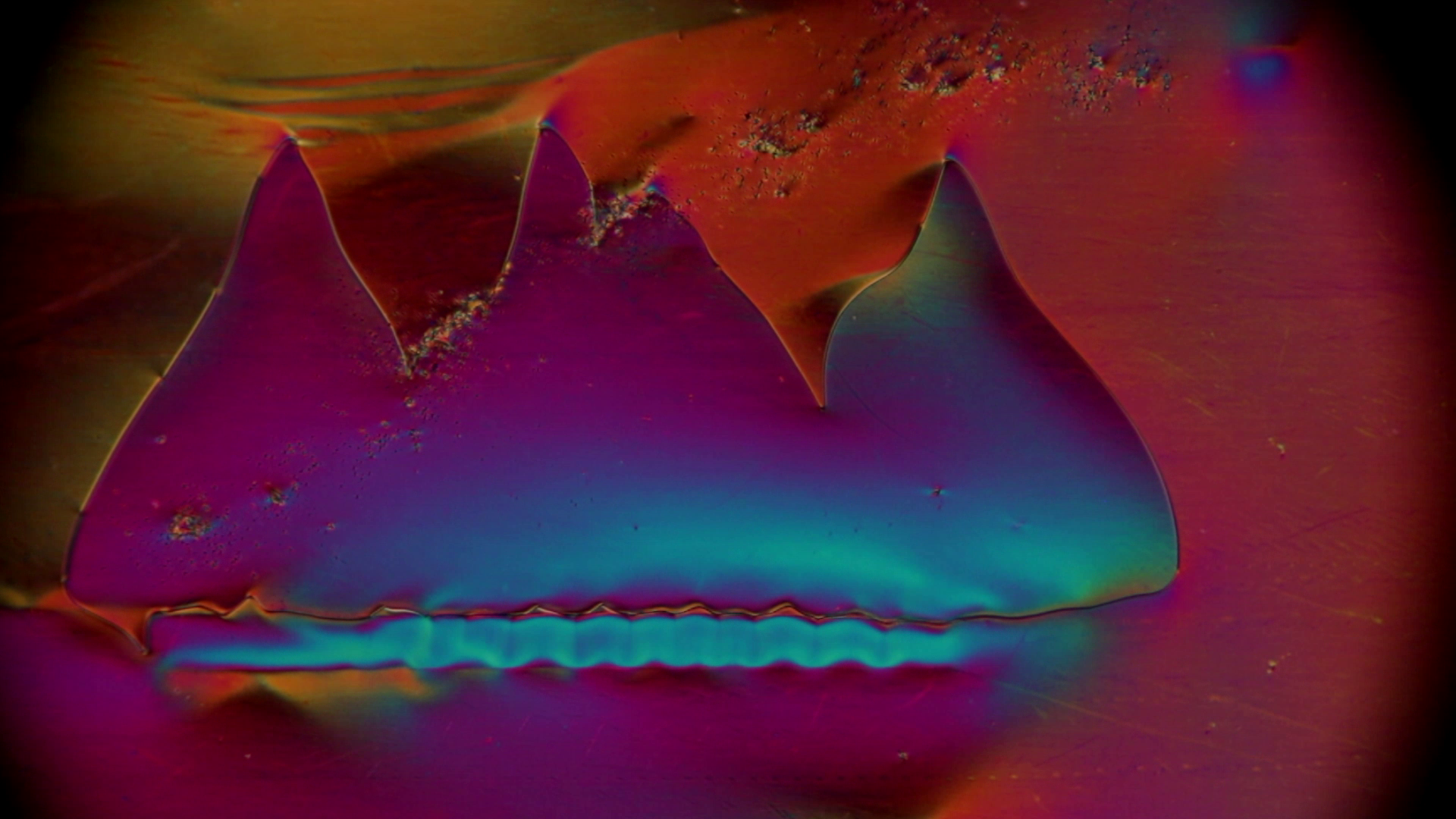
In addition to the efficiency of generating entangled photons in liquid crystals being comparable to the best existing sources, their main advantage lies in the fact that the quantum state of the photon pair can be tunably altered. This can be achieved by applying an electric field or by arranging the molecules of the liquid crystal into the appropriate configuration. With the ability to tunably change the quantum state, the presented results indicate exceptional practical potential for numerous quantum technologies, such as quantum communication, quantum computing, and quantum metrology.
A summary of the research can also be viewed in the presentation video.
Source:
Sultanov, V., Kavčič, A., Kokkinakis, E. et al. Tunable entangled photon-pair generation in a liquid crystal. Nature (2024). https://doi.org/10.1038/s41586-024-07543-5

