
The Slovenian smart box, developed at the UL FE, has returned from Antarctica

Archive Laboratory for Radiation and Optics
Date of publication:
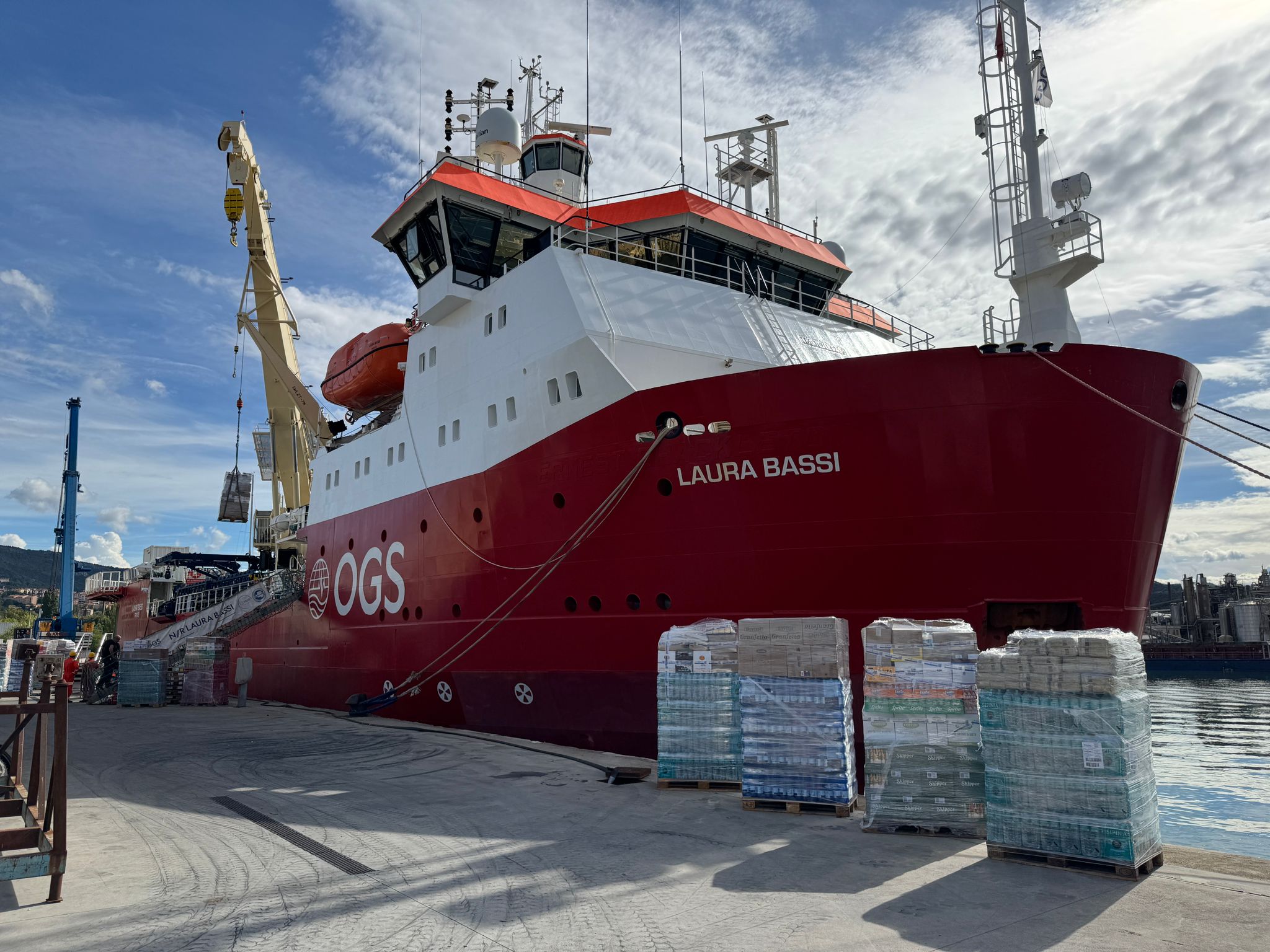
How reliable are Global Navigation Satellite Systems (GNSS) when a ship sails through the harshest conditions on Earth? This question was answered by researchers from the Faculty of Electrical Engineering of the University of Ljubljana, the “Jožef Stefan” Institute, and the Faculty of Maritime Studies and Transport of the University of Ljubljana. On board the Italian icebreaker Laura Bassi, they carried out a 200-day research expedition. The collected data are crucial for developing the next generations of autonomous ships.
The research was conducted with a Slovenian smart box that spent 200 days aboard the icebreaker listening to space and bringing back data. What is it like to travel for 200 days on a real icebreaker to the coldest and most remote continent on Earth?
Technological challenge: High-frequency electronics in extreme cold
Scientific expeditions in polar regions face extreme weather conditions. Temperatures that regularly drop below –60 °C at night pose a significant challenge for the operation of sensitive electronics. Advanced geodetic equipment that might withstand such conditions is extremely expensive—often exceeding €15,000—and very energy-intensive. High energy consumption is unacceptable on long autonomous missions, where every watt of power is precious.
The solution: An innovative measurement system developed at UL FE
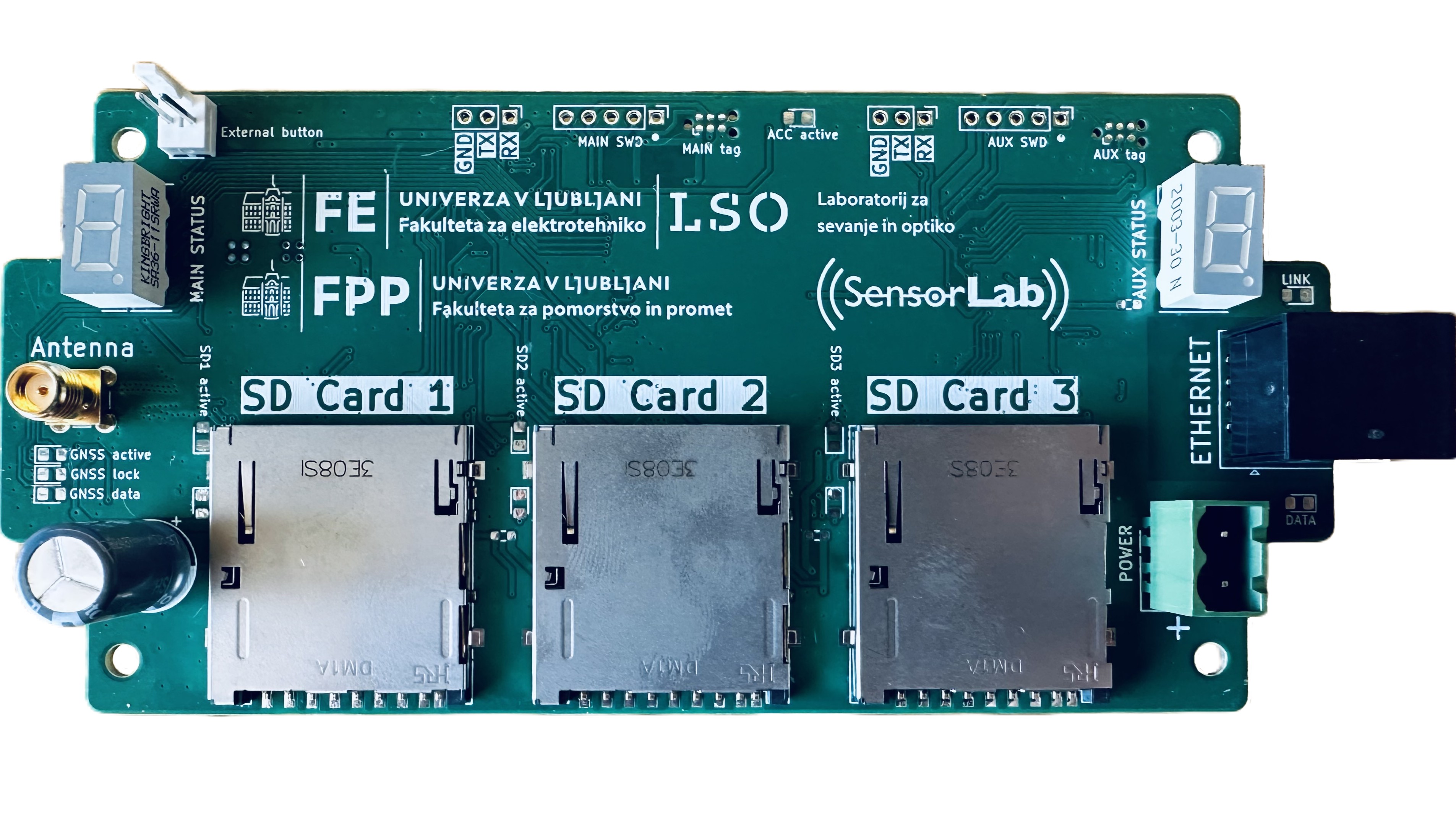
To overcome these obstacles, researchers at the Faculty of Electrical Engineering designed and built their own low-cost measurement platform. At the heart of the innovation is a thermally regulated printed circuit board. Instead of using power-hungry external heaters, the team at the Laboratory for Radiation and Optics integrated the heating element directly into the inner layers of the PCB for cost-effective production. A thin copper trace, routed in a serpentine pattern, acts as an efficient resistive heater that precisely warms the most sensitive components—such as clock reference crystals, accelerometers, and memory cards.
This innovative design allows key components to be kept at a stable operating temperature (around 20–25 °C) with minimal energy consumption. The entire heating system uses only about 4 watts of power, significantly less than the 20+ watts required by traditional methods. The measurement system is equipped with three vibration-resistant SD-card slots for continuous data collection (up to 6 TB total) and a diagnostic interface enabling connection to the Starlink satellite network for remote monitoring and control.
Photo gallery


The journey and surprising data
The icebreaker Laura Bassi completed a 200-day journey from Europe across the Atlantic, through the Panama Canal, over the Pacific to New Zealand, then twice into the Ross Sea in Antarctica, and back home around Cape Horn.
The measurement device developed at UL FE operated flawlessly throughout the entire voyage and collected an enormous dataset—about 600 MB per day, amounting to more than 85 million individual navigation records. The collected data are not just a “travel diary”. They are a unique record of the challenges GNSS faces in real maritime and polar environments: from disruptions caused by low satellite angles and ionospheric conditions to constant rolling, pitching, and acceleration of the ship on rough seas.
One of the most surprising findings is the prevalence of radio interference. The system detected intentional or unintentional GNSS signal interference on 81 out of the 200 travel days. This represents a serious threat to maritime safety, as it can lead to incorrect position determination or even complete loss of navigation.
Photo gallery
So why collect data about things that go wrong?
Because it is the only way to build systems that will work correctly! These data are not just for scientific archives. They are essential for developing the next generation of autonomous ships. Imagine cargo vessels without crews that must safely navigate into busy ports or avoid icebergs in the middle of the night.
To achieve this, they need navigation systems that are fully reliable and resilient. “With the unique data collected by the system we developed at our faculty, we’ll be able to create new, smarter algorithms that can detect interference, ignore it, and keep the ship on course even in the harshest sea conditions,” said Assist. Dr. Aljaž Blatnik from the Laboratory for Radiation and Optics, who participated in developing the innovative measurement system.
Slovenian expertise, embedded in a robust device, set off once again to the other side of the world this September and will return in May 2026 with a treasure trove of data that will help shape a safer and smarter future of maritime navigation.
Data collected with the measurement device developed at UL FE, is available here.
