
When Feelings Mislead: Technology for a Better Golf Swing

Val Vec/UL FE
Date of publication:
When playing sports, our own perception can easily mislead us. We may be convinced that we have performed a movement perfectly, when in reality we have positioned our arms at a slightly different angle than intended. Researchers at the Laboratory of Information Technologies (LAIT) at the Faculty of Electrical Engineering, University of Ljubljana, have addressed this challenge by developing a system that provides golfers with biomechanical feedback on their swing during practice.
The system consists of two components: a sensor device and a user application. The sensor device is assembled from commercially available components: a sensor, a microcontroller, and a battery. Its main component is a sensor incorporating an accelerometer, a magnetometer, and a gyroscope, enabling the orientation of the golf club to be determined. The device transmits information about the club's current orientation, angular velocities, and accelerations to the application via Wi-Fi.
The BMFGA (Biomechanical Feedback Golf Application) was developed using Unity, which enables the visualization of club movements in a three-dimensional virtual environment and allows the application to run on both mobile and desktop devices. The central concept of the application is to compare the player's current swing with their desired swing. First, the golfer records one or more successful swings, which can then be selected, together with their coach, as a reference for future practice. During training, the system automatically detects each swing and monitors the position and movement of the club.
The application supports training focused on both club positioning and swing tempo. During club positioning practice, it compares the club's current orientation with the reference swing in real time. If the deviation is too large, the player receives an audible warning and can see the difference between the actual and desired positions on the screen. This allows golfers to gradually develop a better feel for executing the movement correctly.
Photo gallery
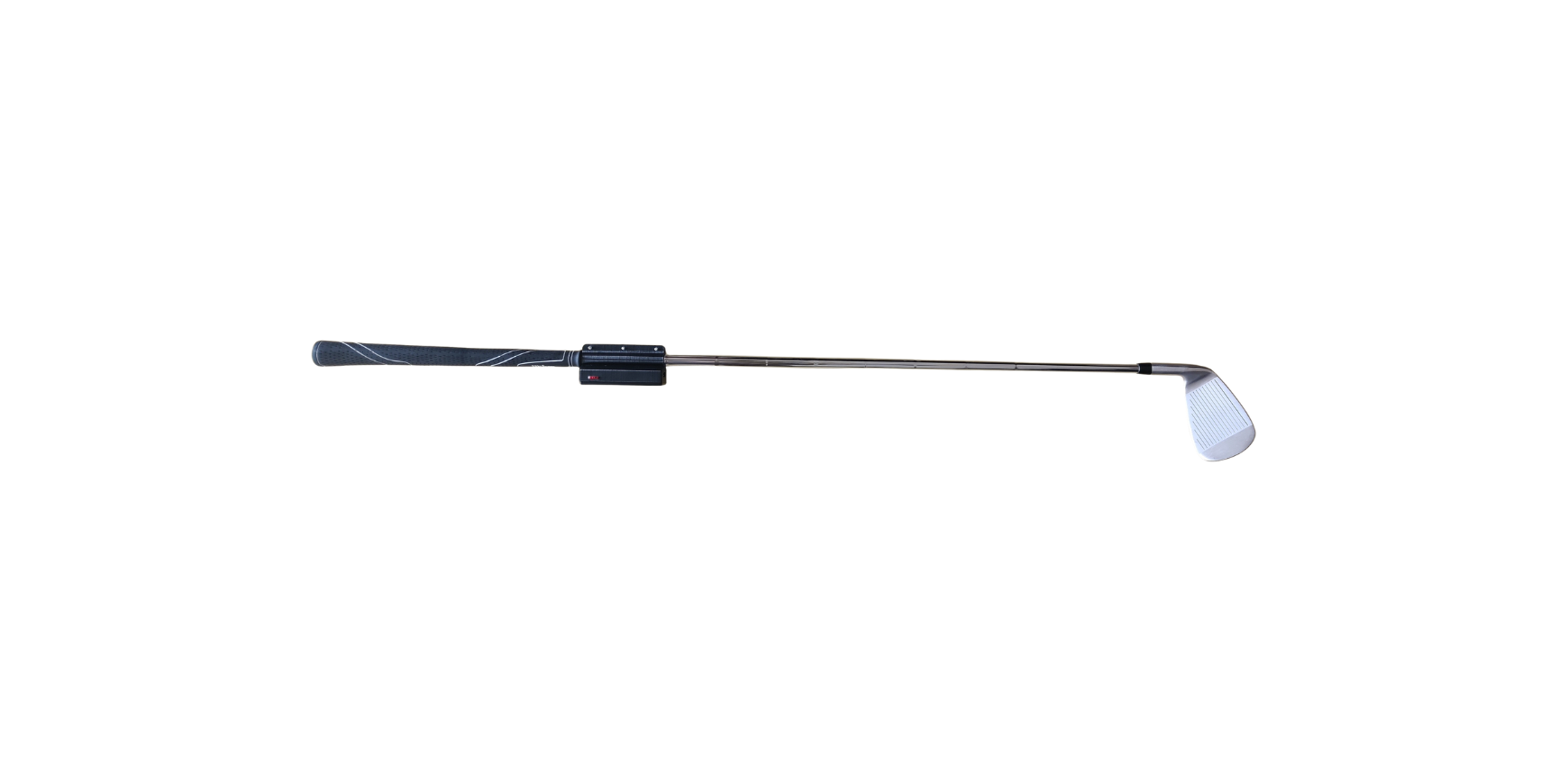
During tempo training, the system monitors the duration of individual phases of the swing and compares them with the reference. If the swing is too fast or too slow, the player receives another warning. Since a repeatable tempo is important for consistent shots, this type of immediate feedback can help golfers develop and maintain a more consistent swing rhythm.
After a practice session, players can also analyse individual swings in greater detail. The application provides a three-dimensional visualization of club movement and enables comparisons between the performed and reference swings at different stages of the movement. In this way, golfers gain not only their subjective impression but also an objective representation of what actually happened during the swing.
Professional golf coaches also contributed their expertise and advice during the development of the application. One of them, Uroš Gregorič, commented: "With immediate feedback on the swing path, players can effectively improve their consistency, leading to better results on the golf course."
The application is fully functional and runs on Android, iOS, and Windows devices. Researchers at LAIT are also preparing a user study to scientifically validate the system's effectiveness in accelerating motor learning and improving golf swing technique.