
David Stopar
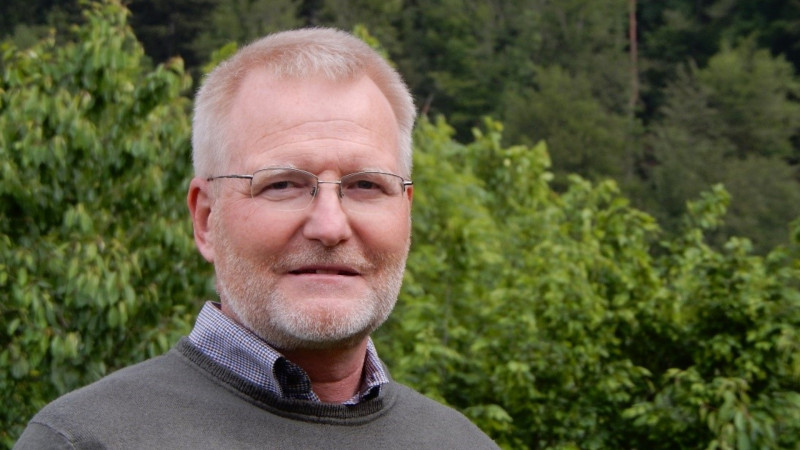
Prof Dr David Stopar is a full professor at the Faculty of Biotechnology of the University of Ljubljana, Department of Microbiology. He is an alumnus of the Faculty of Biotechnology. He received his PhD in Molecular Biophysics from Wageningen University in 1997.
David Stopar teaches students of microbiology, biotechnology, agronomy, biology and food science in undergraduate and postgraduate programmes at the University of Ljubljana. He is a guest lecturer at international conferences, summer schools and a visiting professor at various foreign institutions and universities. At the University of Ljubljana, his research work is related to the study of the structure and function of biofilms growing on surfaces of industrial and medical interest.
He is looking for ways to use new approaches to better remove biofilms or reduce their harmful impact on the environment and humans. He uses different hydrodynamic flow regimes, new photodynamic methods to remove biofilms and laser methods to enhance the effect of antibacterial agents in biofilms. He uses optical tweezers to determine the viscoelasticity of the immediate environment of individual bacterial cells and investigates how cavitation destroys bacterial cells. He has published more than 50 papers in journals with impact factor, some of them in the most prestigious journals in the field of science, and has published several books and textbooks.
He led a research team at the University of Ljubljana that discovered mechanical connections between bacteria that were thought not to exist. He loves to share his extensive knowledge of microorganisms with the public.
He has produced several radio and television programmes about the role of microorganisms in the environment, where he debunks myths and stereotypes about the invisible living world.