
Liza Debevec
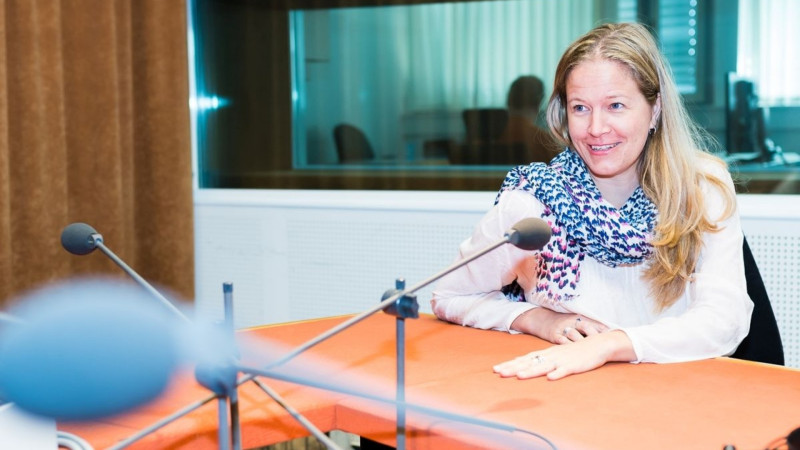
A graduate of the Faculty of Arts in Ljubljana, and employed at the International Water Management Institute, IWMI, in Ethiopia. She works in the field of management of water and other natural resources in relation to farming, principally from the aspect of the role of women, young people and marginalised groups in decision-making processes.
Dr Liza Debevec isa polyglot and speaks as many as nine languages (English, Slovenian, Serbian/Croatian, French, Italian, German, Spanish, Dyula and Amharic). She graduated in the sociology of culture, cultural anthropology and ethnology from the University of Ljubljana, then gained her doctorate in social anthropology at the University of St Andrews in Scotland. She first fell in love with Africa on a visit to Benin, Burkina Faso and Ghana at the end of her undergraduate studies. Later in her career she found a way to return to her beloved continent.
Dr Debevec began her career as a scientific associate at the Scientific Research Centre of the Slovenian Academy of Sciences and Arts, where she did more than 36 months of field work in Burkina Faso, Ivory Coast and Ethiopia. She was a visiting assistant professor in Ethiopia at Addis Ababa University, and now she is employed as a scientific associate at the International Water Management Institute (IWMI) in Addis Ababa, Ethiopia. Her scientific work involves the protection and management of water, and her latest publication is a review of available tools for monitoring and assessing agricultural and social resilience to climate change.