
Natalija Györek
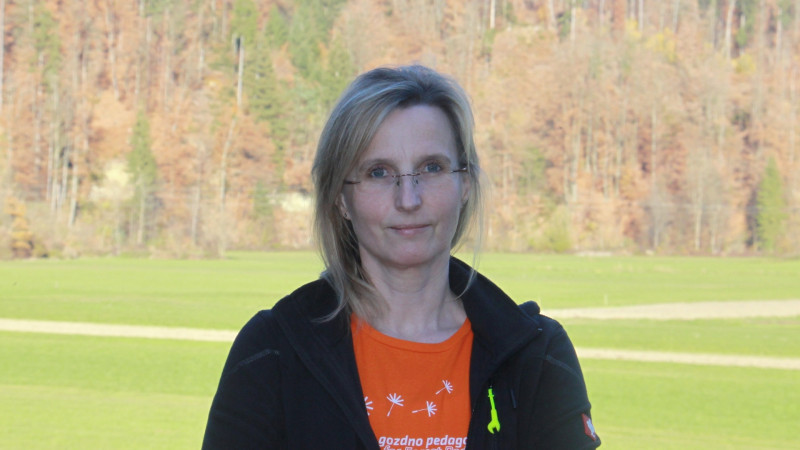
Natalija Györek, who holds an interdisciplinary Master’s degree in environmental protection from the Biotechnical Faculty in Ljubljana, is the founder of the Slovenian Network of Forest Kindergartens and Schools, which today has over 125 members, and heads the Institute for Forest Education, which she set up in 2010.
The aim of the Institute for Forest Education is to develop the area of forest education professionally at home and abroad. In pursuit of this aim, Natalija organises seminars and specialist educational activities for teachers, designs, leads and carries out European-level projects, and conducts learning and education programmes herself in forest environments.
The institute has already got over 2,000 teaching professionals involved in forest education and has, over the years, acquired a large number of positive reviews in Slovenia and beyond. The “Invitation to the forest” project was chosen as the best project in the dynAlp-Climate programme, and the Slovenian Network of Forest Kindergartens and Schools has been selected by the International Union of Forest Research Organizations (IUFRO), the University of Helsinki and the Food and Agriculture Organization of the United Nations (UN FAO) as one of ten international examples of best practice in the field of forest education.
In addition to her activities at the institute, Natalija also devotes her time to scientific research, passing on her knowledge to future teaching professionals and writing academic handbooks on forest learning.