
The Most Outstanding Research Achievements
Every year, the University of Ljubljana recognises 10 outstanding research achievements from the previous 12 months. In evaluating and making the final selection of the 10 most outstanding achievements, the Research and Development Committee’s working group principally takes into account their international impact, their comprehensiveness, how relevant they are to the wider professional audience and the general public, and their applicability. All the proposals were assessed equally, regardless of the discipline, and regardless of whether they involved pure or applied research.
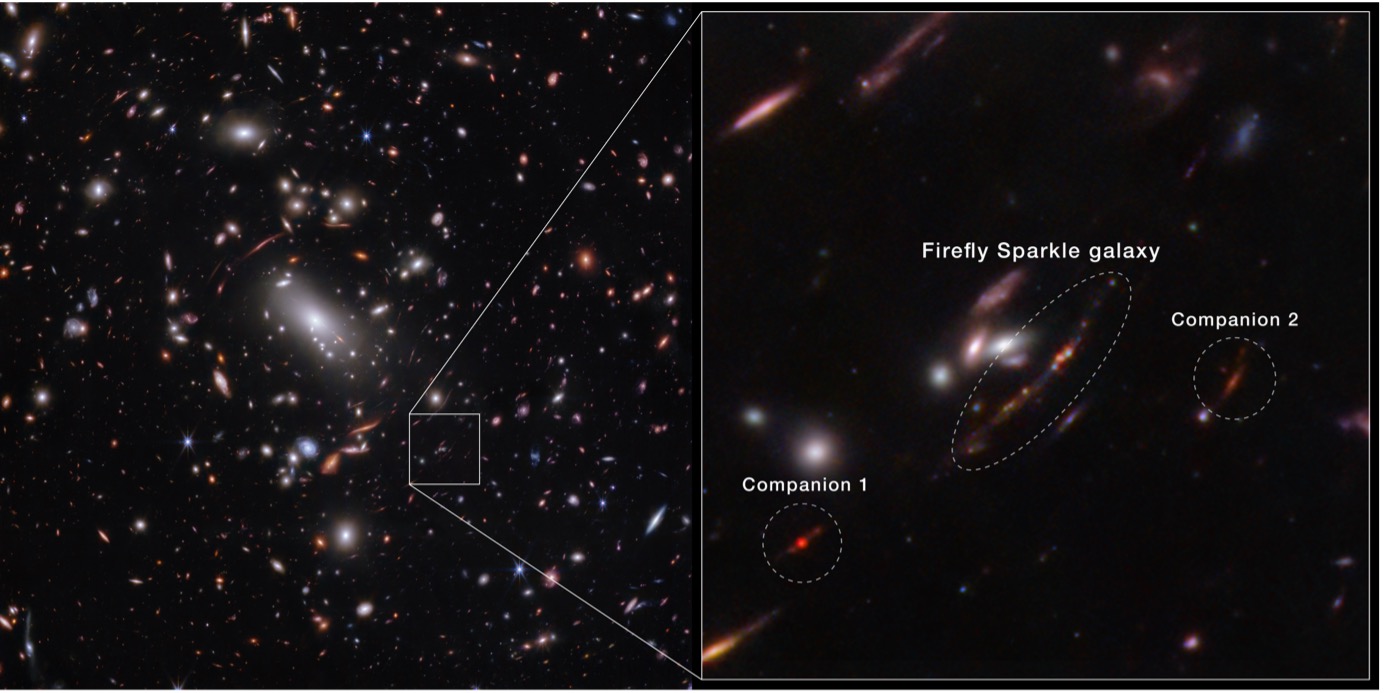
Formation of a low-mass galaxy from star clusters in a 600-million-year-old Universe
Authors: Professor Maruša Bradač, Dr Nicholas Martis (researcher) and Gregor Rihtaršič (doctoral student), all from the UL Faculty of Mathematics and Physics
Other Authors: Lamiya Mowla (Whitin Observatory, Department of Physics and Astronomy, Wellesley College, Wellesley, MA, USA, and the Center for Astronomy, Space Science, and Astrophysics, Independent University Bangladesh, Dhaka, Bangladesh), Kartheik Iyer (Columbia Astrophysics Laboratory, Columbia University, New York, NY, USA), Yoshihisa Asada, Guillaume Desprez, Marcin Sawicki, Vince Estrada-Carpenter, Gaël Noirot and Johannes Zabl (Department of Astronomy and Physics, Saint Mary’s University, Halifax, Nova Scotia, Canada), Vivian Yun Yan Tan, Ghassan Sarrouh and Adam Muzzin (Department of Physics and Astronomy, York University, Toronto, Ontario, Canada), Victoria Strait, Gabriel Brammer and Jasleen Matharu (Cosmic Dawn Center (DAWN), Copenhagen, Denmark, and the Niels Bohr Institute, University of Copenhagen, Copenhagen, Denmark), Roberto Abraham and David A. Dunlap (Department of Astronomy and Astrophysics, University of Toronto, Toronto, Ontario, Canada), Camilla Pacifici (Space Telescope Science Institute, Baltimore, MD, USA), Swara Ravindranath (Astrophysics Science Division, NASA Goddard Space Flight Center, Greenbelt, MD, USA), Chris Willott (NRC Herzberg, Victoria, British Columbia, Canada), Nusrath Jahan (Shahjalal University of Science and Technology, Sylhet, Bangladesh)
Proposed by: Faculty of Mathematics and Physics, University of Ljubljana
The “Firefly Sparkle” galaxy, which researchers Professor Maruša Bradač and Dr Nicholas Martis, with doctoral student Gregor Rihtaršič (who are all from the UL Faculty of Mathematics and Physics), studied in detail with the help of the natural phenomenon of gravitational lensing, contains ten distinct star clusters that differ in terms of age and stage of formation. This means that the stars in the galaxy were formed at different periods of time, confirming the theory of the gradual development of galaxies. The galaxy’s mass is comparable with that of our galaxy at an early stage of its formation. This therefore provides us with an insight into how the first structures in the universe were formed. Researchers used the most advanced technology available, the James Webb telescope, for their study of Firefly Sparkle. Gravitational lensing, enabled by the massive cluster of galaxies in the foreground, magnified the image of Firefly Sparkle, and allowed researchers to observe details at an exceptional level of resolution. With several dozen scientists from universities and research institutions from around the world taking part, the Firefly Sparkle project is also proof of the importance of collaboration within the international scientific community. The Slovenian team from UL FMF was responsible for analysing the gravitational lensing data and for interpreting the development of the star clusters. This breakthrough discovery has global importance for astrophysics because it enables galaxy-creation theories to be tested, leading to a better understanding of the processes behind the formation of the early universe. The research also showed that the merger of and interactions between galaxies play an important role in their formation. This provides an important starting point for future studies of the evolution of the universe.
Source:
Mowla, L., Iyer, K., Asada, Y., Desprez, G., Tan, V. Y. Y., Martis, N., Sarrouh, G., Strait, V., Abraham, R., Bradač, M., Brammer, G., Muzzin, A., Pacifici, C., Ravindranath, S., Sawicki, M., Willott, C., Estrada-Carpenter, V., Jahan, N., Noirot, G., Matharu, J., Rihtaršič, G., & Zabl, J.: Formation of a low-mass galaxy from star clusters in a 600-million-year-old Universe (2024), Nature, 636, 332.
DOI: 10.1038/s41586-024-08293-0
Photo gallery
Protection of unstable organic radical C59N
Lead author: Professor Dean Cvetko
Authors: Assistant Professor Gregor Kladnik (joint first author), Assistant Professor Gregor Bavdek (joint first author), Luca Schio (joint first author), Yuri Tanuma, Marion van Midden Mavrič, Erik Zupanič, Bastien Anézo, Ioanna K. Sideri, Nikos Tagmatarchis, Jannis Volkmann, Hermann A. Wegner, Andrea Goldoni, Christopher P. Ewels, Alberto Morgante, Luca Floreano, Professor Denis Arčon
Proposed by: Faculty of Education, University of Ljubljana
Researchers from the Faculty of Mathematics and Physics, the Faculty of Education and the Jožef Stefan Institute managed to protect an azafullerene (C59N) molecule and maintain its radical state by [10]cycloparaphenylene ([10]CPP) nanohoop encapsulation on the surface of gold.
Organic radicals, which are organic molecules with unpaired electrons in their ground state that give the molecules a ½ spin and cause them to behave like tiny magnets, constitute the simplest basis for the encoding of quantum qubits at molecular scale. They are usually considered unstable precisely because of the high reactivity of their unpaired electrons, which presents a major experimental challenge when it comes to the use of molecular qubits as the building blocks of quantum computers.
Azafullerene C59N is an organic radical in which a nitrogen atom replaces one of the carbon atoms in the fullerene lattice. Owing to the difference in the valences of carbon and nitrogen, C59N has one surplus electron and is therefore highly reactive so that in the powder-phase sample it exists only in the form of diamagnetic spin-inactive (C59N)2 dimers. When evaporated in an ultra-high vacuum, these dimers break down back into radicals. However, when the substrate surface coverage is higher, dimers are instantly formed again. Stability of spin-active (magnetic) monomers can be achieved by encasing those monomers in shells that fit them as closely as possible in terms of shape. The radical C59N has a spherical shape whose diameter is slightly smaller than the diameter of a polyaromatic nanohoop represented by the [10]cycloparaphenylene molecule. This is why it can be placed in the hoop. We achieved protection of radical molecules C59N by encapsulating them in a two-dimensional [10]CPP organic nanolattice pre-deposited on a gold surface.
Source:
KLADNIK, Gregor, BAVDEK, Gregor, TANUMA, Yuri, MIDDEN, Marion van, ZUPANIČ, Erik, ANÉZO, Bastien, ARČON, Denis, CVETKO, Dean, et al. (2025). Engineering 2D spin networks by on-surface encapsulation of azafullerene radicals in nanotemplates. Nature Communications, Vol 16, Article no 193, 10 pp., illustrations. ISSN 2041-1723. DOI: 10.1038/s41467-024-55521-2. [COBISS.SI-ID 221416707], [Open access, JCR, SNIP, WoS by 1 July 2025: no of citations (TC): 3, pure citations (CI): 2, pure citations per author (CIAu): 0.16, Scopus by 25 June 2025: no of citations (TC): 3, pure citations (CI): 2, pure citations per author (CIAu): 0.16]
Project: J1-3007-2021 Diamond-assisted quantum processing of fullerene qubits. Funded by: Slovenian Research and Innovation Agency
Project: J2-2514-2020 Development of building blocks for new European quantum communication network. Funded by: Slovenian Research and Innovation Agency
Project: N1-0220-2021 Advanced optical magnetometry of vortices in unconventional superconductors. Funded by: Slovenian Research and Innovation Agency
Project: P1-0112-2022 Studies of atoms, molecules and structures by photons and particles. Funded by: Slovenian Research and Innovation Agency
Project: P1-0125-2022 Physics of quantum and functional materials. Funded by: Slovenian Research and Innovation Agency
Project: P1-0099-2022 Physics of soft matter, surfaces, and nanostructures. Funded by: Slovenian Research and Innovation Agency
Project: ANR-18-EURE-0012 Molecular Materials for Organic Electronics/Photonics [LumoMat-E]. Funded by: French National Research Agency (ANR)
Project: 101007417 Nanoscience Foundries and Fine Analysis – Europe|PILOT [NEP]. Funded by: European Commission
Category: 1A1 (Z, A'', A', A1/2); classification: SCIE, Scopus, MBP (BIOABS, BIOPREW, DOAJ, GEOREF, INSPEC, MEDLINE, METADEX, PUBMED, ZR); type of work verified by OSICN
Photo gallery

Ancient Egyptian mummified bodies: Cross-disciplinary analysis of their smell
Lead author: Professor Matija Strlič
Authors: Emma Paolin, Dr Cecilia Bembibre, Dr Fabiana Di Gianvincenzo, Dr Julio Cesar Torres-Elguera, Randa Deraz, Dr Ida Kraševec, Ahmed Abdellah, Asmaa Ahmed, Professor Irena Kralj Cigić, Dr Abdelrazek Elnaggar, Dr Ali Abdelhalim, Professor Tomasz Sawoszczuk
Proposed by: Faculty of Chemistry and Chemical Technology, University of Ljubljana
Ancient Egyptian mummification was a funerary practice aimed at preserving the body and soul for the afterlife. It was achieved through a detailed embalming ritual using oils, waxes and balms. The goal was to evaluate whether contemporary smells reflected the mummification materials and, if so, what information might be of value to the interpretation and conservation of the collection. We combined panel-based sensory analyses with gas chromatography-mass spectrometry-olfactometry (GC-MS-O), microbiological analysis, and historical and conservation research. The sensory analyses highlighted common olfactory descriptors for all samples: “woody”, “spicy” and “sweet”. We identified four categories of volatiles based on their origin: (i) original mummification materials; (ii) plant oils used for conservation; (iii) synthetic pesticides; and (iv) microbiological deterioration products The study focused on an olfactory analysis of cultural heritage objects in order to understand the material composition, preservation and communication of that heritage.
- Impact since publication 13 February to 24 September 2025:
- Number of views: 18,000
- Altmetrics: 2,318 (Highest score for a JACS publication)
- Number of citations: 7
- The study was mentioned by more than 300 Slovenian and international media outlets, including Scientific American, The Guardian, BBC, CNN, Die Welt, La Repubblica, Kurier and Delo. More information.
Source:
E. Paolin, C. Bembibre, F. Di Gianvincenzo, J. C. Torres-Elguera, R. Deraz, I. Kraševec, A. Abdellah, A. Ahmed, I. Kralj Cigić, A. Elnaggar, A. Abdelhalim, T. Sawoszczuk, M. Strlič, Ancient Egyptian Mummified Bodies: Cross-Disciplinary Analysis of Their Smell, Journal of the American Chemical Society 2025, 147 (8), 6633–6643, DOI: 10.1021/jacs.4c15769
Photo gallery

Link between environmental, social and governance (ESG) aspects and the financial performance of companies
Author: Professor Aljoša Valentinčič
Proposed by: School of Economics and Business, University of Ljubljana
Three papers examine the link between environmental, social and governance (ESG) aspects and the financial performance of companies, but each from a different angle. The paper by Ichev and Valentinčič (2025) focuses on so-called “impact investing”, which aims to improve the functioning of society as a whole. We conclude that governmental impact-investing financial grants boost employment, cash flow, exports and capital investment, but can reduce productivity in the short term. The paper by Jucá et al. (2024) examines how potentially problematic aspects of company operations connected with the ESG concept, such as environmental disasters or irregular governance practices, reduce company profitability, particularly in sectors with high environmental impact and in developed countries. The paper by Ferjančič et al. (2024) examines corporate sustainability reporting by FTSE 350 companies using advanced methods of textual analysis, and shows how the legal framework and reporting practices affect the ESG score. For example, extensive disclosure on climate risk and stakeholder engagement is positively associated with higher ESG scores, while topics like executive remuneration show negative correlations with ESG scores. The common point of all three studies is that ESG decisions and the way they are presented have tangible impacts on firms’ reputation and financial results. Regulation and transparency are key factors: companies benefit when their ESG operations are credible, consistent and measurable, and lose out when problematic aspects arise in business operations or when reporting is superficial. The findings of the three papers confirm that companies’ financial performance is not separable over the long term from their environmental, social and governance (ESG) responsibilities regardless of market or form of ownership. Importantly, they employ different research methods to arrive at the same basic conclusion.
Source:
Ichev, R., & Valentinčič, A. (2025). The effect of impact investing on performance of private firms. Research in International Business and Finance, 73 (Part A), 102586. https://doi.org/10.1016/j.ribaf.2024.102586
Ferjančič, U., Ichev, R., Lončarski, I., Montariol, S., Pelicon, A., Pollak, S., Sitar Šuštar, K., Toman, A., Valentinčič, A., & Žnidaršič, M. (2024). Textual analysis of corporate sustainability reporting and corporate ESG scores. International Review of Financial Analysis, 96(B), 103669. https://doi.org/10.1016/j.irfa.2024.103669
Nascimento Jucá, M., Domadenik Muren, P., Valentinčič, A., & Ichev, R. (2024). The impact of ESG controversies on the financial performance of firms: an analysis of industry and country clusters. Borsa Istanbul review, 24(6), 1305–1315. https://doi.org/10.1016/j.bir.2024.08.001
Photo gallery

The impact of different types of self-regulation scaffolds on learning science with hypermedia
Authors: Assistant Professor Alenka Gril, Professor Anja Podlesek, Assistant Professor Luka Komidar, Assistant Professor Alenka Kavčič, Assistant Professor Katja Depolli Steiner, Professor Sonja Pečjak, Assistant Professor Tina Pirc, Professor Melita Puklek Levpušček, Professor Bojana Boh Podgornik, Professor Aleš Hladnik, Assistant Professor Ciril Bohak, Associate Professor Matevž Pesek, Dr Žiga Lesar (Assistant), Professor Matija Marolt, Professor Cirila Peklaj
Proposed by: Faculty of Social Work, University of Ljubljana
This experiment investigated self-regulation scaffolds (cognitive, metacognitive, motivational and mixed scaffolds) in science learning with hypermedia, and showed that the impact of students’ individual characteristics (learning success, prior knowledge, motivation, learning strategies) was stronger than the impact of scaffolds on learning outcomes. The experiment involved 443 ninth-grade students and was conducted in a whole-class school setting to ensure ecological validity. It was an extremely complex undertaking that had to be planned and controlled very carefully in order to exclude the impact of unforeseen factors. Its advantage lies in the comprehensive approach it takes to studying the types and combinations of scaffolds for promoting self-regulated learning with hypermedia, something that had not previously been studied in this way. Understanding the impact of scaffolds and the psychological processes at play in learning with hypermedia will make an important contribution to further research into the relationship between people and the digital environment; the results will also contribute to the development of digital learning materials for individualised learning as the basis for the creation of guidelines for incorporating scaffolds into hypermedia in order to promote self-regulated learning. When creating personalised interactive learning materials, the student’s individual characteristics must also be taken into account, alongside the scaffolds. UL scientists from the fields of psychology, natural sciences and computer science took part in the study. They developed electronic materials, a learning monitoring program and measuring instruments, and conducted a complex controlled experiment in a natural environment. The paper was published in a major international journal (IF = 8.9).
Source:
GRIL, Alenka, PODLESEK, Anja, KOMIDAR, Luka, KAVČIČ, Alenka, DEPOLLI STEINER, Katja, PEČJAK, Sonja, PIRC, Tina, PUKLEK LEVPUŠČEK, Melita, BOH PODGORNIK, Bojana, HLADNIK, Aleš, BOHAK, Ciril, PESEK, Matevž, LESAR, Žiga, MAROLT, Matija, PEKLAJ, Cirila (2025). The impact of different types of self-regulation scaffolds on learning science with hypermedia. Computers in Human Behavior, Vol 169, Aug 2025, 108670. https://doi.org/10.1016/j.chb.2025.108670.
Photo gallery

Pleiotropic prodrugs for Alzheimer’s disease: How to change the course of the disease, not just treat the symptoms
Authors: Dr Anže Meden (Assistant), Neža Žnidaršič (Assistant), Associate Professor Damijan Knez, Associate Professor Anja Pišlar, Assistant Professor Neža Grgurevič, Associate Professor Stane Pajk, Professor Stanislav Gobec
Proposed by: Faculty of Pharmacy, University of Ljubljana
Dementia in its various forms, one of which is Alzheimer’s disease, is the seventh leading cause of death worldwide, and one of the biggest health, social and financial challenges facing modern society today. Previous approaches to the treatment of this multilayered disease have not been successful: they have been unable to change the course of the disease, instead merely easing the symptoms.
Together with colleagues from the Veterinary Faculty, the Institute of Chemistry and the Institute of Oncology, and in collaboration with partners from Nanjing University in China, members of the Department of Pharmaceutical Chemistry (Dr Anže Meden (Assistant), Associate Professor Damijan Knez, Associate Professor Stane Pajk and Professor Stanislav Gobec) and the Department of Pharmaceutical Biology (Associate Professor Anja Pišlar) developed a multi-target pleiotropic prodrug that simultaneously works on the cholinergic and adrenergic system of neurotransmitters in the brain. Selective inhibition of butyrylcholinesterase leads to symptomatic improvement in cognitive function while avoiding the undesirable effects associated with the currently approved pharmacotherapy for Alzheimer’s disease. On the other hand, antagonism on α2A adrenergic receptors prevents a pathological cascade, linking amyloid β and hyperphosphorylated protein tau. This alters the course of the disease, something that has not been possible with small molecules up to now. The newly developed multi-target prodrug may be administered perorally, reaches its intended destination in the central nervous system, and led to improved cognitive functions in animal tests.
A patent application (WO2024160908 A1) has been filed and published, and last year the authors also received funds from the UL Innovation Fund to enable them to further develop the innovation (efficacy testing in the transgenic model of Alzheimer’s disease).
Source:
Meden, A.; Žnidaršič, N.; Knez, D.; Wang, Y.; Xu, Z.; Yang, H.; Zhang, W.; Pišlar, A.; Perdih, A.; Brezar, S. K.; Grgurevič, N.; Pajk, S.; Sun, H. and Gobec, S.
Pleiotropic prodrugs for both symptomatic and disease-modifying treatment of Alzheimer’s disease. Acta Pharmaceutica Sinica B. 2025, 15 (9), 4807–4828. https://doi.org/10.1016/j.apsb.2025.07.005
[COBISS.SI-ID 249943299]
Photo gallery

Phase-noise measurement using a dual-fiber electro-optical delay line
Authors: Dr Andrej Lavrič (Assistant), Professor Boštjan Batagelj, Professor Matjaž Vidmar
Proposed by: Faculty of Electrical Engineering, University of Ljubljana
In modern telecommunications, radar technologies and quantum technologies, short-lasting phenomena of high-frequency components play an important role. The term “phase noise” is used for short-lasting phenomena in the frequency spectrum of high-frequency components. Phase noise measurement involves a unique and very complex measurement of the intensity of the frequency spectrum. Commercial devices do already exist for measuring phase noise, but are of virtually no practical use with the highest-quality high-frequency components, as current technologies are based on comparable methods. This technological gap can be bridged by our meter, which is not based on established measurement procedures but incorporates the use of a dual-fiber electro-optical delay line.
Our research in the field of phase-noise meters has led to an innovative approach to the phase-noise measurement using two optical fibers with different chromatic dispersion coefficients and wavelength-tuned delay. Our work and the new approaches it employs have contributed to making phase-noise meters with an electro-optical delay line more accessible and straightforward. This will speed up the development of new, high-capacity oscillators with low phase noise, and enable the operation of oscillators that have already been incorporated into high-performance systems to be controlled by means of a simple and affordable meter.
Sources:
[1] LAVRIČ, Andrej, VIDMAR, Matjaž, BATAGELJ, Boštjan. Dual-fiber wavelength-tuned photonic-delay phase-noise measurement: Andrej Lavrič , Matjaž Vidmar and Boštjan Batagelj. Journal of Lightwave Technology. [Online ed.]. 2025, Vol , Issue , [AK1] 9 pp., illustrations. ISSN 1558-2213. https://ieeexplore.ieee.org/document/10870101, DOI: 10.1109/JLT.2025.3538128. [COBISS.SI-ID 236931075], [Open access, JCR, SNIP, Scopus], Category: 1A1 (Z, A', A1/2); JCR IF (2024) = 4.8
[2] Slovenian patent granted: LAVRIČ, Andrej, BATAGELJ, Boštjan, VIDMAR, Matjaž. Method of measuring phase noise and a device for carrying out said method, SI 26620A, Date of publication: 30 September 2025
https://www2.uil-sipo.si/s/ds.dll/00?A=10301aa01004cc109e0000011401
[3] European patent application filed: LAVRIČ, Andrej, BATAGELJ, Boštjan, VIDMAR, Matjaž; A METHOD OF MEASURING PHASE NOISE AND A DEVICE FOR CARRYING OUT SAID METHOD, Application: 25161741.1
[4] LAVRIČ, Andrej, VIDMAR, Matjaž, BATAGELJ, Boštjan. Dispersion-compensation-fiber-enabled photonic-delay phase-noise measurement. In: 2024 International Topical Meeting on Microwave Photonics: 17–20 September 2024, Pisa, Italy. [Piscataway: IEEE], copyright 2024. [4] pp., illustrations. Proceedings; (International Topical Meeting on Microwave Photonics. Online). ISBN 979-8-3503-7539-8. ISSN 2768-346X. https://ieeexplore.ieee.org/abstract/document/10736326, DOI: 10.1109/MWP62612.2024.10736326. [COBISS.SI-ID 216335363], [WoS, Scopus]
Category: 4C (Z);
[5] LAVRIČ, Andrej, BATAGELJ, Boštjan. Quadrature-lock circuit for a photonic-delay phase-noise meter. In: 2024 International Workshop on Fiber Optics in Access Networks (FOAN): 29–30 October 2024. Athens, Greece. [Danvers]: IEEE Xplore, Copyright 2024. Pages 19–21, illustrations. International Workshop on Fiber Optics in Access Network (Online). ISBN 979-8-3315-0429-8. ISSN 2378-8488. https://ieeexplore.ieee.org/document/10765654, DOI: 10.1109/FOAN63517.2024.10765654. [COBISS.SI-ID 224717571], [WoS, Scopus]
Category: 4C (Z);
[6] LAVRIČ, Andrej, VIDMAR, Matjaž, BATAGELJ, Boštjan. Uporaba kompenzacijskega vlakna za merjenje faznega šuma [Use of dispersion-compensation fibres for measuring phase noise]. In: MLINAR, Tomi (ed.), BATAGELJ, Boštjan (ed.). SOK 2025: 27. 27th Seminar on Optical Communication: Ljubljana, 5–7 February 2025. Proceedings. 1st electronic edition. Ljubljana: Založba FE [published by the Faculty of Electrical Engineering], 2025. Page 386, illustrations. ISBN 978-961-243-477-9. https://sok.fe.uni-lj.si/zborniki/ZBORNIK%20SOK%202025.pdf. [COBISS.SI-ID 226519043]
Photo gallery

The Baroque in Slovenia: New perspectives on the art of the 17th and 18th centuries on Slovenian territory
Authors: Dr Matej Klemenčič, Dr Katra Meke (Assistant)
Proposed by: Faculty of Arts, University of Ljubljana
The results of “The Baroque in Slovenia”, a research and exhibition project spanning several years, were presented to the public in 2025. It was conducted as part of the research projects and programme at the Department of Art History at the University of Ljubljana’s Faculty of Arts. This was the first time that the history of Baroque art in the territory of present-day Slovenia had been presented comprehensively within the wider context of the Hapsburg and Venetian lands, and of the connections between and mobility of artists, patrons and artworks themselves.
The results, which substantially alter our views of the fine arts in the 17th and 18th centuries, were presented in the form of exhibitions, publications and conferences, with the active involvement of researchers from Slovenia, Italy, Croatia and Austria. The central part of the project comprised exhibitions at the National Gallery and National Museum. In addition to those two institutions and the Faculty of Arts, the other participating institutions were the Museum of Architecture and Design and the France Stele Institute of Art History at the Slovenian Academy of Sciences and Arts (ZRC SAZU).
The project was conceptualised, designed and led by Matej Klemenčič, who was the co-curator of the two exhibitions at Slovenia’s main museum institutions. Matej Klemenčič and Katra Meke compiled a catalogue of the National Gallery exhibition in the form of an extensive academic monograph (603 pages) and contributed the keynote texts. The results of the research and exhibition project, together with the academic monograph, lay the foundations for all further (international) studies of 17th and 18th century art in the territory of present-day Slovenia.
Sources:
KLEMENČIČ, Matej, KOŠAK, Tina, MEKE, Katra, POLLEROSS, Friedrich B., ŠERBELJ, Ferdinand, VIDMAR, Polona, KLEMENČIČ, Matej (editor, author of supplementary text), MEKE, Katra (editor, author of supplementary text). Barok v Sloveniji: Slikarstvo in kiparstvo [Baroque in Slovenia: Painting and Sculpture] [National Gallery, Prešernova 24, Ljubljana, 10 April–9 November 2025]. Ljubljana: National Gallery, 2025. 603 pp., illustrations. ISBN 978-961-7209-15-0. dCOBISS. [COBISS.SI-ID 227081731]
Individual articles
KLEMENČIČ, Matej. Baročno kiparstvo [Baroque sculpture]. In: KLEMENČIČ, Matej (ed.), et al. Barok v Sloveniji: Slikarstvo in kiparstvo [Baroque in Slovenia: Painting and Sculpture] [National Gallery, Prešernova 24, Ljubljana, 10 April–9 November 2025]. Ljubljana: National Gallery, 2025. pp. 123–155, illustrations. ISBN 978-961-7209-15-0. [COBISS.SI-ID 232277507]
MEKE, Katra, ŠERBELJ, Ferdinand, VIDMAR, Polona. Baročno stropno in stensko slikarstvo [Baroque ceiling and wall paintings]. In: KLEMENČIČ, Matej (ed.), et al. Barok v Sloveniji: Slikarstvo in kiparstvo [Baroque in Slovenia: Painting and Sculpture] [National Gallery, Prešernova 24, Ljubljana, 10 April–9 November 2025]. Ljubljana: National Gallery, 2025. Pages 73–120, illustrations. ISBN 978-961-7209-15-0. [COBISS.SI-ID 232276227]
KLEMENČIČ, Matej. Barok v Sloveniji: umetniki, naročniki, družba [Baroque in Slovenia: Artists, patrons, society]. In: KLEMENČIČ, Matej (ed.), et al. Barok v Sloveniji: Slikarstvo in kiparstvo [Baroque in Slovenia: Painting and Sculpture] [National Gallery, Prešernova 24, Ljubljana, 10 April–9 November 2025]. Ljubljana: National Gallery, 2025. Pages 13–41, illustrations. ISBN 978-961-7209-15-0. [COBISS.SI-ID 232133635]
MEKE, Katra. Oltarne slike [Altarpieces]. In: KLEMENČIČ, Matej (ed.), et al. Barok v Sloveniji: Slikarstvo in kiparstvo [Baroque in Slovenia: Painting and Sculpture] [National Gallery, Prešernova 24, Ljubljana, 10 April–9 November 2025]. Ljubljana: National Gallery, 2025. Pages 43–71, illustrations. ISBN 978-961-7209-15-0. [COBISS.SI-ID 232134915]
KLEMENČIČ, Matej. Slovenska umetnostna zgodovina in raziskovanje baročne umetnosti [Slovenian art history and Baroque art research]. In: KLEMENČIČ, Matej (ed.), et al. Barok v Sloveniji: Slikarstvo in kiparstvo [Baroque in Slovenia: Painting and Sculpture] [National Gallery, Prešernova 24, Ljubljana, 10 April–9 November 2025]. Ljubljana: National Gallery, 2025. Pages 211–217, illustrations. ISBN 978-961-7209-15-0. [COBISS.SI-ID 232293379]
Photo gallery

Extracellular vesicles in plasma as a promising diagnostic source
Lead author: Associate Professor Metka Lenassi
Authors: Assistant Professor Marija Holcar, Dr Ivica Marić, MD, Tobias Tertel, Associate Professor Katja Goričar, Urška Čegovnik Primožič (medical biochemistry specialist), Darko Černe (master’s in pharmacy, medical biochemistry specialist), Professor Bernd Giebel
Proposed by: Faculty of Medicine, University of Ljubljana
Extracellular vesicles (EVs), a newly discovered group of membrane nanoparticles present in bodily fluids such as blood, are a promising source of non-invasive biomarkers for monitoring the state of tissues and organs, particularly in relation to cancer and neurological conditions. The lack of data on EVs in healthy adults (and the resulting absence of reference laboratory values) has so far prevented their use in diagnostic procedures.
In this paper, researchers in the field of extracellular vesicles, together with experts in transfusion medicine, used state-of-the-art methods to describe plasma EVs in 200 adult blood donors for the first time. We showed that EVs largely originate from platelets, to a lesser extent from erythrocytes, granulocytes, T-lymphocytes and monocytes, and least of all from vascular endothelium. These EV sub-groups were present in the majority of individuals, although their concentrations differed markedly from person to person. In-depth analyses have shown that sex, menopausal status, age and smoking affect the concentration of certain EVs from platelets, erythrocytes and leukocytes, although we did not find any general impact from individual factors on all plasma EVs.
The paper represents the first quantitative and system description of plasma EVs in healthy adults, and provides a key basis for future diagnostic application. The study, which was carried out on a population of Slovenian individuals and led by Slovenian researchers, achieved considerable international impact, as shown by the number of views at Wiley and the promotion by the International Society for Extracellular Vesicles (ISEV).
Source:
Holcar, M., Marić, I., Tertel, T., Goričar, K., Čegovnik Primožič, U., Černe, D., Giebel, B. and Lenassi, M. (2025), Comprehensive phenotyping of extracellular vesicles in plasma of healthy humans – Insights into cellular origin and biological variation. J Extracell Vesicles., 14: e70039. https://doi.org/10.1002/jev2.70039
Photo gallery

Intermittent exogenous ketosis during early acclimatization at high altitude: Ventilatory, cardiovascular and muscular responses to maximal exercise
Authors: Domen Tominec (Assistant), Dr Myrthe Stalmans (Assistant), Assistant Professor Benjamin Nahtigal, Professor Grégoire P Millet, Professor Tadej Debevec
Proposed by: Faculty of Sport, University of Ljubljana
Exposure to high altitudes lessens the systemic availability of oxygen for physiological processes in the organs of the body, which reduces exercise capacity. Intermittent exogenous ketosis (IEK), which the individual achieves by consuming ketone monoesters (KE) at intervals of between two and eight hours, has been shown to increase oxygenation of the blood, skeletal muscles and brain during acute hypoxic exposure.
A randomised, double-blind and placebo-controlled study was carried out on 34 individuals, who performed two incremental exercise tests to exhaustion, with extensive measurements of physiological parameters: the first at sea level (295 m, Ljubljana, Slovenia) and the second after ~69 hours of acclimatisation at high altitude (3,375 m, Rifugio Torino, Italy). During the second (high-altitude) test, half the participants ingested KE (IEK, n=17) at intervals of two to eight hours and the other half a placebo (PLA, n=17). Ingesting KE effectively established ketosis prior to maximal exercise (P<0.001). However, both the IEK and PLA groups exhibited comparable reductions in peak power output in mechanical power (P=0.644), oxygen uptake (P=0.529), blood oxygenation (P=0.525) and muscle oxygenation (P=0.304) during maximal exercise during acclimatisation at high altitude in comparison with sea-level.
The findings do not indicate an ergogenic effect of IEK during early acclimatisation at high altitude. This paper was published in one of the highest-ranked journals in the field of sports science (IF=4,029).
Source:
Tominec, D., Stalmans, M., Narang, B. J., Millet, G. P., Poffé, C., Debevec, T. (2025). Exogenous ketosis during early acclimatization at high altitude: Ventilatory, cardiovascular and muscular responses to maximal exercise. Medicine and Science in Sports and Exercise (Accepted for Publication: 11 June 2025). https://doi.org/10.1249/mss.0000000000003791.
Photo gallery


