
Using cavitation to break down invisible water pollutants

Unsplash
Date of publication:
Researchers from the Faculty of Mechanical Engineering and the National Institute of Chemistry conducted an experimental study in which they achieved the degradation of a water-soluble synthetic polymer - poly(vinyl alcohol) PVOH - by acoustic and hydrodynamic cavitation. The use of PVOH is rapidly increasing, and as a result, increasing amounts of this material are being released into the environment. PVOH is widely used in the textile and paper industries, as well as in households, for example in the form of detergent pods. It is estimated that thousands of tons of it are washed into the aquatic ecosystem every year.
Parallel to the growth of the world population and its standard of living, environmental pollution is also increasing. Mass production of various substances results in increasingly complex and difficult-to-degrade municipal and industrial wastewater, which also contains more and more water-soluble synthetic polymers. Biological wastewater treatment plants, which are the last barrier between ever-increasing human activities and the environment, are not designed to purify or remove these "modern pollutants," so upgrading wastewater treatment technology would be essential. For years, scientists have been addressing the problem of various synthetic polymers - microplastics that usually end up in aquatic ecosystems. In most cases, we focus only on the detection of "visible" pollutants and their impact on aquatic ecosystems. However, in addition to common microplastics, "invisible" water-soluble polymers also pose a threat to the environment because they usually run unnoticed and unimpeded down the drain and enter the aquatic ecosystem.
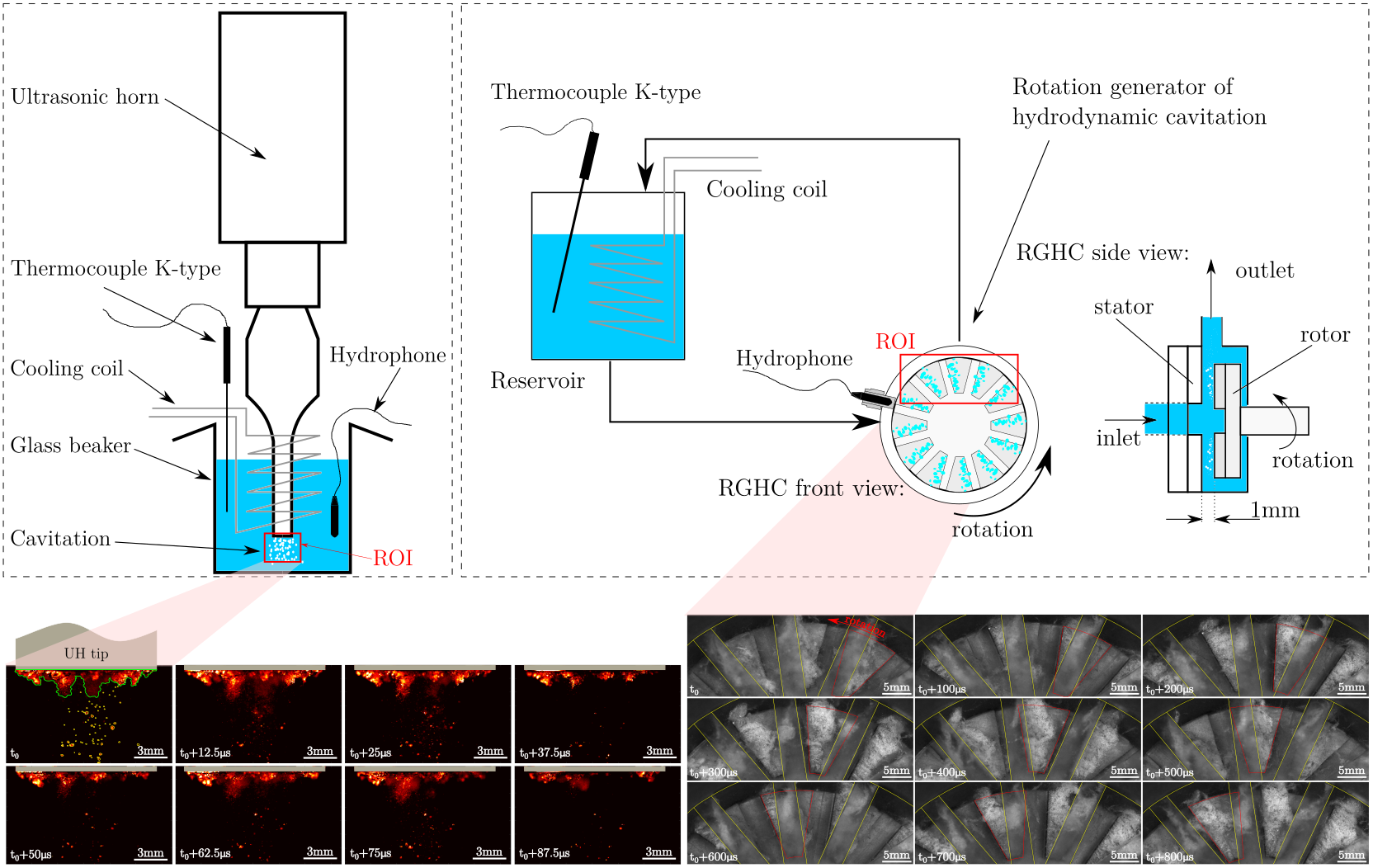
The study was carried out within the ARRS interdisciplinary core project J7-1814, which addresses the issue of microplastics in the environment. The purpose of the research was to address the degradation of PVOH at laboratory scale using acoustic and hydrodynamic cavitation. We systematically studied the effects of different operating conditions on the length of polymer chains and pointed to possible mechanisms responsible for their degradation.
Photo gallery
Authors: Martin Petkovšek1, Andrej Kržan2, Alenka Šmid3, Ema Žagar2, Mojca Zupanc1
1 Faculty of Mechanical Engineering, University of Ljubljana
2 Department of Polymer Chemistry and Technology, National Institute of Chemistry
3 Faculty of Pharmacy, University of Ljubljana
Source:
PETKOVŠEK, Martin, KRŽAN, Andrej, ŠMID, Alenka, ŽAGAR, Ema, ZUPANC, Mojca. Degradation of water soluble poly(vinyl alcohol) with acoustic and hydrodynamic cavitation: laying foundations for microplastics. npj clean water. April 2023, vol. 6, str. 1-11, ilustr. ISSN 2059-7037. https://www.nature.com/articles/s41545-023-00248-8, https://repozitorij.uni-lj.si/IzpisGradiva.php?id=145650, DOI: 10.1038/s41545-023-00248-8. [COBISS.SI-ID 150832899]