Only if artificial intelligence is developed responsibly will it be capable of supporting a sustainable future
Bor Slana/STA
Date of publication:
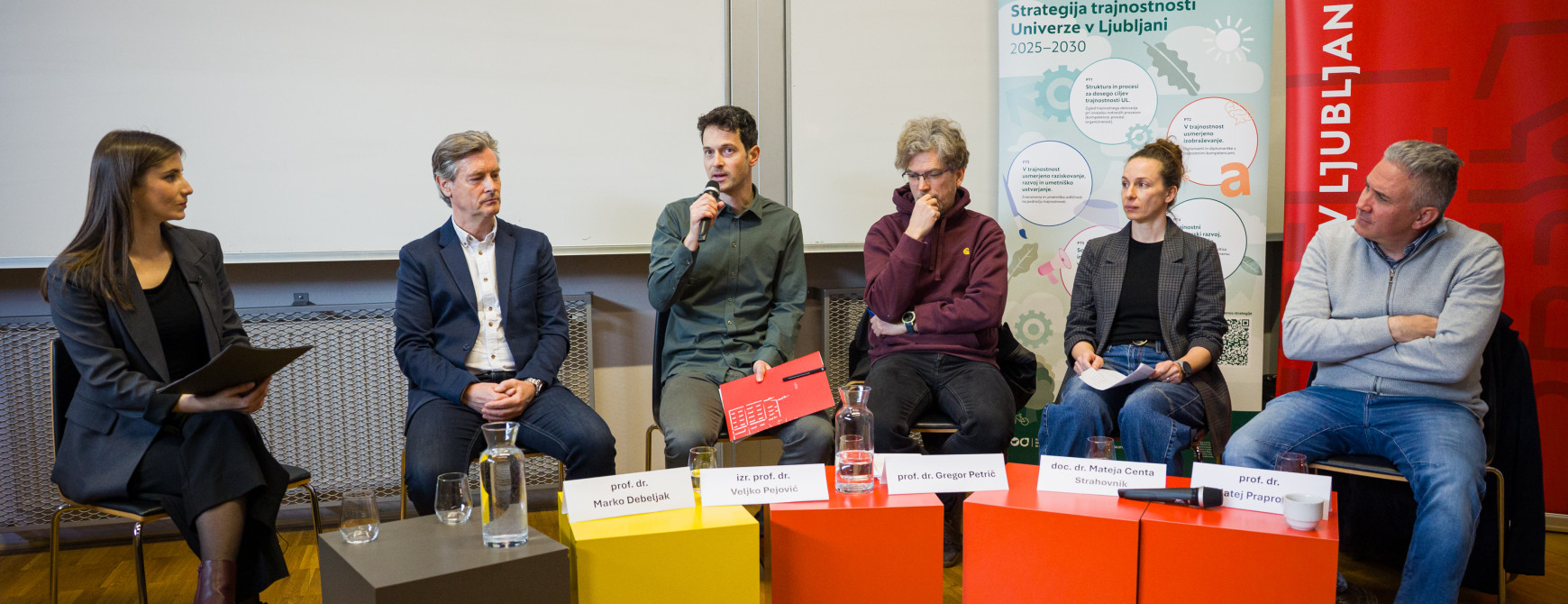
On 16 March we opened this year’s Food For Thought festival at the Faculty of Computer and Information Science (UL FRI) with a round-table discussion titled “Code to Drive a Better World: Challenges and Opportunities in the Development of Artificial Intelligence for Delivering a Sustainable Future”. The discussion focused on how AI might support sustainable development goals, and where the new environmental, social and ethical issues could arise.
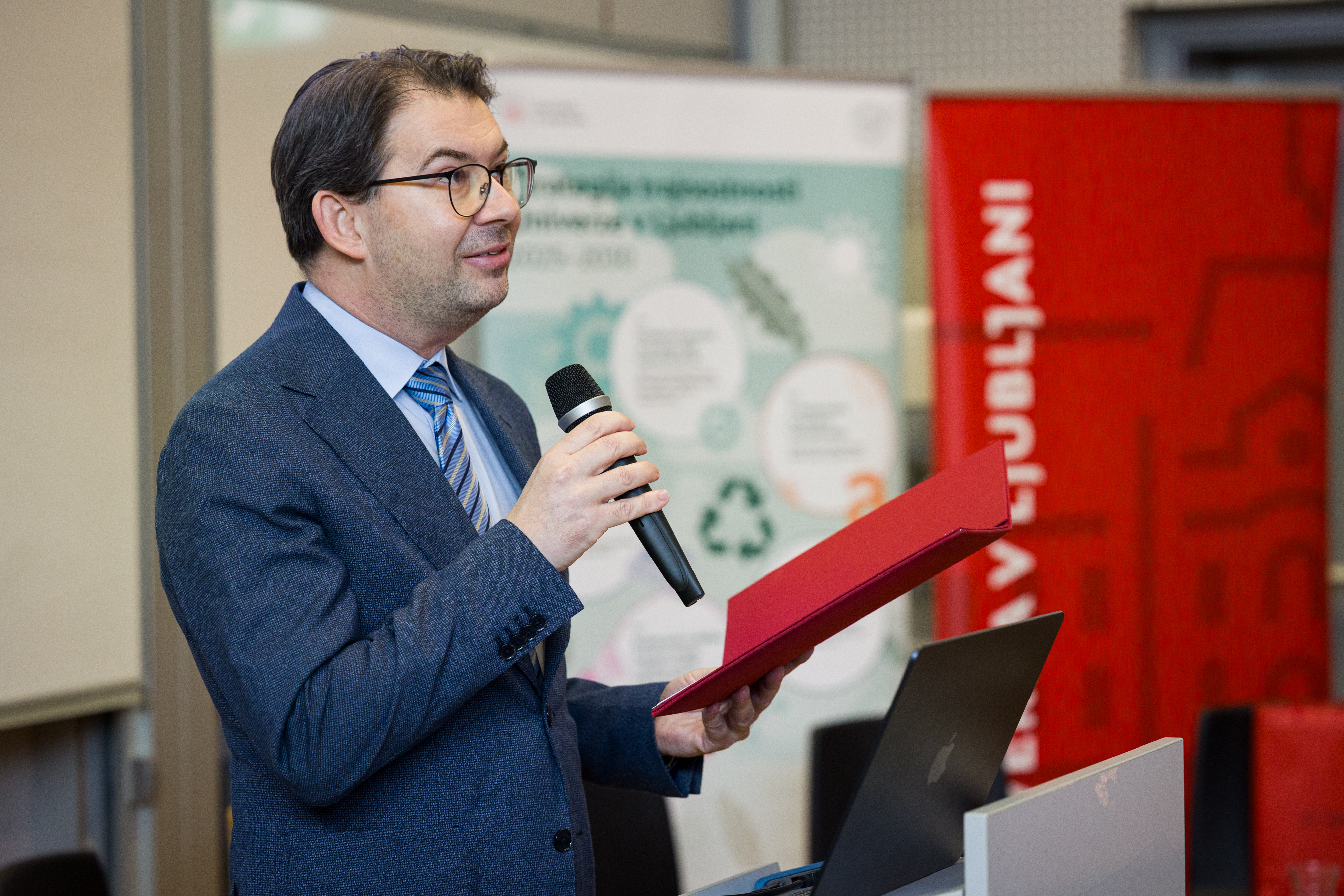
The festival began with an address by Professor Janez Vogrinc, Vice-Rector for Quality and Sustainability, who stressed that the events were aimed at “highlighting both the social and environmental aspects of the development and use of new digital technologies and, at the same time, exploring how and under what circumstances digital solutions might support a more sustainable future.”
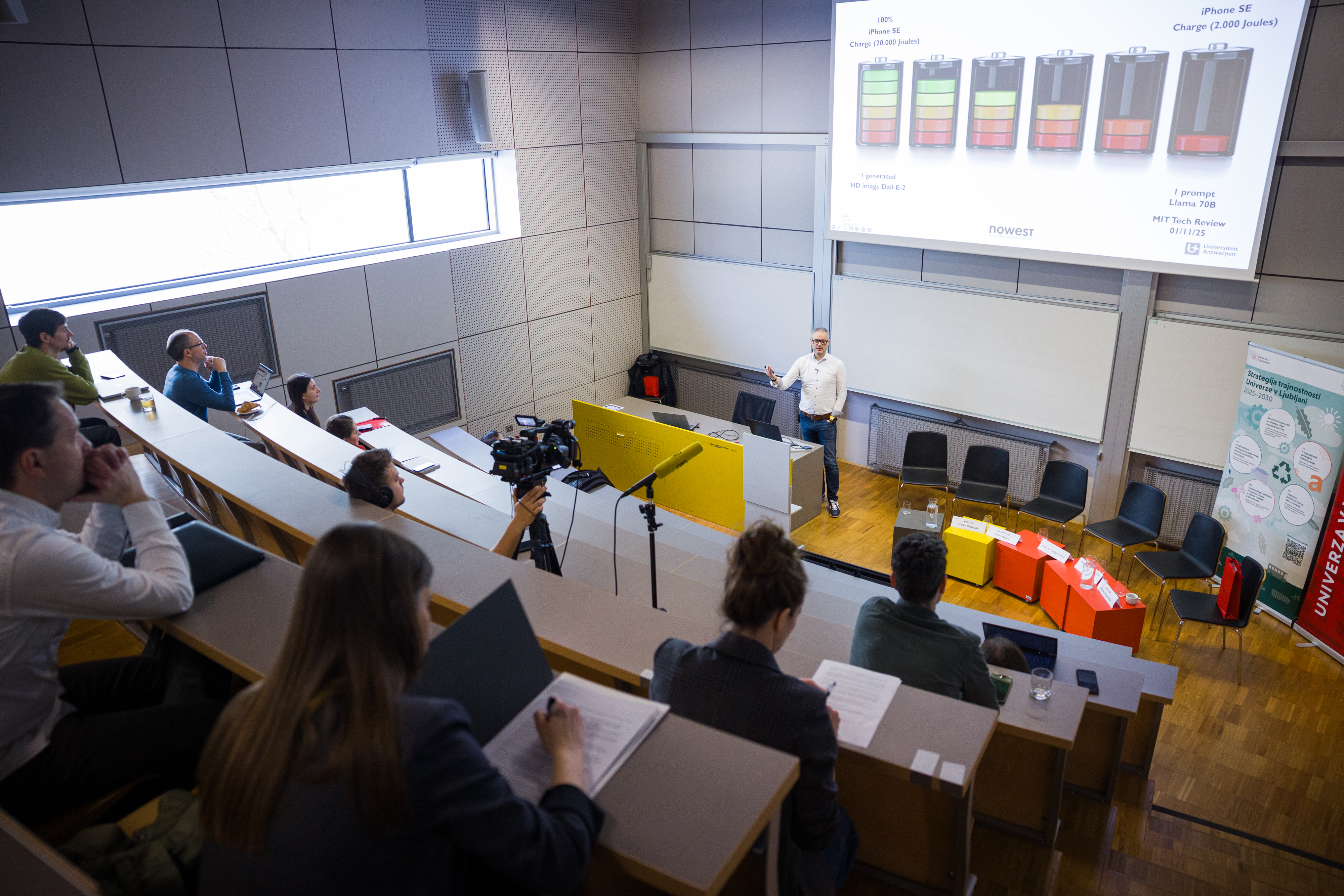
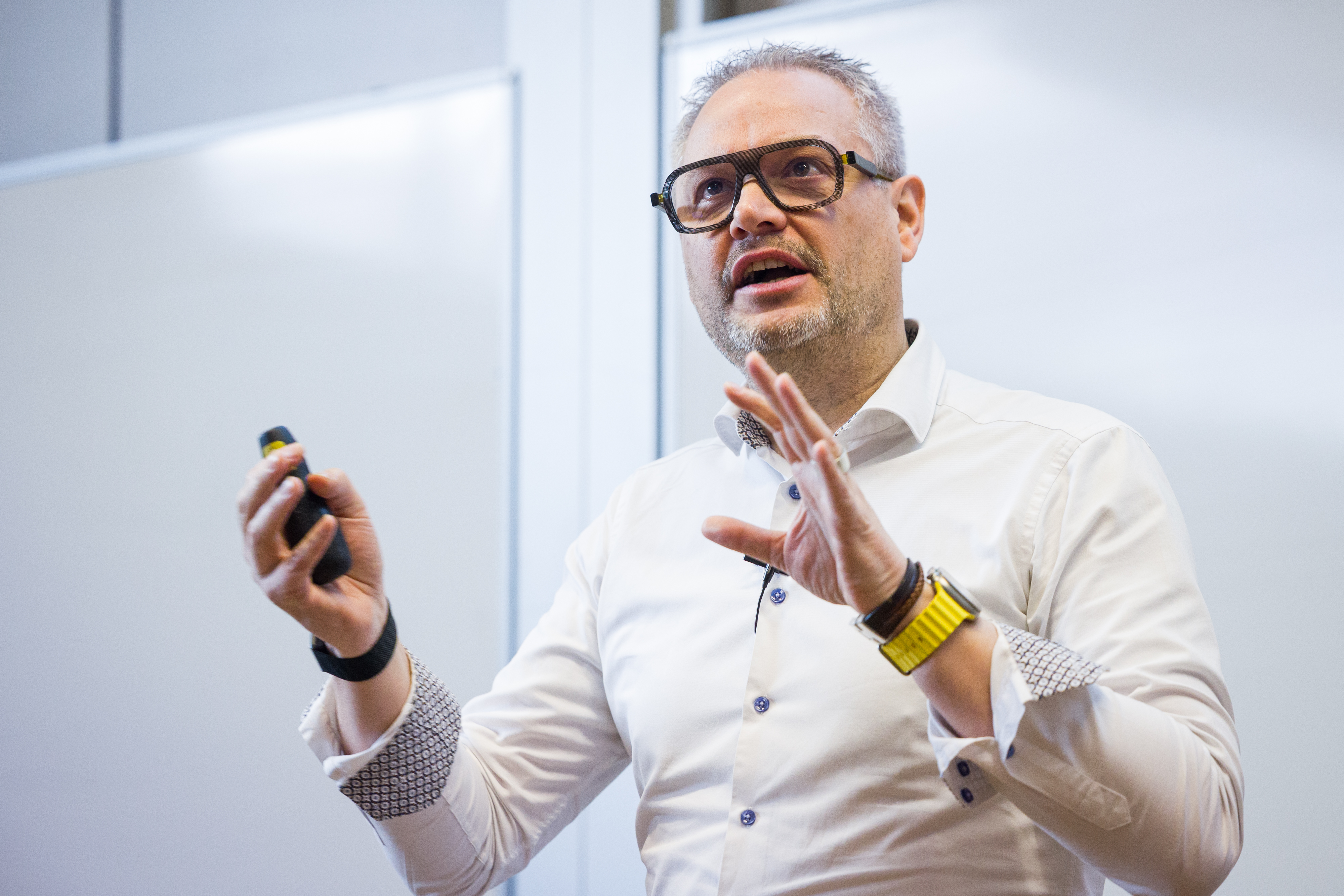
This was followed by a plenary lecture by Professor Erik Mannens, an eminent expert in sustainable AI, professor at the universities of Antwerp and Ghent, and author of the book Sustainable AI. He devoted his lecture, which was titled “Sustainable AI – From paradoxes towards synergies between sustainability and AI”, to a presentation of the key connections and tensions between AI development and sustainability. He also highlighted the importance of designing schemes or scales for evaluating the use of AI that could help inform researchers as well as end-users of how sustainable (or indeed unsustainable) existing modes of AI are in terms of their impact on the environment, humanity and society. Professor Mannens highlighted some of the key criteria for evaluating individual AI solutions or uses. These included “efficiency, energy consumption, openness of access and support for circular economy principles”. He was particularly critical of the uncritical use of large language models and other day-to-day aspects of AI use in terms of energy consumption, warning that “the information and telecommunications industry is currently responsible for around 10% of the world’s electricity consumption. If no action is taken, this will rise to 20% by 2030.” Professor Mannens highlights critical considerations of the long-term environmental and social impacts as a key guiding principle of AI use, and particularly the alignment of the purpose and objectives of AI use with the resolution of sustainability-related challenges.
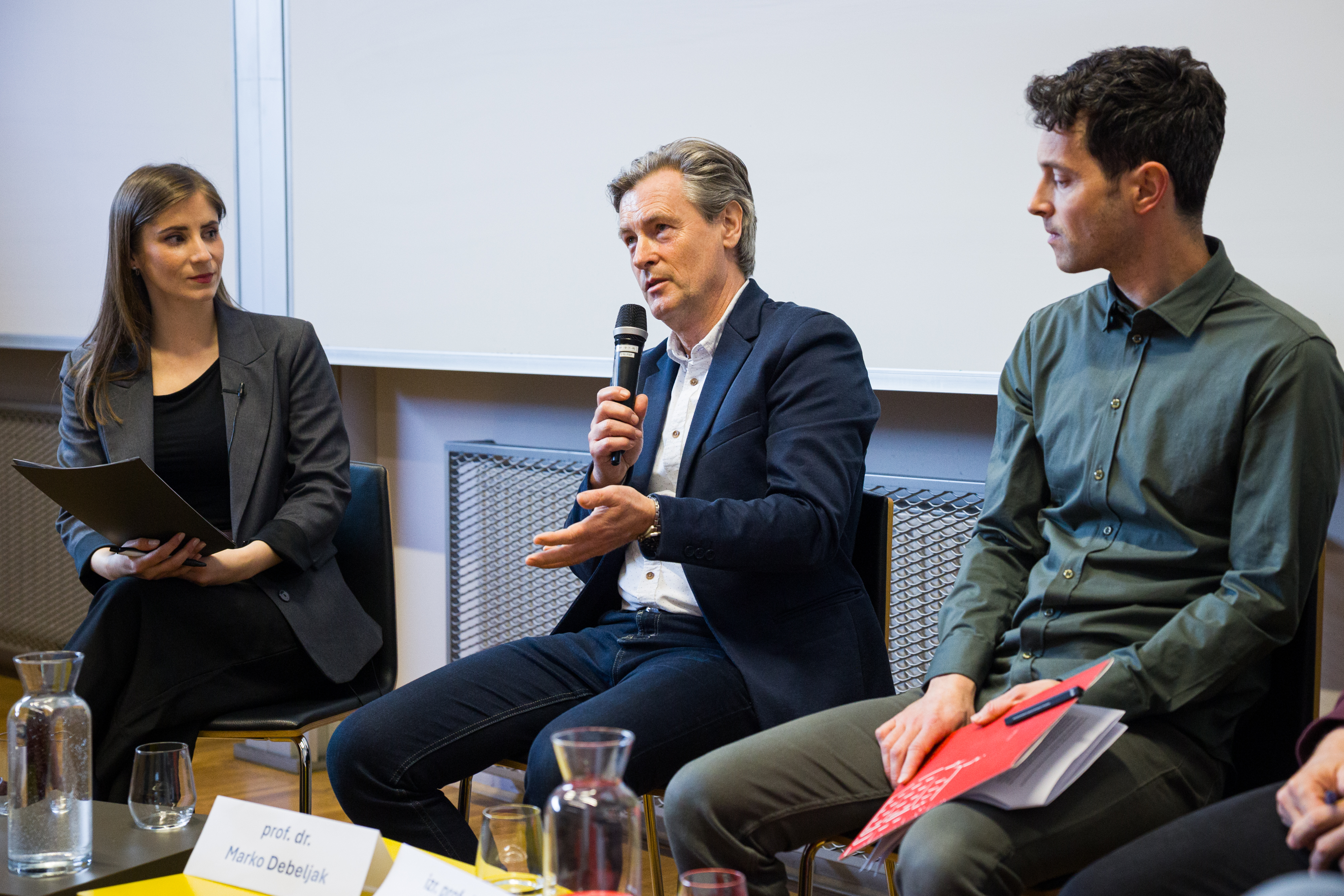
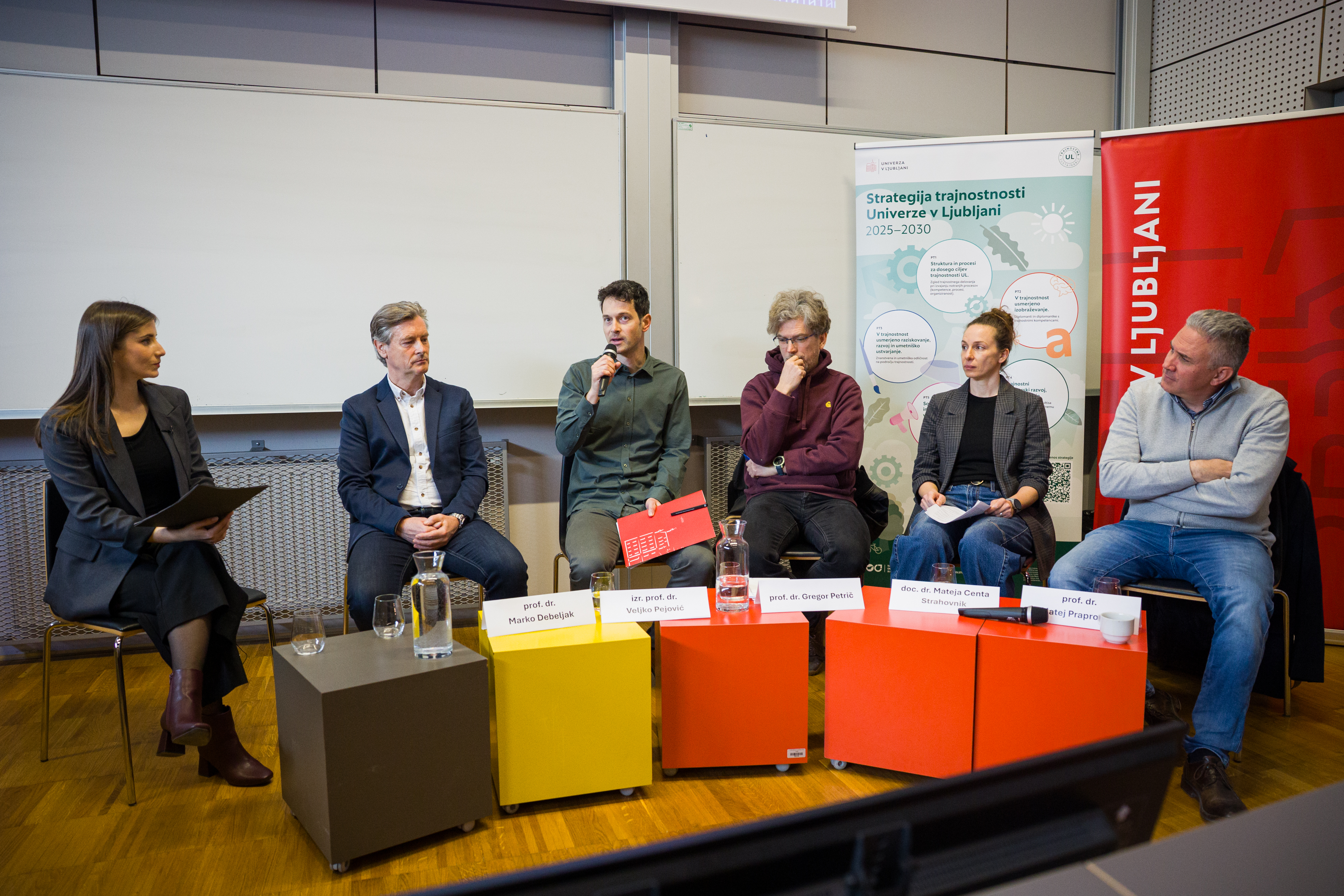
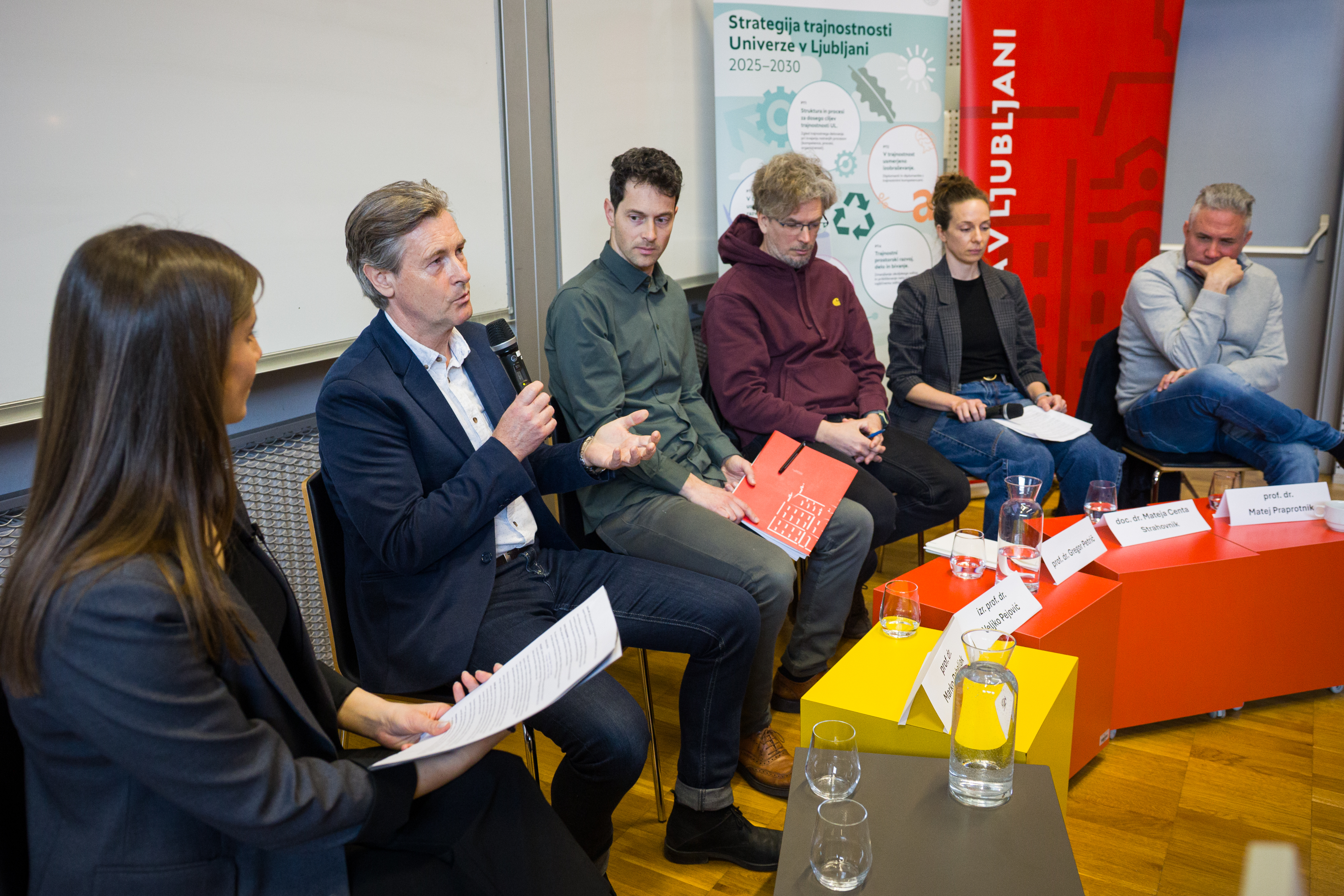
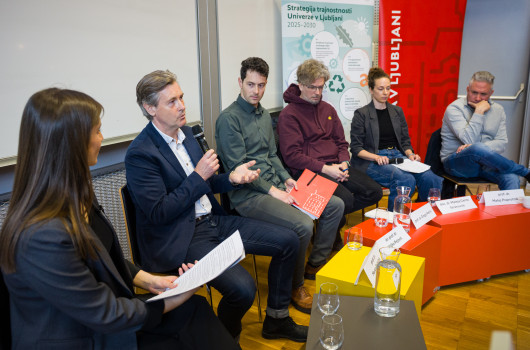
The lecture was followed by a round-table discussion featuring Assistant Professor Mateja Centa Strahovnik from the Faculty of Theology, Professor Marko Debeljak from the Jožef Stefan Institute, Professor Matej Praprotnik from the National Institute of Chemistry, Associate Professor Veljko Pejović from the Faculty of Computer and Information Science, and Professor Gregor Petrič from the Faculty of Social Sciences.
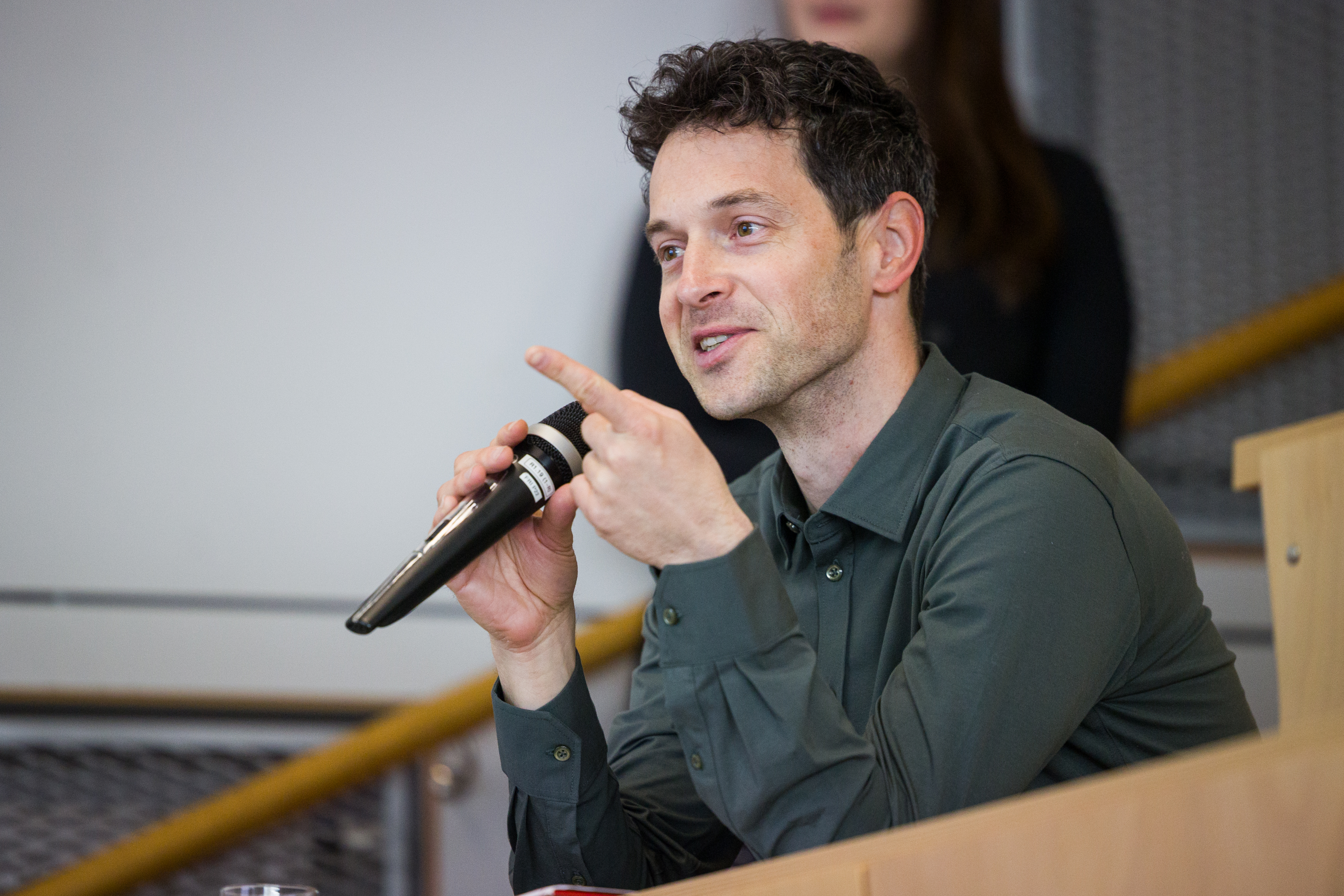
The discussion looked at how energy-intensive today’s AI models were, particularly the large generative models, and how we might promote the development of more specialised, more efficient and more sustainable solutions. Associate Professor Veljko Pejović drew attention to the considerable need for energy and data infrastructure, and stressed that we also had to recognise the current (positive) contributions being made to sustainability by digital solutions. He also highlighted the material aspect of digital infrastructure, since data centres consumed enormous quantities of electricity and water for AI operations. We therefore also had to consider whether digital solutions brought benefits commensurate with that consumption.
Professor Matej Praprotnik from the National Institute of Chemistry and the Faculty of Computer and Information Science focused on how AI was changing scientific methods to an ever-greater degree. For him, the greatest potential came from the integration of classic physical models and AI methods, as this helped accelerate the development of new materials and drugs and enabled natural phenomena to be predicted with greater accuracy – if the main data was of sufficiently high quality and the research infrastructure adequate, of course.
Professor Marko Debeljak from the Jožef Stefan Institute pointed out that AI was opening up new possibilities for analysing complex natural systems. This was particularly important when researching complex natural ecosystems and developing sustainable farming solutions, since AI enables patterns to be discerned that are simply overlooked with existing conventional methods.
Professor Gregor Petrič warned that social inequalities could even widen if AI were not deployed properly, since systems were frequently based on partial data or accessible mainly to those with more knowledge and greater digital skills. It was therefore vital, he said, to promote digital literacy, a critical understanding of how systems work and responsible use of technology.
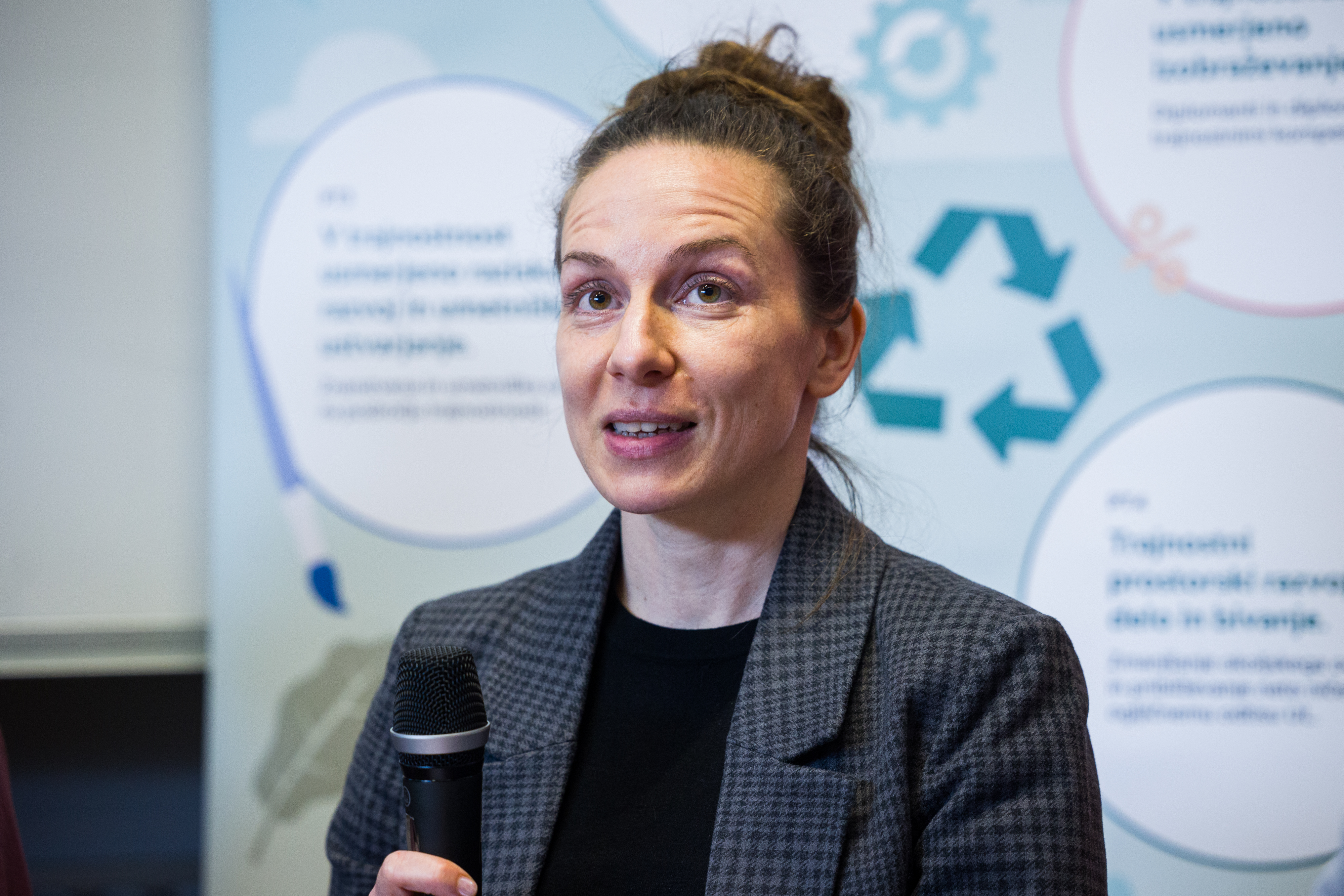
Assistant Professor Mateja Centa Strahovnik addressed the issue of values and identity in the digital age, and stressed that it was imperative for ethical considerations to accompany all phases of AI development. In her opinion, the key question was how to incorporate ethical considerations of the social consequences into AI development, as the drive to do so was moving more slowly than the pace at which the technology was being developed.
The event threw light on the importance of linking science, ethics and technologies, and the need for responsible AI development capable of providing genuine support for a sustainable future.
Round-table discussion
Photo gallery
-
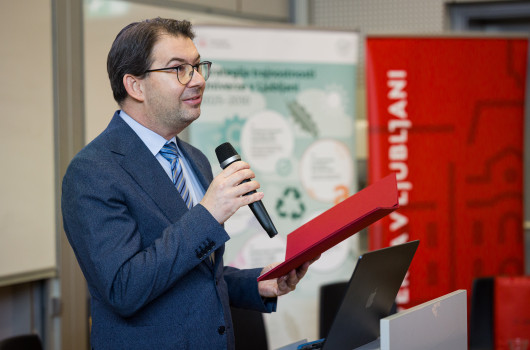
Address by Professor Janez Vogrinc, Vice-Rector for Quality and Sustainability.
Author: Bor Slana, STA
-
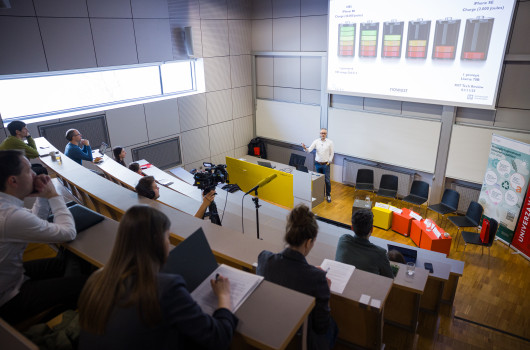
Plenary lecture by Professor Erik Mannens.
Author: Bor Slana, STA
-
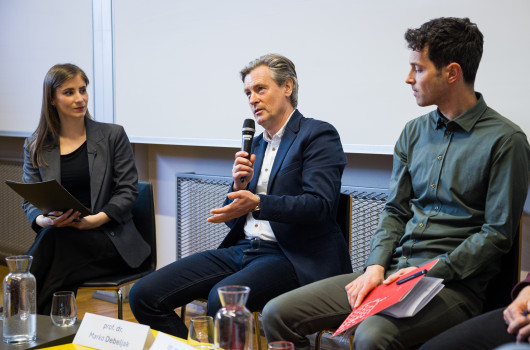
Associate Professor Veljko Pejović.
Author: Bor Slana, STA
-
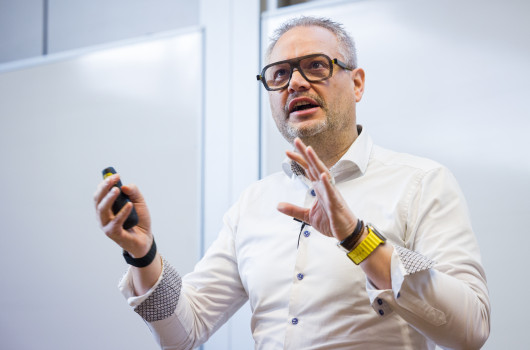
Prof. dr. Erik Mannens.
Author: Author: Bor Slana, STA
-
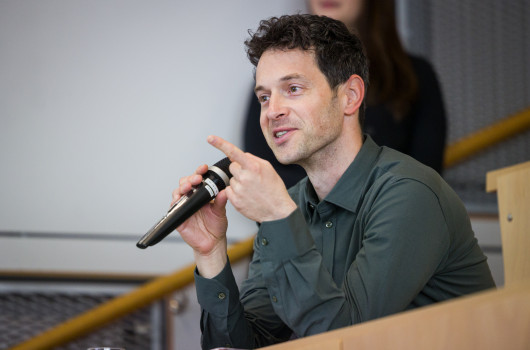
Associate Professor Veljko Pejović.
Author: Bor Slana, STA
-
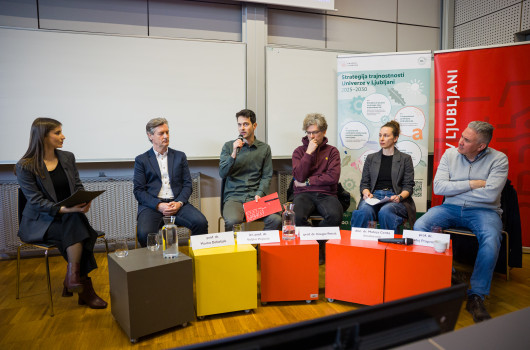
Round-table discussion.
Author: Bor Slana, STA
-
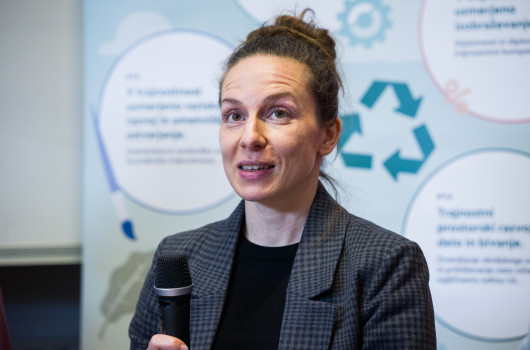
Assistant Professor Mateja Centa Strahovnik.
Author: Bor Slana, STA
-
Professor Marko Debeljak.
Author: Bor Slana, STA