
News
Customize list
Results
Number of results: 12
-

When Time Saved Turns into More Work
Artificial intelligence helps us complete tasks faster. Yet the time we save is often filled with new work. Research on digital overload, work intensity, sleep, recovery, and human sustainability raises an important question: are we recovering as quickly as we are using up our energy?
-

Assistant Professor Svit Komel first Slovenian recipient of the Bader Prize
Assistant Professor Svit Komel of the Faculty of Law at the University of Ljubljana is the first Slovenian to receive the prestigious Bader Prize of the Austrian Academy of Sciences for the best work by early-career researchers in the field of the history of science. He received the award for his doctoral dissertation Rule and Measure: A History of Juridical Practices in the Age of Surveys.
-

Slovene language obtains its own generative large language model GaMS
Researchers at the University of Ljubljana have developed a generative large language model for Slovene GaMS, which places Slovene alongside languages for which advanced open-source artificial intelligence models already exist. This achievement marks an important step towards Slovenia’s technological sovereignty, as it enables the development and use of artificial intelligence tailored to the Slovene language, culture, and the needs of its users.
-
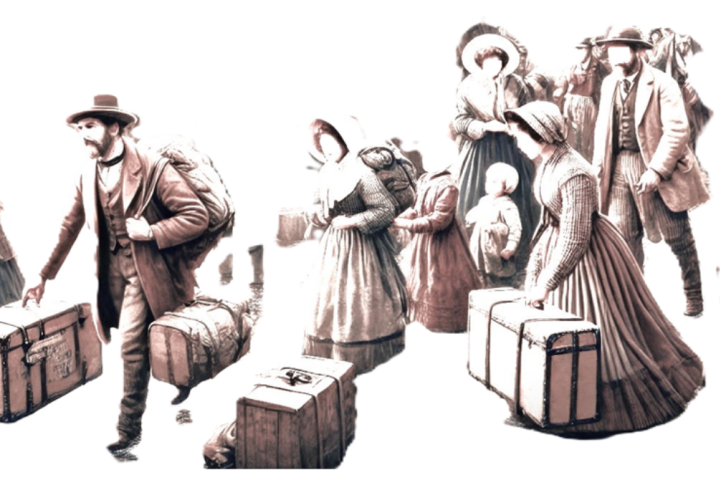
A Marie Skłodowska-Curie postdoctoral project to challenge narratives on migrant women
Dr Sara Delmedico (PhD, University of Cambridge) is the recipient of the prestigious Marie Skłodowska-Curie postdoctoral fellowship. As part of her fellowship, she will conduct research on how Italian-speaking women migrating from Northern Italy and the former Austro-Hungarian territories to the Americas were represented and represented themselves. She will be mentored by Professor Marta Verginella, Department of History, Faculty of Arts, University of Ljubljana.
-

Understanding and Addressing the Challenges of Hybrid Work: Key Challenges and Opportunities for Organizations
The study reveals how hybrid work affects employee well-being and organizational culture.
-
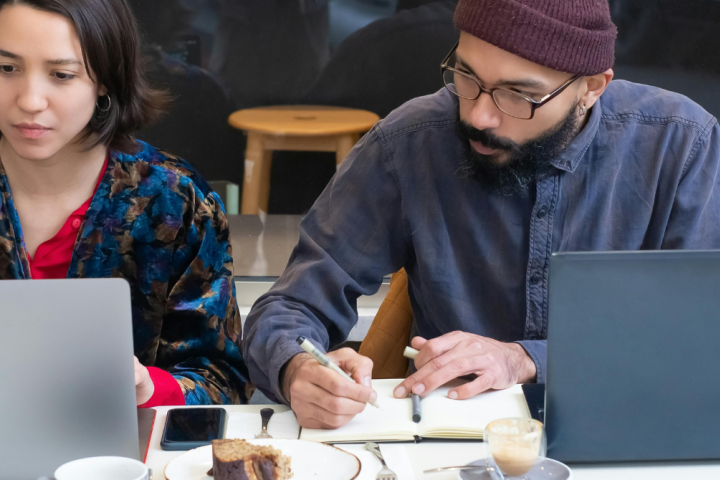
Digital Nomads Reveal the Future of Work: What Do Their Stories on Reddit Tell Us?
The way we work has changed significantly in recent years, and in the coming years, it will become even more digital, mobile, and tailored to individuals. Digital nomads play a crucial role in this transformation. What drives them to choose this lifestyle, how do they shape their careers, and in what ways do they build their networks? Answers to these questions are provided by a study, which included Professor Dr. Matej Černe from the School of Economics and Business at the University of Ljubljana, analyzing over 66,000 discussions on the Reddit forum Digital Nomad.
-

In Slovenia, the majority of employees from third countries have vocational or secondary education
In Bulgaria and Slovenia, 80% of companies employed workers from third countries, while in Croatia and Slovakia, two-thirds of companies did so, and in Hungary only one-third. The most educated foreign workers were employed by companies in Bulgaria and Hungary, where over 40% of foreign workers held a university degree. On the other hand, three-quarters of foreign employees in Croatian companies had only primary or vocational education, while in Slovenia and Slovakia, this figure was around 60%.
-
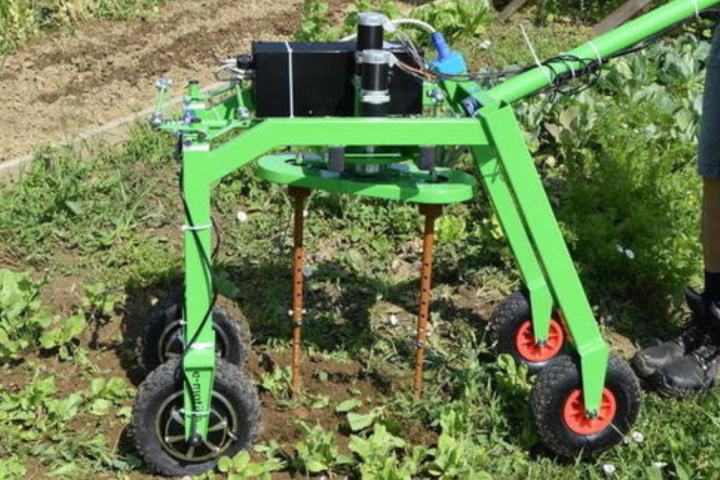
Sustainable Use of Soil with E-MOTIKA
Tillage machines are a necessity in agriculture, but they compact the soil and do not allow smaller farmers and growers to till and weed in an environmentally friendly and sustainable manner. Researchers from the Faculty of Mechanical Engineering of the University of Ljubljana, together with project partners on the Accelerated Vegetable Hoeing project - "MOTIKA," addressed this challenge by developing a hoeing machine specifically for smaller farmers and crop growers.
-
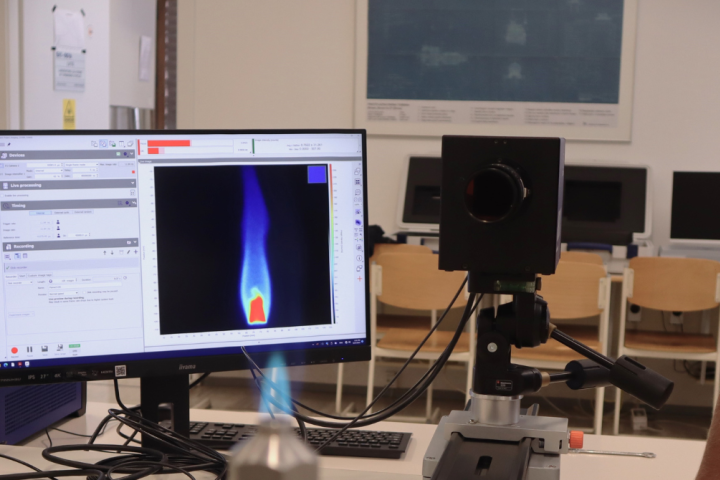
Faculty of Mechanical Engineering Successful in MSCA Doctoral Networks Call
The University of Ljubljana, Faculty of Mechanical Engineering, has been successful in the Horizon Europe Marie Skłodowska-Curie Actions (MSCA) Doctoral Networks call with the project UPCYCLE – Dissemination of Advanced Conversion Routes for Hard-to-Recycle Biogenic Waste. As part of the project, 15 doctoral candidates will be trained, three of whom will be based in Slovenia. The project is coordinated by Politecnico di Milano, with UL FS participating as a partner.
-

Reorganization of Social Work Centers Between Declared and Actual
How successful was the reorganization of Social Work Centers (SWC), implemented in 2018 by the Ministry of Labor, Family, Social Affairs, and Equal Opportunities? The ministry, SWC employees, and users have different opinions. This was found in the doctoral dissertation "Evaluation of the Reorganization of Social Work Centers in the Republic of Slovenia from the Perspective of Selected Public Governance Models" by Dr. Matej Babšek from the Faculty of Public Administration at the University of Ljubljana. This exceptional work earned him the Mzia Mikeladze award, presented by the Network of Institutes and Schools of Public Administration in Central and Eastern Europe (NISPAcee) for outstanding doctoral dissertations in the field of public administration and public policies.
-
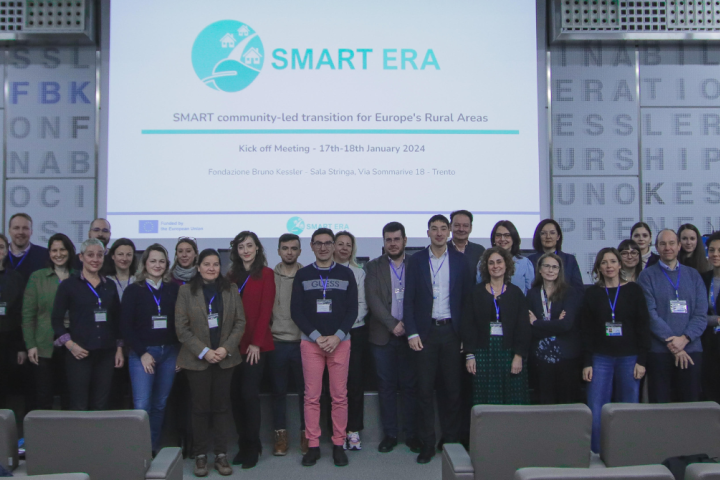
SMART ERA: SMART Community-led Transition for Europe's Rural Areas
Europe's rural areas are facing processes of depopulation, particularly of young people, which is leading to an ageing demographic profile. This is causing a number of structural problems, such as fewer jobs, deteriorating infrastructure and a shrinking supply of services of general interest. On the other hand, development of digital technologies and the increase in remote work have also led to a reverse trend of rural in-migration, which was most evident during the COVID-19 pandemic. These trends can be harnessed for rural growth through smart adaptation strategies, development of new integrated solutions, and the integration of local knowledge and cultural heritage.
-

Biotechnical Faculty and partners free up potential European rural areas for transition to circular bioeconomy
Based at the Biotechnical Faculty of the University of Ljubljana, a new Horizon Europe coordination and support project is underway to develop a working framework for introducing circular small-scale bio-based solutions in rural areas. Assoc. Prof. Dr Luka Juvančič, head of the project at the Biotechnical Faculty in the Chair for Agrarian Economics, Policy Law of the Animal Science Department, explains: “The aim of the BioRural project is to address economic, demographic and climate challenges for the most remote rural communities, through the presentation of circular technological and organisational solutions in various fields of bioeconomy (agricultural and food systems, the forest-wood chain, water systems, bioenergy, biomaterials).” He pointed out that European rural areas should not just succumb to the role of a source of raw materials for the bioeconomy, but should strengthen local value chains that will contribute to increased income and new rural employment.


