
News
Customize list
-
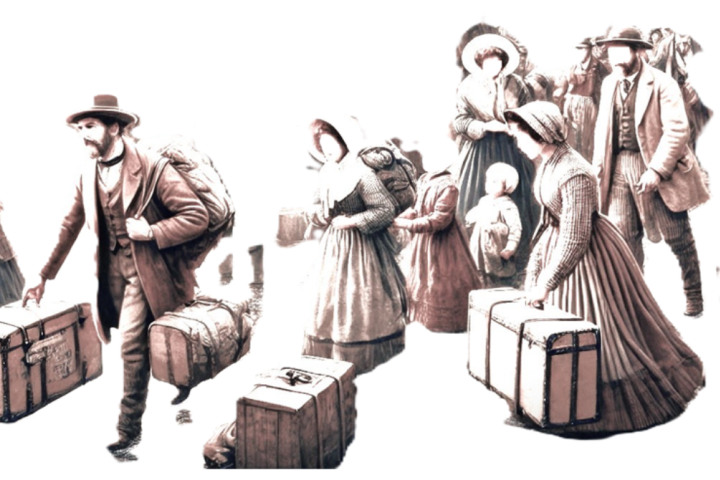
A Marie Skłodowska-Curie postdoctoral project to challenge narratives on migrant women
Dr Sara Delmedico (PhD, University of Cambridge) is the recipient of the prestigious Marie Skłodowska-Curie postdoctoral fellowship. As part of her fellowship, she will conduct research on how Italian-speaking women migrating from Northern Italy and the former Austro-Hungarian territories to the Americas were represented and represented themselves. She will be mentored by Professor Marta Verginella, Department of History, Faculty of Arts, University of Ljubljana.
-

How to Improve the Position of Young Carers?
Across Europe, thousands of children and young people care for ill, disabled, or addicted family members – often in silence and without recognition. Young carers represent a vulnerable and frequently overlooked group whose needs are too often neglected in public policies. The path toward including their voices in policy-making is being opened by the international project OUR VOICES, implemented by the Faculty of Social Sciences at the University of Ljubljana.
-

How is new knowledge created, who produces it, and how is it transferred to new generations of researchers?
Relationships between doctoral students and their supervisors play a key role in the production of knowledge. This particular form of scientific collaboration is being studied at the Centre for Methodology and Informatics, Faculty of Social Sciences, University of Ljubljana. Their findings show that successful knowledge transfer depends not only on the motivation of the mentees, but also on the quality of supervision. Moreover, having more than one supervisor contributes to the successful completion of a doctorate.
-
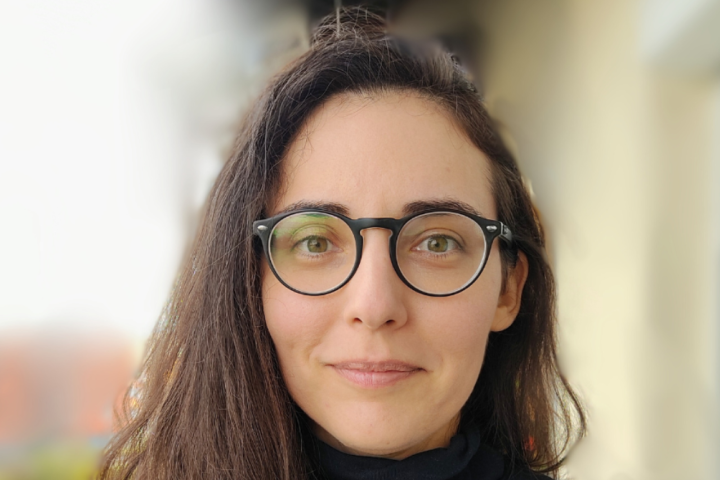
Assist. Prof. Dr. Jasmina Šepetavc Recipient of the Prestigious ERC Starting Grant for the QEAST Project
Assist. Prof. Dr. Jasmina Šepetavc, researcher at the Centre for Cultural and Religious Studies (CCRS) at the Faculty of Social Sciences, University of Ljubljana, is the recipient of a prestigious European Research Council (ERC) Starting Grant. She received the grant for the project QEAST.
-

Digital Maturity of Young People in Slovenia
Young people acquire most of their digital skills from their peers, while schools often lack sufficient digital content. The two main challenges they face in the digital world are digital illiteracy—both their own and that of teachers and parents—and the need for digital disconnection. These findings come from the research project Digital Maturity of Youth, conducted by the Faculty of Social Sciences and the Faculty of Education at the University of Ljubljana.
-

Half of the homeless people in Ljubljana have been without a home for more than five years
Homelessness in Slovenia is not being adequately addressed. This is evident from data showing that nearly half of homeless individuals have been without a home for over five years. The main reasons for homelessness are family issues and financial hardship.
-

You're Never Too Old to Be Scammed Online – and Cybercriminals Know It
Older adults are increasingly facing online scams and cyber threats. Due to less experience and greater trust in others, they are often targeted by attackers. However, not all older internet users are equally vulnerable – their digital skills and needs vary greatly.
-

Digital Nomads Reveal the Future of Work: What Do Their Stories on Reddit Tell Us?
The way we work has changed significantly in recent years, and in the coming years, it will become even more digital, mobile, and tailored to individuals. Digital nomads play a crucial role in this transformation. What drives them to choose this lifestyle, how do they shape their careers, and in what ways do they build their networks? Answers to these questions are provided by a study, which included Professor Dr. Matej Černe from the School of Economics and Business at the University of Ljubljana, analyzing over 66,000 discussions on the Reddit forum Digital Nomad.
-

In Slovenia, the majority of employees from third countries have vocational or secondary education
In Bulgaria and Slovenia, 80% of companies employed workers from third countries, while in Croatia and Slovakia, two-thirds of companies did so, and in Hungary only one-third. The most educated foreign workers were employed by companies in Bulgaria and Hungary, where over 40% of foreign workers held a university degree. On the other hand, three-quarters of foreign employees in Croatian companies had only primary or vocational education, while in Slovenia and Slovakia, this figure was around 60%.
-

Reorganization of Social Work Centers Between Declared and Actual
How successful was the reorganization of Social Work Centers (SWC), implemented in 2018 by the Ministry of Labor, Family, Social Affairs, and Equal Opportunities? The ministry, SWC employees, and users have different opinions. This was found in the doctoral dissertation "Evaluation of the Reorganization of Social Work Centers in the Republic of Slovenia from the Perspective of Selected Public Governance Models" by Dr. Matej Babšek from the Faculty of Public Administration at the University of Ljubljana. This exceptional work earned him the Mzia Mikeladze award, presented by the Network of Institutes and Schools of Public Administration in Central and Eastern Europe (NISPAcee) for outstanding doctoral dissertations in the field of public administration and public policies.
-

10 Steps to a National System for Monitoring the Physical Fitness of Children and Adolescents According to Recommendations from the FitBack Network
In an era where children and adolescents are increasingly exposed to sedentary lifestyles and screen time, the question arises on how to reverse the trend of their continuous decline in physical fitness. A recent study published in the Scandinavian Journal of Medicine and Science in Sports, prominently featuring researchers from the SLOfit team, offers a solution—systematic monitoring of physical fitness at both individual and population levels. There are several such national systems currently in existence—how do they differ? What are their advantages, and where are their limitations? Most importantly, how can we design and establish such a system using the best practices in 10 steps?
-

Despite numerous cases, familial Hypercholesterolaemia is still insufficiently recognised and treated
Familial hypercholesterolaemia, an inherited disorder accompanied by increased levels of LDL or ‘bad’ cholesterol and a greater susceptibility to the early onset of cardiovascular diseases, is still insufficiently recognised and treated, despite the high number of cases. This has been shown in the cross-sectional study ‘Familial hypercholesterolaemia in children and adolescents from 48 countries: a cross-sectional study’, which involved the participation of researchers from the University of Ljubljana Faculty of Medicine.
-
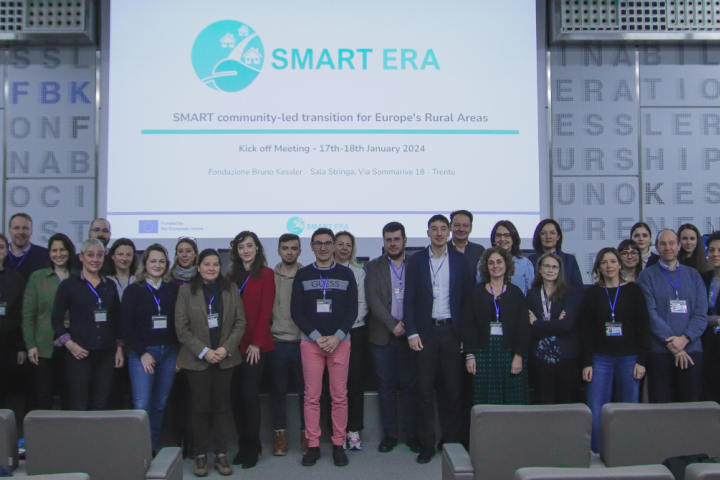
SMART ERA: SMART Community-led Transition for Europe's Rural Areas
Europe's rural areas are facing processes of depopulation, particularly of young people, which is leading to an ageing demographic profile. This is causing a number of structural problems, such as fewer jobs, deteriorating infrastructure and a shrinking supply of services of general interest. On the other hand, development of digital technologies and the increase in remote work have also led to a reverse trend of rural in-migration, which was most evident during the COVID-19 pandemic. These trends can be harnessed for rural growth through smart adaptation strategies, development of new integrated solutions, and the integration of local knowledge and cultural heritage.
-

The DIACOMET Project has Begun: Dialogue Expands Horizons
A new EU-funded project DIACOMET, involving ten European universities, media companies, non-governmental and research organizations, started with a kick-off meeting at Vytautas Magnus University (VMU) in Lithuania.


