
News
Customize list
-

The Sea Is More Than a Resource: Study Reveals How People Value It in the Northern Adriatic
Residents of the northern Adriatic do not see the sea merely as a space for tourism or economic activity. For them, it is also a space of identity, heritage and shared values. They therefore stress that protecting the sea is not only an environmental issue, but also a matter of preserving communities and their identity.
-

Professor Nina Gunde-Cimerman Becomes the Second Slovenian Woman Elected to EMBO
Professor Nina Gunde-Cimerman of the Department of Biology at the Biotechnical Faculty, University of Ljubljana, has been elected to the European Molecular Biology Organisation (EMBO), one of the world\'s most prestigious organizations in the life sciences. As the second woman from Slovenia and only the sixth Slovenian researcher overall, she has received this recognition, which is awarded by the international scientific community for outstanding research achievements and an exceptional contribution to the advancement of science.
-
New methods for removing algae from drinking water
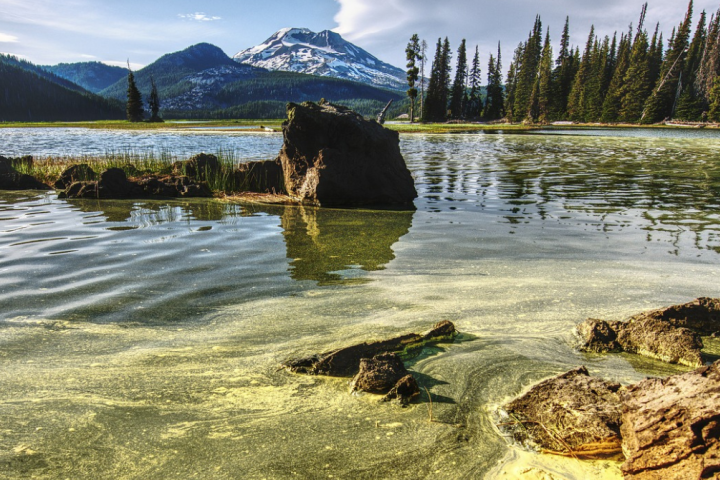
How to remove algae from drinking water? Since traditional methods, such as coagulation and sedimentation, are usually ineffective, Prof. Dr. Matevž Dular from the Laboratory for Water and Turbine Machines (LVTS) at the Faculty of Mechanical Engineering, together with colleagues from Yangzhou University, sought a solution in the use of ultrasound and advanced carbon-based materials.
-
Using cavitation to break down invisible water pollutants
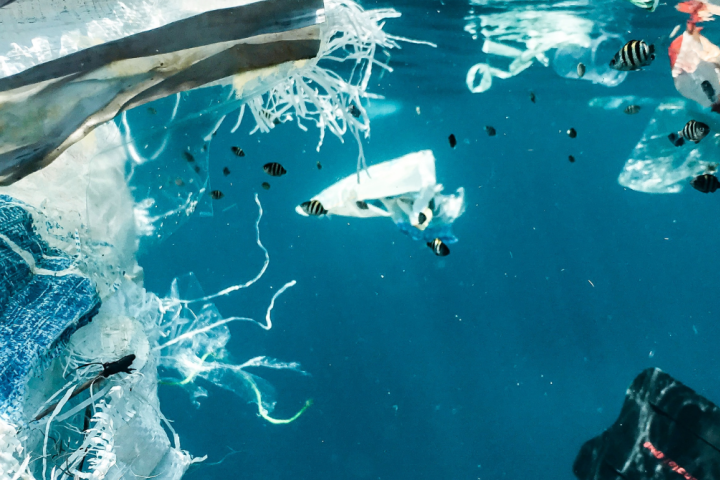
Researchers from the Faculty of Mechanical Engineering and the National Institute of Chemistry conducted an experimental study in which they achieved the degradation of a water-soluble synthetic polymer - poly(vinyl alcohol) PVOH - by acoustic and hydrodynamic cavitation. The use of PVOH is rapidly increasing, and as a result, increasing amounts of this material are being released into the environment. PVOH is widely used in the textile and paper industries, as well as in households, for example in the form of detergent pods. It is estimated that thousands of tons of it are washed into the aquatic ecosystem every year.


