
News
Customize list
Results
Number of results: 46, page 3 of 3
-

How do wild animals react to human presence in their environment?
Understanding how animals respond to people is becoming increasingly important in the face of growing disturbances such as tourism, recreation, driving in natural environment and the exploitation of natural resources. To this end, researchers from around the world have pooled their data to find out how wild animals respond to people in their environments. The results showed considerable differences among different species, with large carnivores proving to be the most sensitive to humans. Part of the research was also carried out in Slovenia, where researchers from the University of Ljubljana’s Biotechnical Faculty and the Slovenia Forest Service observed the strongest response in brown bears. The researchers hope that the new knowledge will facilitate coexistence between humans and animals, and enable more effective mitigation of the negative impact of recreation and other human activities in nature.
-

Researchers from UL unexpectedly discovered new way of foraging by spotted hyenas in Africa
Spotted hyenas are the second largest species of large carnivore in Africa. Most people know them as scavengers, but they are in fact also successful hunters of antelope, zebra and other African ungulates. Little is known about their feeding on smaller prey. In Namibia, researchers from the University of Ljubljana have discovered an unusual and hitherto unknown way of feeding the local hyenas - on songbirds.
-

Dr. Nina Vesel recieved prestigious EMBO Postdostoral Fellowship
Dr Nina Vesel of the University of Ljubljana Biotechnical Faculty is the recipient of a prestigious Postdoctoral Fellowship from EMBO (European Molecular Biology Organization), aimed at supporting the mobility of postdoctoral researchers in Europe and around the world. This is a major success both for the researcher and for the UL Biotechnical Faculty, which succeeded in attracting back this outstanding researcher.
-

Biotechnical Faculty and partners free up potential European rural areas for transition to circular bioeconomy
Based at the Biotechnical Faculty of the University of Ljubljana, a new Horizon Europe coordination and support project is underway to develop a working framework for introducing circular small-scale bio-based solutions in rural areas. Assoc. Prof. Dr Luka Juvančič, head of the project at the Biotechnical Faculty in the Chair for Agrarian Economics, Policy Law of the Animal Science Department, explains: “The aim of the BioRural project is to address economic, demographic and climate challenges for the most remote rural communities, through the presentation of circular technological and organisational solutions in various fields of bioeconomy (agricultural and food systems, the forest-wood chain, water systems, bioenergy, biomaterials).” He pointed out that European rural areas should not just succumb to the role of a source of raw materials for the bioeconomy, but should strengthen local value chains that will contribute to increased income and new rural employment.
-

A controlled experiment tests the effectiveness of knowledge transfer in Slovenian agriculture for the first time
With agriculture accounting for around 10% of greenhouse gas emissions in the European Union, and with cattle farming contributing the largest share, there is an urgent need to increase the uptake of low-emission farming practices in this sector. Education and good advisory support play an important role in promoting such changes, enabling farmers to acquire new knowledge and change their attitudes towards this issue.
-
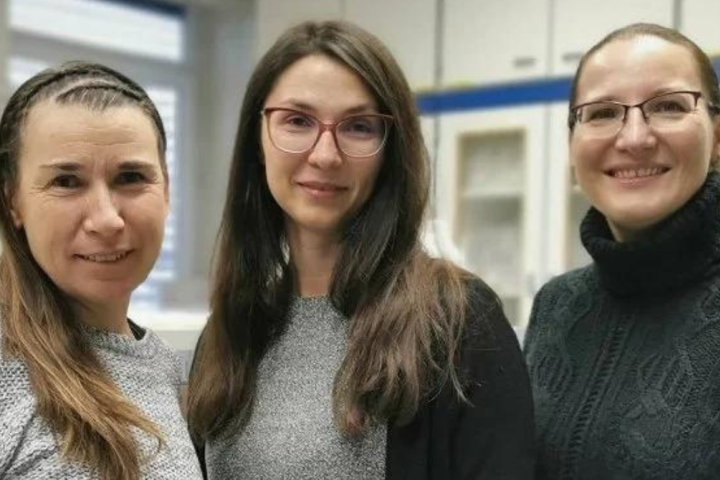
SIMBA innovation in the fight against superbacteria
Innovation offers faster and cheaper solution in finding new active substances in the fight against superbacteria
The growing phenomenon of superbacteria, as we call bacteria that are resistant to multiple antibiotics, is a global health problem. The problem is exacerbated by the merging of bacteria in biofilms, which offers them protection and survival in very harsh conditions and facilitates the transmission of resistance. For this very reason the global development of new antibiotics is focused on their effects on other properties of the bacteria, such as attaching bacteria to the surface, movement or interaction between bacteria, and not just on survival. The new orientation of development urgently requires a new methodology.


