
News
Customize list
-

Almost 2.8 million European funds for innovative student exercise programs
The Ministry of Cohesion and Regional Development has approved almost 2.8 million euros in European funds for the zMIGAJ! program. This program will provide young students with two extra hours of exercise per week, which they will co-create with their teachers. Encouraging regular exercise is essential for young people's health and well-being, especially as they are increasingly exposed to stress, sedentary lifestyles, and digital screens. Regular exercise has been proven to improve mood, self-esteem, concentration, and academic success, as well as promote social bonds, cooperation, and mutual respect.
-

The negative effects of the corona period still burden the development and health of children
They were less physically active, spent even more time in front of screens and slept longer, we all still remember the "new reality" of children and adolescents during the covid closure of society. But - how long-term harmful restrictions and (too) long school closures have really (re)shaped the behavior of our children, is one of the first to reveal a population cohort study based on the Slovenian system for monitoring physical fitness (SLOfit), which has just been published in the prestigious scientific journal The Lancet Regional Health Europe.
-

The DIACOMET Project has Begun: Dialogue Expands Horizons
A new EU-funded project DIACOMET, involving ten European universities, media companies, non-governmental and research organizations, started with a kick-off meeting at Vytautas Magnus University (VMU) in Lithuania.
-

New method for predicting adult height
Researchers from Jožef Stefan Institute and Faculty of Sport, University of Ljubljana, developed a new method for predicting adult height of children and adolescents. The method uses large population data collected in the framework of the SLOfit program over decades. It compares the growth curve of a child with those of the most similar individuals and substantially outperforms the existing height predicting methods.
-

Prof. dr. Slavko Splichal has received the 2023 Media and Democracy Karol Jakubowicz Award
Academy member Slavko Splichal has received the 2023 Media and Democracy Karol Jakubowicz Award for his book Datafication of Public Opinion and the Public Sphere: How Extraction Replaced Expression of Opinion, which was published last year by Anthem Press in London and New York.
-

Chronic disease risk prediction with artificial intelligence
Project SmartCHANGE - an innovative solution for drastically reducing the risk of chronic non-communicable diseases.
Although the future may seem like something we can only speculate about, the Jožef Stefan Institute, in collaboration with the SLOfit research group of the Faculty of Sport of the University of Ljubljana, within the Horizon Europe program, is starting to develop an innovative solution that would enable better prediction and drastic reduction of the risk of developing chronic non-communicable diseases (NCDs; e.g. cardiovascular and metabolic diseases, various forms of cancer) with the help of artificial intelligence. -

A controlled experiment tests the effectiveness of knowledge transfer in Slovenian agriculture for the first time
With agriculture accounting for around 10% of greenhouse gas emissions in the European Union, and with cattle farming contributing the largest share, there is an urgent need to increase the uptake of low-emission farming practices in this sector. Education and good advisory support play an important role in promoting such changes, enabling farmers to acquire new knowledge and change their attitudes towards this issue.
-
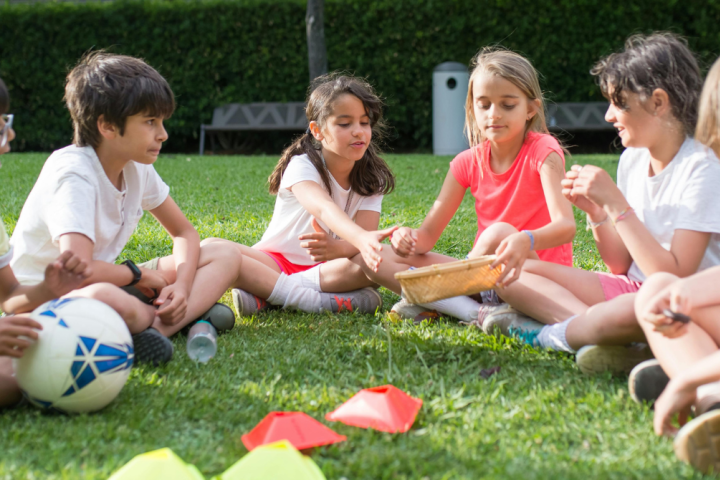
Reintroduction of the Healthy Lifestyle Intervention could radically boost the post-corona recovery of capacities in Slovenian youth
A newly published study by the SLOfit group at the Faculty of Sport of the University of Ljubljana has shown that interventions for increasing physical activity, such as the Healthy Lifestyle Intervention in Slovenian schools, are vital for preventing childhood obesity in developed countries.
-

Slovenian project SLOfit is the E+ SPORT #BeActive Across Generations Award Winner 2022
The SLOfit project - Lifelong monitoring of physical fitness, developed at the Faculty of Sport University Ljubljana, was selected by an expert jury in Brussels as the winner of the E+ SPORT #BeActive - Across Generations Award 2022, dedicated to recognizing the best European projects that promote a regular exercise and ensure easier access to sport and physical activity for all generations.


