
News
Customize list
-
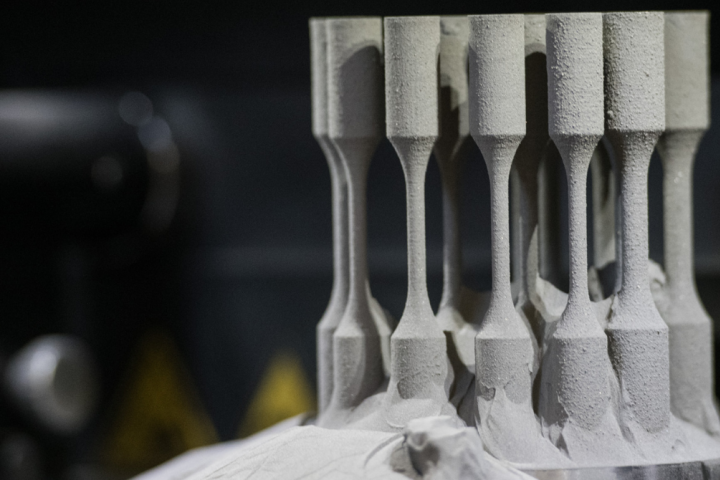
Artificial intelligence for predicting process condition variations in laser powder bed fusion of metals
Assistant professor Dominik Kozjek, a researcher in the Laboratory for Mechatronics, Production systems, and Automation (LAMPA) at the Faculty of Mechanical Engineering, UL, in cooperation with researchers from Northwestern University (Illinois, United States), the United States Army Research Laboratory, and the company DMG MORI Advanced Solutions, developed a new method of predicting meltpool temperature variations in the laser-powder bed fusion of metals (PBF-LB/M) process.
-
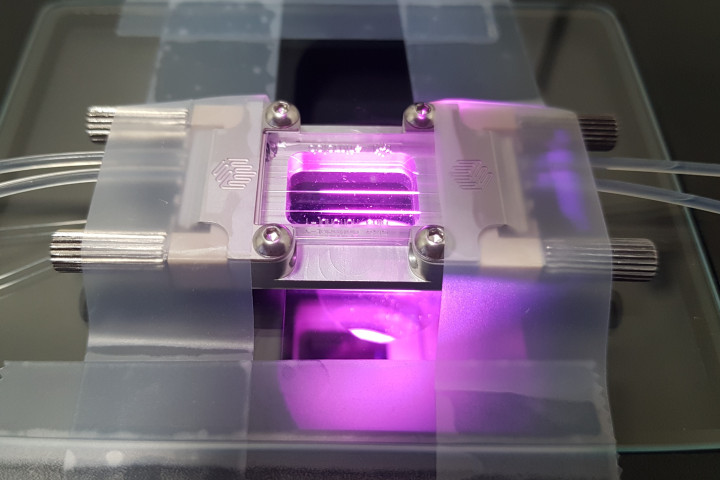
Researchers from the Faculty of Chemistry and Chemical Technology of the University of Ljubljana have obtained a Twinning project in the field of continuous (bio)catalytic processes
Under the leadership of Prof. Dr. Polona Žnidaršič Plazl, researchers from the Faculty of Chemistry and Chemical Technology of the University of Ljubljana (UL FKKT) have obtained a Twinning project titled "Twinning for Building Excellence and Innovative Solutions in Flow Catalysis" – FlowCat.
-
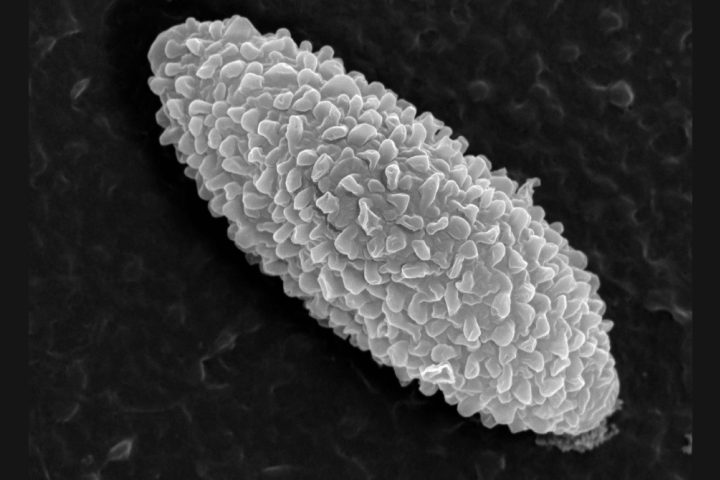
With a universal mechanism of cellular movement to new possibilities for treating cancer
Cell migration in the body is a fundamental biological phenomenon. Immune cells constantly search for pathogens throughout the body, while cancer cells migrate, causing metastases. To better understand the migration of immune and cancer cells, researchers, including Assoc. Prof. Dr. Samo Penič and Prof. Dr. Aleš Iglič from the Faculty of Electrical Engineering, University of Ljubljana, have developed a universal physical model of cell movement. This has also paved the way for new possibilities in the treatment of cancer.
-
Important breakthrough in quantum physics by Prof. Dr. Tomaž Prosen and a Google Lab Team
Professor Tomaž Prosen, a mathematical physicist from the University of Ljubljana’s Faculty of Mathematics and Physics (UL FMF), has published, in collaboration with Google’s Quantum AI laboratory, an article entitled “Dynamics of magnetization at infinite temperature in a Heisenberg spin chain” in prestigious scientific journal Science. The article presents breakthrough findings in the theory of quantum transport phenomena.
-

Duckiebots – autonomous driving robot cars in a small-scale city Model
Autonomous driving robots, equiped with camera and sensors have become reality. Meet Duckiebots, which are the result of the reasearch of doc. dr. Octavian Machidon from the Faculty of Computer and Information Science (FRI).
-
Doc. dr. Jaka Tušek from UL FS recieves ERC funding to support his research on elastocaloric technology
Dr. Jaka Tušek, Assistant Professor at the University of Ljubljana’s Faculty of Mechanical Engineering (UL FS), and his research team are developing elastocaloric cooling and heating technology. The ground-breaking research carried out under the ERC Starting Grant (StG) as part of the SUPERCOOL project has been rewarded with a successful application for an ERC Proof-of-Concept (PoC) Grant with the E-CO-HEAT project, providing support for the innovation potential of research achievements. This makes Tušek the sixth ERC researcher in Slovenia, and the second at UL FS, to receive additional support to develop the innovative potential of his research. The E-CO-HEAT project will be based on the elastocaloric device developed in the SUPERCOOL project, which was the first in the world to demonstrate sustained dynamic performance and record-breaking cooling and heating characteristics, and whose specific characteristics exceed all caloric cooling devices built to date. The ERC PoC funding will enable the technology to be further developed and, together with the relevant business strategy and intellectual property, to be transferred into everyday use.
-

Dr. Nina Vesel recieved prestigious EMBO Postdostoral Fellowship
Dr Nina Vesel of the University of Ljubljana Biotechnical Faculty is the recipient of a prestigious Postdoctoral Fellowship from EMBO (European Molecular Biology Organization), aimed at supporting the mobility of postdoctoral researchers in Europe and around the world. This is a major success both for the researcher and for the UL Biotechnical Faculty, which succeeded in attracting back this outstanding researcher.
-
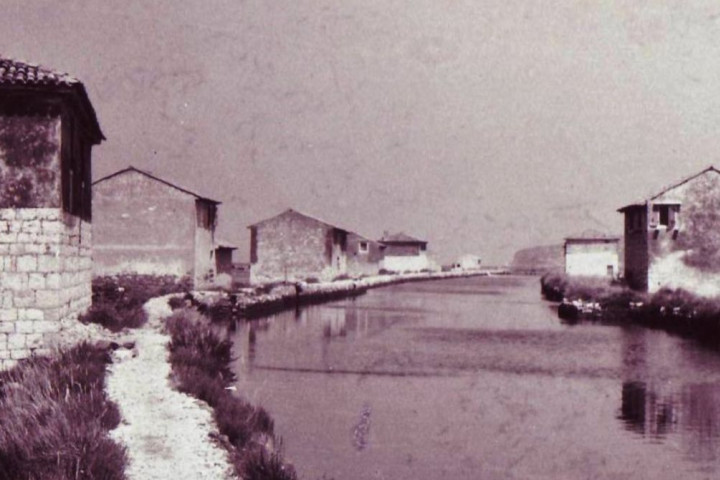
Use of ship technology for self-maintenance of saltpan cottages
Ship technology could offer a solution for the saltpan cottages which are falling inexorably into ruin in the area of the Sečovlje saltpans. This has been determined by students of various University of Ljubljana faculties under the mentorship of Senior Lecturer Mag. Valter Suban of the University’s Faculty of Maritime Studies and Transport. They were aware of the problem of degradation in the area of the Sečovlje saltpans, so they were looking for a way for the saltpan cottages to be reconstructed and changed into sustainable self-maintaining projects.
-

Soap bubbles can be used as lasers
Soap bubbles, with their changing colors, impress both adults and children and are a source of inspiration for researchers in various fields - mathematics, physics, chemistry and biology. Among them are Zala Korenjak and Asst. Dr. Matjaž Humar from the Jožef Stefan Institute and the Faculty of Mathematics and Physics, University of Ljubljana, who were the first to show that soap bubbles can be used as lasers.
-

The negative effects of the corona period still burden the development and health of children
They were less physically active, spent even more time in front of screens and slept longer, we all still remember the "new reality" of children and adolescents during the covid closure of society. But - how long-term harmful restrictions and (too) long school closures have really (re)shaped the behavior of our children, is one of the first to reveal a population cohort study based on the Slovenian system for monitoring physical fitness (SLOfit), which has just been published in the prestigious scientific journal The Lancet Regional Health Europe.
-
Lea Rems, PhD, from the Faculty of Electrical Engineering of the University of Ljubljana, successful in the European Research Council’s call for proposals
The European Commission has published the results of the call for proposals for the European Research Council (ERC) Starting Grant 2023. After a ten-month evaluation process, 400 projects were selected for funding from almost 2,700 applications from all over the world. Among the successful applicants is the researcher Lea Rems, PhD, who will lead the EUR 1.5 million, five-year ERC project REINCARNATION at the Faculty of Electrical Engineering, University of Ljubljana (UL FE).
-

3D Printing of Piezoelectric Sensors Unaffected by Electromagnetic Interference
Researchers from the University of Ljubljana have developed a unique method for printing advanced sensors that are not affected by electromagnetic interference. The 3D printing of sensors allows for their rapid and adaptable integration into other 3D printed structures, even in hard-to-reach places, which is particularly important in medicine, such as in customized prosthetics. At the same time, these sensors can be used to monitor the lifespan of other 3D printed structures, such as parts for the automotive industry.
-

Irregularities in hydrogen fuel cell catalysts
The increasingly evident consequences of climate change are a major motivation for the development of low-carbon technologies, among which fuel cells, using hydrogen as fuel, hold great promise. One of the obstacles to the wider commercialization of the technology is the use of expensive and rare platinum in catalysts, which is why effort goes into trying to reduce the amount of platinum used while preserving the relevant properties of these materials. For the oxygen reduction reaction, one of the reactions in a fuel cell, we use catalysts with alloyed nanoparticles containing platinum and cheaper transition metals. Since certain defects in the nanoparticle structure can occur during the preparation of the catalyst, the effects of all aspects of the structure on the performance in the fuel cell need to be studied in detail.
-

The thin line of sheet metal forming
The production of thin-walled components from sheet metal is an integral part of the automotive, aerospace and other industries. Forming the initial sheet metal into the desired final shape of the product requires overcoming reaction forces and thinning of the sheet metal, which can lead to fractures. Knowing the influence of many parameters of the forming process allows controlled change of the shape of the workpiece, thus achieving the target shape of the final component.
-
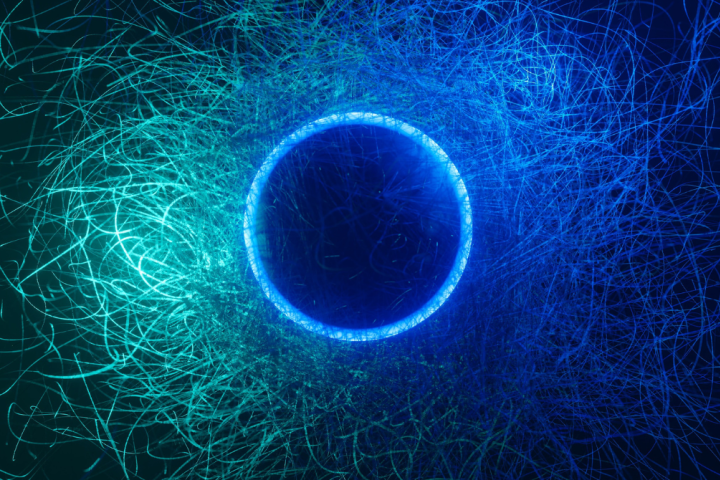
Project »FEATURE«: Far-from-Equilibrium ATtractors at Ultra-Relativistic Energies
One of the grand challenges facing the high-energy physics community is understanding the far-from-equilibrium evolution of quantum chromodynamics (QCD). This new postdoctoral Marie Skłodowska-Curie project, carried out at the Faculty of Mathematics and Physics, will take the critical step to bring theoretical understanding to the level of complexity required for realistic phenomenology, by fully characterizing the properties of the QCD attractor without resorting to simplifying assumptions done in the current preliminary studies. This will be done via the inclusion of fermionic degrees of freedom and by relaxing simplifying spatial symmetries.
-

Mathematical physicist Prof. Dr. Tomaž Prosen has become the first in Slovenia to receive his second prestigious European Research Council (ERC) Advanced Grant (ERC ADG)
The awarded ERC AdG, which is aimed at established researchers, is undoubtedly the most prestigious scientific project that an individual researcher can receive. For Prof. Dr. Tomaž Prosen, this is already his second such project, this time titled QUEST (Quantum Ergodicity: Stability and Transitions). In addition to being a top-level success on a global scale for the researcher, it is also an outstanding achievement for the Faculty of Mathematics and Physics at the University of Ljubljana - primarily for its exceptionally high-quality research environment that it provides for researchers and their groups.
-
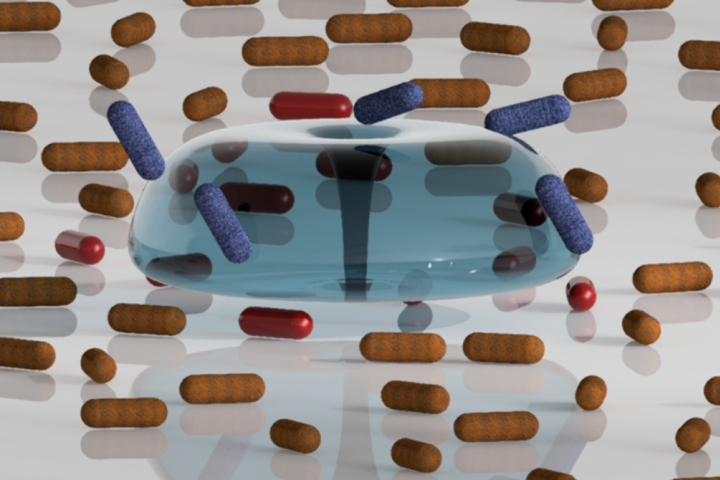
Treating wastewater through cavitation and understanding the effects of bubbles on bacterial cells
Increasing environmental pollution and drinking water shortages are a growing socioeconomic problem, in which cavitation technology can contribute to a cleaner and greener approach to wastewater treatment. Cavitation is a physical phenomenon that describes the phase change from liquid to vapour and back at constant temperature. The mechanical, thermal and chemical effects of cavitation can be utilised for various purposes, including to inactivate microorganisms in drinking water and wastewater. It has been proven that cells are subjected to damage in the immediate vicinity of a bubble. Further numerical analysis has identified the formation of microjets as a possible mechanism of bacterial cell damage.
-

New method for predicting adult height
Researchers from Jožef Stefan Institute and Faculty of Sport, University of Ljubljana, developed a new method for predicting adult height of children and adolescents. The method uses large population data collected in the framework of the SLOfit program over decades. It compares the growth curve of a child with those of the most similar individuals and substantially outperforms the existing height predicting methods.
-

A research breakthrough in the dating of historical books
Heritage scientists can now date historical paper using only infrared light and computational analysis of spectroscopic data. In the research of postdoctoral researcher Dr. Floriana Coppola and colleagues, which is published in the top scientific journal 'Journal of the American Chemical Society', shows that it is possible to date paper extremely accurately, even to 2 years. An uncertainty this low is not possible with any other method, much less with a non-destructive method.
-
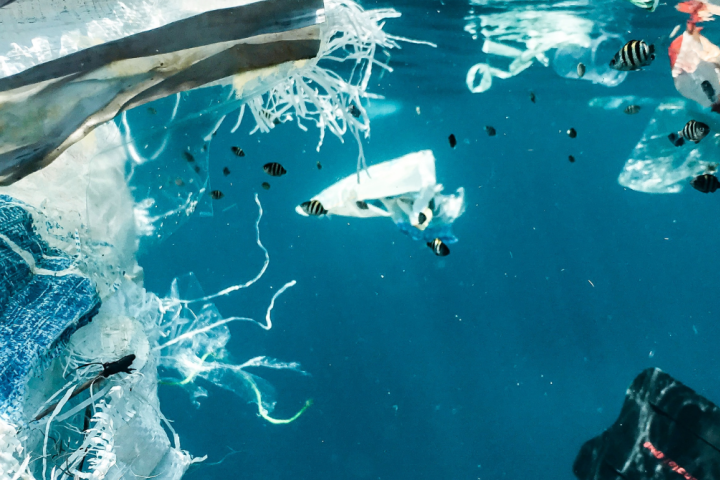
Using cavitation to break down invisible water pollutants
Researchers from the Faculty of Mechanical Engineering and the National Institute of Chemistry conducted an experimental study in which they achieved the degradation of a water-soluble synthetic polymer - poly(vinyl alcohol) PVOH - by acoustic and hydrodynamic cavitation. The use of PVOH is rapidly increasing, and as a result, increasing amounts of this material are being released into the environment. PVOH is widely used in the textile and paper industries, as well as in households, for example in the form of detergent pods. It is estimated that thousands of tons of it are washed into the aquatic ecosystem every year.


