
News
Customize list
-

From Ljubljana to Chile: UL FMF Researchers in One of Today’s Largest Astronomical Projects
Only a few months after reaching its First Light milestone, the international astronomical project 4MOST successfully completed its Science Programme Verification phase. In just three months, it recorded more than one million spectra of stars and galaxies, confirming its readiness for the systematic survey of the southern sky. Dr Gregor Traven and Dr Janez Kos of the Faculty of Mathematics and Physics, University of Ljubljana, also play an important role in the project.
-

Development of Language Models in All EU Languages
The University of Ljubljana is participating in the European project LLMs4EU (Large Language Models for the European Union), which aims to develop large language models for all official languages of the European Union, including languages with fewer digital resources, such as Slovenian.
-

The Sea Is More Than a Resource: Study Reveals How People Value It in the Northern Adriatic
Residents of the northern Adriatic do not see the sea merely as a space for tourism or economic activity. For them, it is also a space of identity, heritage and shared values. They therefore stress that protecting the sea is not only an environmental issue, but also a matter of preserving communities and their identity.
-

Dr. Snežana Popov awarded Marie Skłodowska-Curie Postdoctoral Fellowship for SEROTONIN
Dr. Snežana Popov has been awarded the prestigious Marie Skłodowska-Curie Postdoctoral Fellowship (MSCA) for her project SEROTONIN – A Sight for Sore Eyes: Bridging People and Pollinators Through Pollinator Monitoring. She is hosted by the Faculty of Education, University of Ljubljana, where she is conducting the research under the supervision of Prof. Dr. Gregor Torkar.
-

Are future healthcare professionals ready to use telemedicine?
Telemedicine promises easier access to healthcare, but its future will also depend on the people who will use it. How prepared are future healthcare professionals to work with new technologies?
-

Slovene language obtains its own generative large language model GaMS
Researchers at the University of Ljubljana have developed a generative large language model for Slovene GaMS, which places Slovene alongside languages for which advanced open-source artificial intelligence models already exist. This achievement marks an important step towards Slovenia’s technological sovereignty, as it enables the development and use of artificial intelligence tailored to the Slovene language, culture, and the needs of its users.
-

A Marie Skłodowska-Curie postdoctoral project to challenge narratives on migrant women
Dr Sara Delmedico (PhD, University of Cambridge) is the recipient of the prestigious Marie Skłodowska-Curie postdoctoral fellowship. As part of her fellowship, she will conduct research on how Italian-speaking women migrating from Northern Italy and the former Austro-Hungarian territories to the Americas were represented and represented themselves. She will be mentored by Professor Marta Verginella, Department of History, Faculty of Arts, University of Ljubljana.
-

The BIOMASS Satellite Reveals How Much Carbon the World’s Forests Store
The BIOMASS satellite of the European Space Agency (ESA) enables, for the first time, the measurement of forest biomass volume from space. New satellite data reveal how much carbon dioxide forests store and how important they are for understanding climate change. Researchers from the Faculty of Civil and Geodetic Engineering of the University of Ljubljana (UL FGG) are also involved in research and education activities
-
Slovenian Students Explore “Space Mayonnaise” in Microgravity
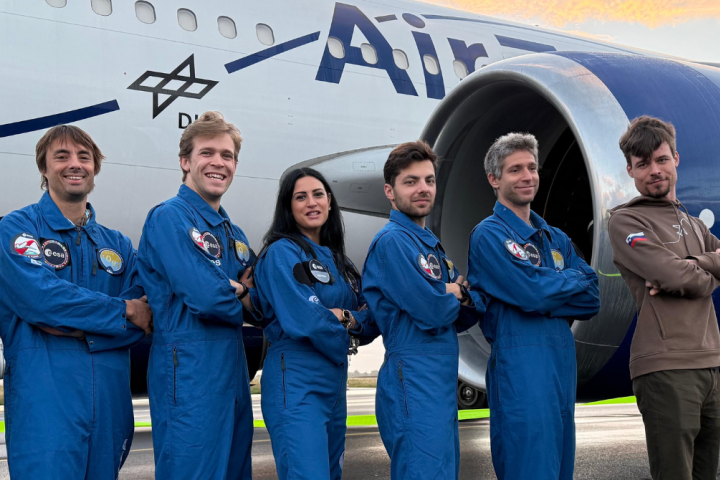
The CAVE 0g team from the University of Ljubljana studied the formation of emulsions in microgravity during the 87th parabolic flight campaign of the European Space Agency – a key step toward preparing food and medicine in space.
-

Faculty of Electrical Engineering UL coordinates the Competence Center for Chips and Semiconductor Technologies.
Slovenia has established the Competence Center for Chips and Semiconductor Technologies (KC Čip.si), coordinated by the Faculty of Electrical Engineering UL. As part of the European network of competence centers, the center will contribute to strengthening Slovenia’s competitiveness in the strategic field of chip research and development, as well as to Europe’s technological sovereignty.
-

How is new knowledge created, who produces it, and how is it transferred to new generations of researchers?
Relationships between doctoral students and their supervisors play a key role in the production of knowledge. This particular form of scientific collaboration is being studied at the Centre for Methodology and Informatics, Faculty of Social Sciences, University of Ljubljana. Their findings show that successful knowledge transfer depends not only on the motivation of the mentees, but also on the quality of supervision. Moreover, having more than one supervisor contributes to the successful completion of a doctorate.
-

Digital Maturity of Young People in Slovenia
Young people acquire most of their digital skills from their peers, while schools often lack sufficient digital content. The two main challenges they face in the digital world are digital illiteracy—both their own and that of teachers and parents—and the need for digital disconnection. These findings come from the research project Digital Maturity of Youth, conducted by the Faculty of Social Sciences and the Faculty of Education at the University of Ljubljana.
-

You're Never Too Old to Be Scammed Online – and Cybercriminals Know It
Older adults are increasingly facing online scams and cyber threats. Due to less experience and greater trust in others, they are often targeted by attackers. However, not all older internet users are equally vulnerable – their digital skills and needs vary greatly.
-

The Life Lynx Project Has Been Nominated for the LIFE Awards 2025
The LIFE Lynx project, in which the Biotechnical Faculty and the Veterinary Faculty of the University of Ljubljana participated, has been nominated for the prestigious LIFE Award 2025. The award is given to the most effective, innovative, and inspiring projects within the LIFE programme.
-
The University of Ljubljana will play a key role in establishing the Slovenian Artificial Intelligence Factory
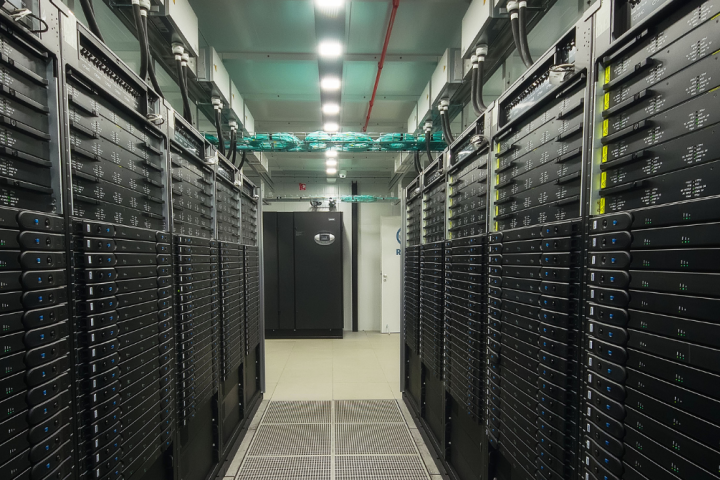
Slovenia has secured European funding for the establishment of a new supercomputer and the Slovenian Artificial Intelligence Factory. The supercomputer will be tailored for building and utilizing artificial intelligence models, while the AI factory will help Slovenian experts create an ecosystem that provides key services for the development and application of artificial intelligence in one place for businesses, research organizations, and the public sector. The University of Ljubljana will play a significant role in this initiative.
-

Serious Game Reduces Victim Blaming and Encourages Reporting of Cyber Violence
A study conducted by the Faculty of Social Sciences at the University of Ljubljana has shown that serious games can play a significant role in preventing cyber violence. Young people who participated in the educational program were less likely to blame victims after the workshops and became more aware of the importance of reporting cyber violence. However, the results also indicate that many young people lack knowledge on how and where to report such incidents.
-

Slovenian primary school students without mandatory computer science in the digital age
Slovenian primary school students achieve below-average results in creative thinking compared to their peers from other countries. Although their achievements in mathematics and science are above average, a noticeable gap exists in reading literacy. Girls perform as well as boys in mathematics, slightly better in science, and significantly better in reading.
-

How to Reduce Drop-out Rates in Music Schools?
What factors contribute to music school drop-out, and which impact it most significantly? What creates an optimal supportive environment for a child to persist in music school? Researchers from the University of Ljubljana, Academy of Music: Dr. Ana Kavčič Pucihar, Dr. Katarina Habe, Dr. Branka Rotar Pance, and from the University of Maribor, Faculty of Education, Dr. Maruša Laure, addressed these topics in their paper "The key reasons for dropout in Slovenian music schools - a qualitative study," published in the Frontiers in Psychology (2024).
-
LIFE Lynx project - preventing the extinction of the lynx in the Dinaric Mountains and the South-Eastern Alps
How to save the Eurasian lynx population in the Dinarides and the South-Eastern Alps from extinction again? This is the challenge that the LIFE Lynx project, in which the Biotechnical Faculty of UL participated as a partner, has successfully tackled. Before the start of the project, there were 20 adult lynx in Slovenia, which were threatened by inbreeding. A total of 14 animals were introduced from the Romanian and Slovakian Carpatian Mountains, 9 of them in Slovenia and 5 in the Croatian Dinaric Mountains. This not only saved the population, but also set an example of good practice for all future attempts to reintroduce lynx or similar large carnivore species in Europe.
-
Faculty of Mechanical Engineering Successful in MSCA Doctoral Networks Call
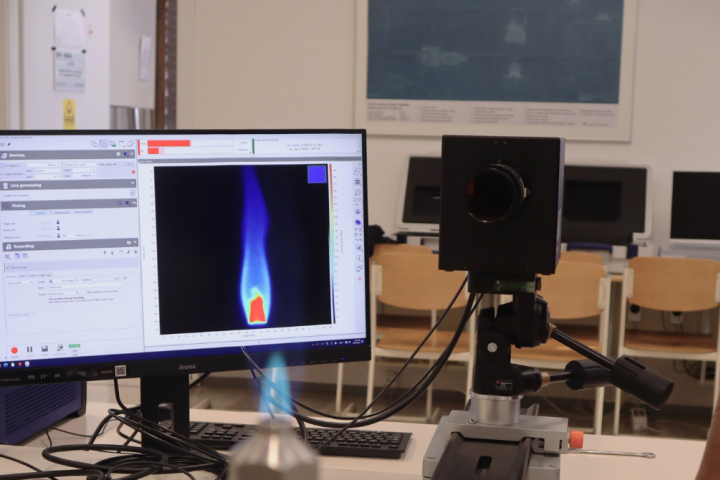
The University of Ljubljana, Faculty of Mechanical Engineering, has been successful in the Horizon Europe Marie Skłodowska-Curie Actions (MSCA) Doctoral Networks call with the project UPCYCLE – Dissemination of Advanced Conversion Routes for Hard-to-Recycle Biogenic Waste. As part of the project, 15 doctoral candidates will be trained, three of whom will be based in Slovenia. The project is coordinated by Politecnico di Milano, with UL FS participating as a partner.


