
News
Customize list
-

2026 recipients of top national science awards and prizes announced
This year’s recipients of the most prestigious national awards and prizes for exceptional achievements in the field of scientific research and development include seven scientists from the University of Ljubljana: akad. prof. dr. Slavko Splichal, prof. dr. Nataša Poklar Ulrih, doc. dr. Denis Golež, prof. dr. Kristina Sepčić, prof. dr. Irena Mlinarič-Raščan, akad. prof. dr. Ferdinand Gubina and doc. dr. Barbara Gornik, viš. znan. sod. This year’s winners were announced on 14 October at the National and University Library by dr. Rok Strašek, state secretary at the ministry of education, science and youth, and prof. dr. Maja Ravnikar, president of the national committee for the awarding of prizes and awards for outstanding achievements in scientific research and development.
-

What Do Parents Think About Age Restrictions on Access to Social Media?
In Slovenia, 83% of parents support restricting access to social media for children and adolescents under the age of 15, according to a survey of parents’ views on children joining social media platforms and on parental controls.
-

Are future healthcare professionals ready to use telemedicine?
Telemedicine promises easier access to healthcare, but its future will also depend on the people who will use it. How prepared are future healthcare professionals to work with new technologies?
-
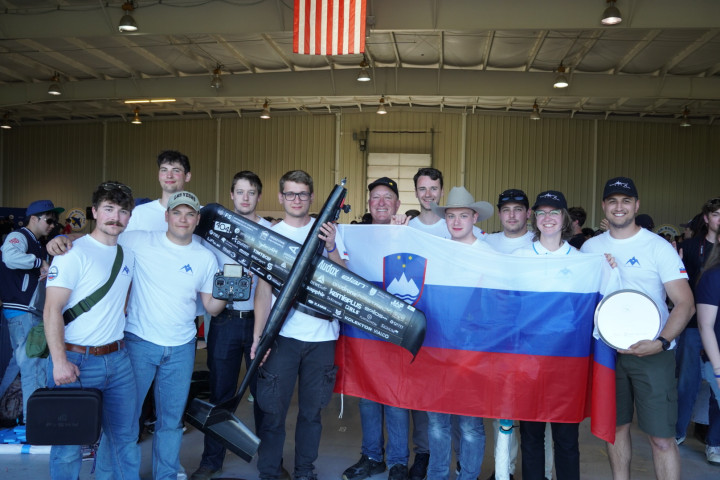
Edvard Rusjan Team triumphs at Design/Build/Fly 2026
The Edvard Rusjan Team have soared to first place at the international Design/Build/Fly 2026 competition in the USA, with their ‘Brvinc’ aircraft beating off competition from 98 other university teams from around the world. Knowledge, persistence and several months of intense work propelled the team to the top of one of the most demanding student aviation competitions. Success was made possible by more than 30 students from a range of University of Ljubljana faculties: of mechanical engineering, electrical engineering, computer and information science, chemistry and chemical technology, social sciences, and the biotechnical faculty.
-

EUTOPIA_HEALTH at UL: From the Biological Impact of Digital Environments to the Challenges of Addiction
On March 11, as part of the international EUTOPIA_HEALTH project, the University of Ljubljana hosted a day packed with content dedicated to the intersection of health and digitalization. Through a morning expert panel and an afternoon Science Café, the event offered a comprehensive look into the future of medicine, where technology is no longer just an external tool but a biological factor that influences our epigenome. Experts from various disciplines highlighted the path from advanced clinical solutions, such as socially intelligent robots, to the urgent need for digital market regulation to protect users’ mental health.
-
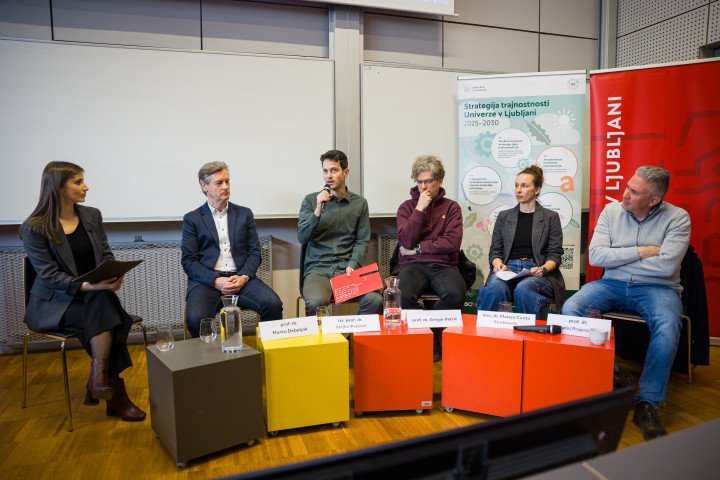
Only if artificial intelligence is developed responsibly will it be capable of supporting a sustainable future
On 16 March we opened this year’s Food For Thought festival at the Faculty of Computer and Information Science (UL FRI) with a round-table discussion titled “Code to Drive a Better World: Challenges and Opportunities in the Development of Artificial Intelligence for Delivering a Sustainable Future”. The discussion focused on how AI might support sustainable development goals, and where the new environmental, social and ethical issues could arise.
-

How prepared is society for a potential outage of global satellite navigation systems?
Modern society is increasingly dependent on global satellite navigation systems (GNSS) such as GPS, Galileo and BeiDou. These systems are no longer merely a navigation aid; rather, they represent the invisible backbone of modern societies—supporting everything from transport and energy to banking, telecommunications, and emergency services. The key question is whether society is even aware of how deeply it is intertwined with this technology, and how unprepared it may be for a potential outage.
-

Mental Health: Nearly One-Third of Young People Who Participated in the Survey Consider Seeking Help but Do Not Do So
The mental health of young people in Slovenia represents a serious challenge that cannot be addressed solely through individual approaches or within the healthcare system, but requires broader reflection on social relationships, living conditions, and opportunities for the future.
-

How to Improve the Position of Young Carers?
Across Europe, thousands of children and young people care for ill, disabled, or addicted family members – often in silence and without recognition. Young carers represent a vulnerable and frequently overlooked group whose needs are too often neglected in public policies. The path toward including their voices in policy-making is being opened by the international project OUR VOICES, implemented by the Faculty of Social Sciences at the University of Ljubljana.
-

How is new knowledge created, who produces it, and how is it transferred to new generations of researchers?
Relationships between doctoral students and their supervisors play a key role in the production of knowledge. This particular form of scientific collaboration is being studied at the Centre for Methodology and Informatics, Faculty of Social Sciences, University of Ljubljana. Their findings show that successful knowledge transfer depends not only on the motivation of the mentees, but also on the quality of supervision. Moreover, having more than one supervisor contributes to the successful completion of a doctorate.
-
Assist. Prof. Dr. Jasmina Šepetavc Recipient of the Prestigious ERC Starting Grant for the QEAST Project
Assist. Prof. Dr. Jasmina Šepetavc, researcher at the Centre for Cultural and Religious Studies (CCRS) at the Faculty of Social Sciences, University of Ljubljana, is the recipient of a prestigious European Research Council (ERC) Starting Grant. She received the grant for the project QEAST.
-

Digital Maturity of Young People in Slovenia
Young people acquire most of their digital skills from their peers, while schools often lack sufficient digital content. The two main challenges they face in the digital world are digital illiteracy—both their own and that of teachers and parents—and the need for digital disconnection. These findings come from the research project Digital Maturity of Youth, conducted by the Faculty of Social Sciences and the Faculty of Education at the University of Ljubljana.
-
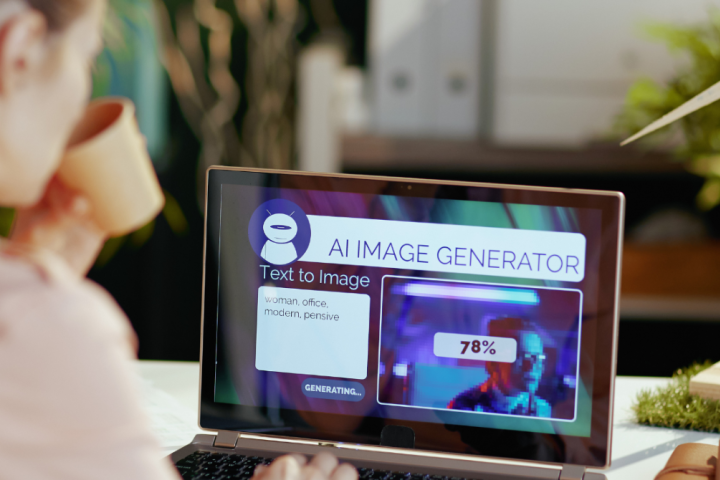
Generative Artificial Intelligence Has Surpassed Smartphones and the Internet in Speed of Adoption
The number of generative artificial intelligence (GenAI) users in Slovenia is rapidly increasing. In one year, the number has doubled. Most users utilize ChatGPT, and usage is becoming increasingly frequent. More than half of the population uses GenAI weekly, and nearly a quarter use it daily. Despite growing usage, Slovenia still lags behind the most developed countries.
-

Half of the homeless people in Ljubljana have been without a home for more than five years
Homelessness in Slovenia is not being adequately addressed. This is evident from data showing that nearly half of homeless individuals have been without a home for over five years. The main reasons for homelessness are family issues and financial hardship.
-
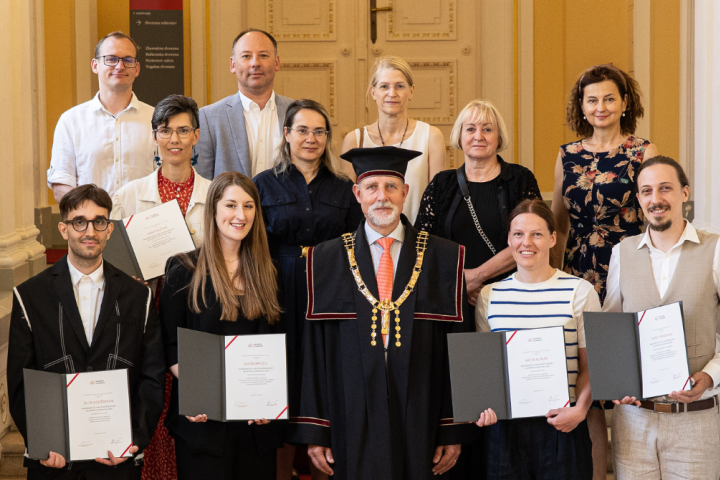
Dr Ana Mayer Kansky Awards bestowed for the third time at the UL
On Wednesday, 18 June 2025, the Dr Ana Mayer Kansky Awards for outstanding doctoral theses were awarded for the third time in the Assembly Hall at the Rector’s Office of the University of Ljubljana (UL). The awards were presented to Dr Matej Perovnik, Dr Faris Kočan, Dr Aleša Bricelj, Dr Duje Kodžoman, and Dr Katja Klinar. The award ceremony was held under the patronage of the President of the Republic of Slovenia, Nataša Pirc Musar.
-

How to Build a Relationships with Sustainability-Oriented Consumers?
For a successful transition to a more sustainable society, we need empathetic, credible, and strategically consistent communication—one that addresses the consumer not only as a buyer but also as a socially responsible individual, embedded in relationships with others and with nature.
-

Understanding and Addressing the Challenges of Hybrid Work: Key Challenges and Opportunities for Organizations
The study reveals how hybrid work affects employee well-being and organizational culture.
-
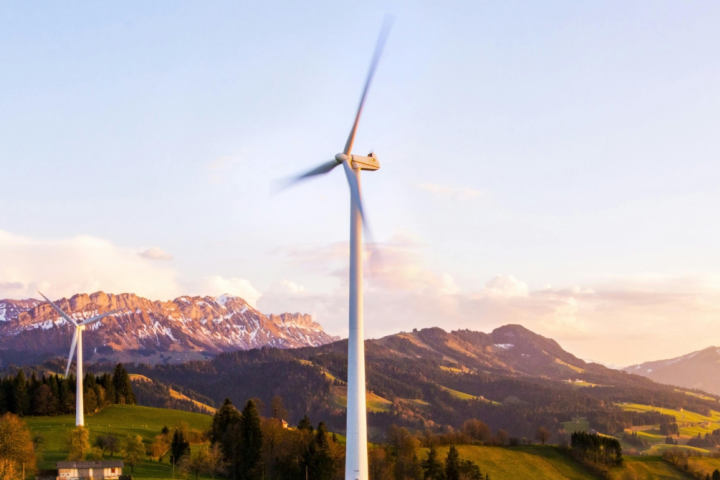
Planning Renewable Energy Without Conflict?
The transition to renewable energy is a political necessity. But how can it be implemented without compromising other vital objectives – such as biodiversity conservation, water management, cultural heritage preservation, and public health – while also ensuring active public engagement?
-

Young People and COVID-19 Vaccination: What Influenced Their Decision to Get Vaccinated?
In Slovenia, young people aged 23 to 26, with higher education levels and above-average material status, were the most likely to choose COVID-19 vaccination. Conversely, the youngest (15–18 years old) and slightly older (27–30 years old) individuals, who had lower education levels, lived more often in rural areas, and had mothers or primary caregivers with lower education levels, were more likely to refuse vaccination. These individuals also more frequently reported having already contracted COVID-19. A study by the Faculty of Social Sciences at the University of Ljubljana, which examined why Slovenia had one of the lowest COVID-19 vaccination rates in the EU in 2021, revealed that young people's vaccination decisions were strongly linked to their socioeconomic status.
-

Serious Game Reduces Victim Blaming and Encourages Reporting of Cyber Violence
A study conducted by the Faculty of Social Sciences at the University of Ljubljana has shown that serious games can play a significant role in preventing cyber violence. Young people who participated in the educational program were less likely to blame victims after the workshops and became more aware of the importance of reporting cyber violence. However, the results also indicate that many young people lack knowledge on how and where to report such incidents.


