
News
Customize list
-

How will living labs help keep soils fertile and resilient?
How can soils remain fertile, resilient to climate change and capable of long-term food production? Answers to these questions are being sought in the European project TRAILS4SOIL in living labs, where farmers, researchers, advisors, industry representatives, policymakers and non-governmental organisations jointly develop, test and evaluate regenerative and conservation agricultural practices.
-

Filip Todorovski Receives the 2026 Oronzio and Niccolò De Nora Foundation Young Author Prize
University of Ljubljana Faculty of Mechanical Engineering researcher Filip Todorovski has received the 2026 Oronzio and Niccolò De Nora Foundation Young Author Prize, awarded by the International Society of Electrochemistry (ISE). He received the award for a scientific paper examining the effects of contact pressure on the performance and durability of high-temperature fuel cells, published in Electrochimica Acta.
-

Assistant Professor Svit Komel first Slovenian recipient of the Bader Prize
Assistant Professor Svit Komel of the Faculty of Law at the University of Ljubljana is the first Slovenian to receive the prestigious Bader Prize of the Austrian Academy of Sciences for the best work by early-career researchers in the field of the history of science. He received the award for his doctoral dissertation Rule and Measure: A History of Juridical Practices in the Age of Surveys.
-

Green hydrogen as the foundation of energy independence of military bases
Military bases worldwide remain heavily dependent on fossil fuels for their energy supply, increasing their carbon footprint and vulnerability due to logistical challenges. Researchers from the UL Faculty of Mechanical Engineering, in collaboration with the Ministry of Defence of the Republic of Slovenia, have developed an innovative methodology for designing autonomous energy hubs based on renewable energy sources and green hydrogen, and demonstrated its capabilities on the case of the energy system of the military barracks in Kranj.
-

Professor Nina Gunde-Cimerman Becomes the Second Slovenian Woman Elected to EMBO
Professor Nina Gunde-Cimerman of the Department of Biology at the Biotechnical Faculty, University of Ljubljana, has been elected to the European Molecular Biology Organisation (EMBO), one of the world\'s most prestigious organizations in the life sciences. As the second woman from Slovenia and only the sixth Slovenian researcher overall, she has received this recognition, which is awarded by the international scientific community for outstanding research achievements and an exceptional contribution to the advancement of science.
-
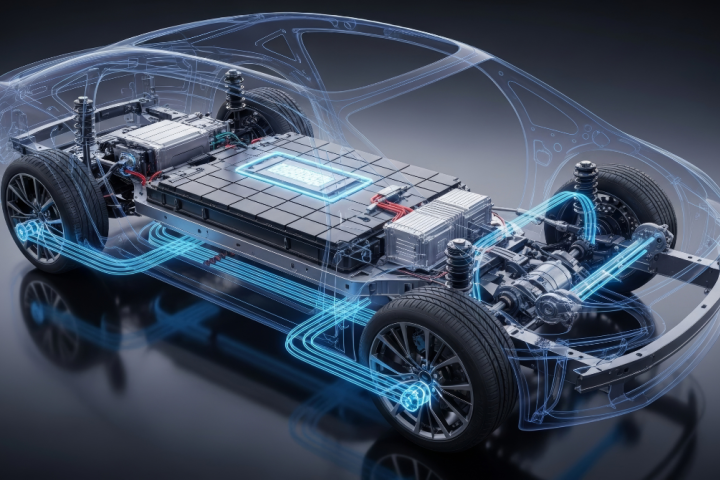
UL FS with a coordinating project towards the development of more efficient and sustainable e-mobility
The Faculty of Mechanical Engineering at the University of Ljubljana will lead the breakthrough research and development project NEO-TWIN: Next-Generation Methods, Tools, and Products for Innovative Diagnostics and Prognostics of Electric Vehicles Based on Digital Twins. Through the project, they aim to improve the diagnostics of batteries and other e-vehicle components, extend their service life, and thereby contribute to even more efficient and sustainable e-mobility.
-

Dr. Jana Bedek is a recipient of the Marie Skłodowska-Curie Postdoctoral Fellowship
Dr. Jana Bedek, employed at the Croatian Biospeleological Society, was successful under the mentorship of Associate Professor Dr. Cene Fišer from the Biotechnical Faculty of the University of Ljubljana in securing a Marie Skłodowska-Curie Actions (MSCA) postdoctoral fellowship.
-

Artificial Intelligence Accelerates Plasma Simulations and Opens New Pathways to Fusion Energy
Researchers at the Faculty of Mechanical Engineering UL (UL FS) have developed a machine-learning approach that significantly accelerates complex physical simulations of plasma in fusion reactors. By using advanced surrogate models, researchers can predict plasma behaviour much faster, contributing to more efficient development of fusion energy as one of the key sustainable energy sources of the future.
-

Young researcher from UL BF Živa Alif receives the L’Oréal–UNESCO “For Women in Science” award
Živa Alif from the Department of Animal Science at the Biotechnical Faculty of the University of Ljubljana has received the L’Oréal–UNESCO “For Women in Science” award, granted to doctoral candidates in their final year of study for outstanding research achievements. She received the award for her work in the field of social aspects of nature conservation in agriculture.
-

The BIOMASS Satellite Reveals How Much Carbon the World’s Forests Store
The BIOMASS satellite of the European Space Agency (ESA) enables, for the first time, the measurement of forest biomass volume from space. New satellite data reveal how much carbon dioxide forests store and how important they are for understanding climate change. Researchers from the Faculty of Civil and Geodetic Engineering of the University of Ljubljana (UL FGG) are also involved in research and education activities
-

A new method enables significantly more precise measurements in engines – a step toward cleaner and more efficient vehicles
Researchers from the Faculty of Mechanical Engineering at the University of Ljubljana participated in the development of a new method for measuring pressure in internal combustion engines, which can significantly improve their efficiency and reduce emissions. Using this method, they achieved up to 48% more accurate determination of heat release, up to 38% more accurate measurement of the rate of pressure rise, and up to 13% more accurate measurement of in-cylinder pressure.
-

Why Small Differences in Materials Lead to Big Energy Savings?
Even small statistical variations in the magnetic properties of magnetocaloric materials have a major impact on the performance of future environmentally friendly cooling systems, researchers from the UL Faculty of Mechanical Engineering observe. These findings support the development of robust and reliable cooling devices and heat pumps that operate without harmful refrigerants.
-

Faculty of Electrical Engineering UL coordinates the Competence Center for Chips and Semiconductor Technologies.
Slovenia has established the Competence Center for Chips and Semiconductor Technologies (KC Čip.si), coordinated by the Faculty of Electrical Engineering UL. As part of the European network of competence centers, the center will contribute to strengthening Slovenia’s competitiveness in the strategic field of chip research and development, as well as to Europe’s technological sovereignty.
-

The University of Ljubljana and the City of Ljubljana join forces to green bus shelters
As part of the NOO ULTRA project, the University of Ljubljana (UL), in cooperation with the UL Botanical Garden, carried out the greening of two Ljubljana Passenger Transport (LPP) bus shelters near Ljubljana Zoo on Thursday, 2 October 2025.
-
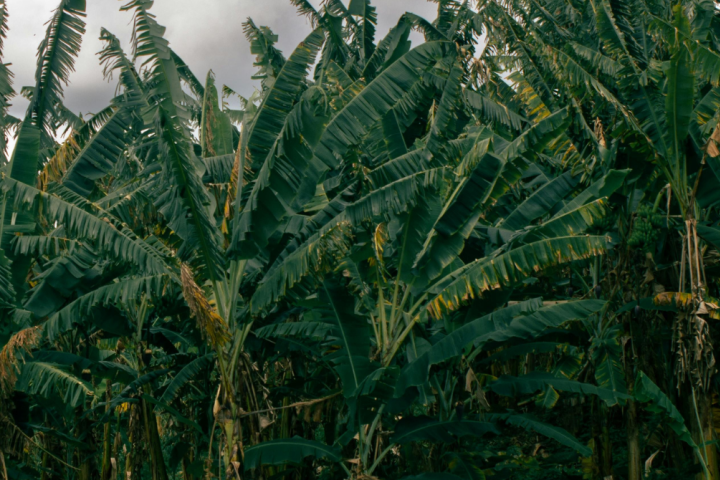
Climate Change Threatens the Future of Bananas
The cultivation of the world’s most popular fruit – bananas – is under threat from climate change, particularly due to tropical cyclones. Plantations in Southeast Asia and the Caribbean will be most affected, where production will face significantly greater risks – in the Caribbean, almost 50% more. This is revealed by an international study that included participation from the Biotechnical Faculty of the University of Ljubljana.
-

How to Build a Relationships with Sustainability-Oriented Consumers?
For a successful transition to a more sustainable society, we need empathetic, credible, and strategically consistent communication—one that addresses the consumer not only as a buyer but also as a socially responsible individual, embedded in relationships with others and with nature.
-
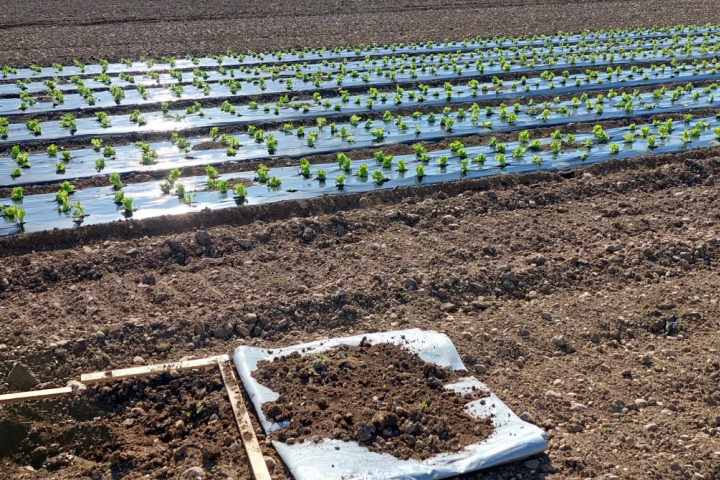
How Micro- and Nanoplastics (MNPs) Are Shaping European Agricultural Soils
Modern agriculture relies heavily on plastic products such as mulch films, greenhouses, and irrigation systems. However, a significant portion of this plastic ends up as micro- and nanoplastics in the soil. How does this affect ecosystems and food production across Europe? This is the central question addressed by the MINAGRIS project.
-
Microreactors of the Future for Efficient Wastewater Treatment Using Hydroxyl Radicals
The issue of wastewater treatment is becoming increasingly pressing in modern society, which is also reflected in the intensive research in this field. Conventional treatment methods are struggling to keep up with the growing diversity of pollutants that end up in various water bodies – both surface and groundwater. As a result, significant efforts are being invested in developing new technological approaches to address this challenge, with cavitation emerging as one of the promising technologies.
-
Planning Renewable Energy Without Conflict?
The transition to renewable energy is a political necessity. But how can it be implemented without compromising other vital objectives – such as biodiversity conservation, water management, cultural heritage preservation, and public health – while also ensuring active public engagement?
-
How to Enrich the Nutritional Value of Flour – Collaboration Between Slovenian Industry and Academia
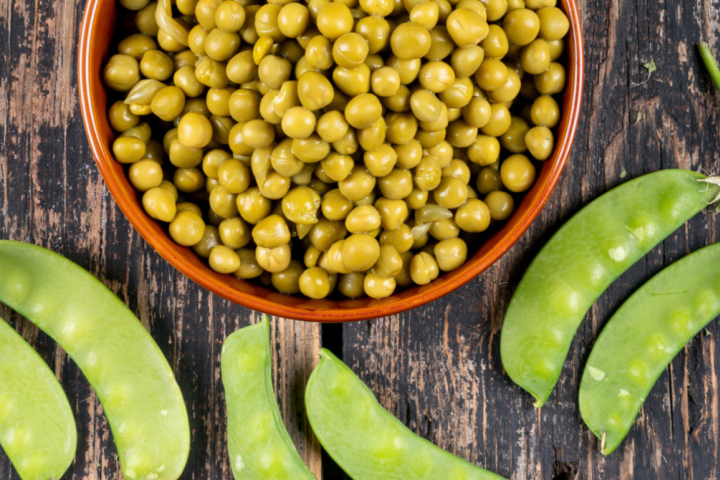
Researchers from the Biotechnical Faculty and the Faculty of Chemistry and Chemical Technology at the University of Ljubljana have successfully developed a process for improving the nutritional value of pea flour through lactic acid fermentation. The interdisciplinary study, conducted in collaboration with a Slovenian food processing company goes beyond academic boundaries and presents a significant commercial value for the techonlogical application on an industrial scale.


