
News
Customize list
-

Green hydrogen as the foundation of energy independence of military bases
Military bases worldwide remain heavily dependent on fossil fuels for their energy supply, increasing their carbon footprint and vulnerability due to logistical challenges. Researchers from the UL Faculty of Mechanical Engineering, in collaboration with the Ministry of Defence of the Republic of Slovenia, have developed an innovative methodology for designing autonomous energy hubs based on renewable energy sources and green hydrogen, and demonstrated its capabilities on the case of the energy system of the military barracks in Kranj.
-

First Slovenian quantum key distribution network based on entangled photons
Members of the SiQUID project have established Slovenia's first quantum communication network and developed the country's first industrial quantum encryptor. These achievements represent an important step towards the future quantum internet, as quantum technologies are expected to transform secure communications, computing, and sensing in the coming decades.
-

Higher diet quality is associated with a lower risk of developing dementia
Higher diet quality is associated with a lower risk of developing dementia, even among older adults with biological markers indicating an increased risk of neurodegenerative diseases. This is the key finding of a new study co-authored by asst. Anja Mrhar, MSc in Nutrition Engineering, a researcher and doctoral candidate at the Biotechnical Faculty UL.
-

Global map of ancient DNA research places the University of Ljubljana among the world's leading institutions
The University of Ljubljana ranks among the world's leading research institutions in terms of scientific publications on DNA recovered from ancient human skeletal remains. Particularly noteworthy are the publications of Dr. Irena Zupanič Pajnič, Senior Research Fellow and Associate Professor at the Institute of Forensic Medicine, Faculty of Medicine UL and Dr. Tamara Leskovar, Assistant Professor at the Department of Archaeology, Faculty of Arts UL.
-

Professor Nina Gunde-Cimerman Becomes the Second Slovenian Woman Elected to EMBO
Professor Nina Gunde-Cimerman of the Department of Biology at the Biotechnical Faculty, University of Ljubljana, has been elected to the European Molecular Biology Organisation (EMBO), one of the world\'s most prestigious organizations in the life sciences. As the second woman from Slovenia and only the sixth Slovenian researcher overall, she has received this recognition, which is awarded by the international scientific community for outstanding research achievements and an exceptional contribution to the advancement of science.
-

Prof. Dr. Marko Žnidarič Awarded Prestigious ERC Advanced Grant
Physicist and researcher at the Faculty of Mathematics and Physics UL, Prof. Dr. Marko Žnidarič, has been awarded a European Research Council (ERC) grant for established researchers (ERC Advanced Grant) for his project NUMBS – Effective Non-Unitarity in Many-Body Systems. The ERC Advanced Grant is one of the most prestigious funding schemes available to individual researchers, supporting established scientists with outstanding research achievements.
-

Dr. Rachel Trode receives MSCA Postdoctoral Fellowship
Dr. Rachel Trode, a researcher from the European University Institute in Italy, has been awarded the prestigious Marie Skłodowska–Curie Action Postdoctoral Fellowship for her project BURKNOW. The project will be carried out at the Faculty of Arts under the mentorship of Prof. Dr. Rok Stergar.
-

Slovenia gains the cutting-edge FRIDA supercomputing infrastructure
On Tuesday, 16 June 2026, the University of Ljubljana Faculty of Computer and Information Science (UL FRI) launched FRIDA, a high-performance data centre and new supercomputing infrastructure designed to support research and development partnerships. The opening event was attended by Dr Tomaž Boh, Director-General of the Science and Innovation Directorate at the Ministry of Education, Science and Youth (MIZM); Prof. Dr Gregor Dolinar, UL Vice-Rector for Research and Development; and more than 150 representatives from academia and the business sector.
-

The University of Ljubljana has made significant progress in strengthening scientific excellence, internationalisation, and societal impact
The University of Ljubljana significantly strengthened its research excellence, innovation capacity, and societal impact during the 2022–2025 period, according to its self-evaluation report. Among the most notable achievements are the acquisition of 15 European Research Council (ERC) projects, 93 researchers ranked among the world's top 2% most-cited scientists, and the University's highest-ever position in the QS Europe rankings.
-

Researchers from the Faculty of Mechanical Engineering UL Developed an Innovative Elastocaloric Cooling System
Researchers at the University of Ljubljana’s Faculty of Mechanical Engineering have developed a novel actuation system for elastocaloric cooling. Elastocaloric cooling is an emerging sustainable cooling technology that exploits temperature changes in solid-state materials subjected to cyclic mechanical loading and unloading. Considered one of the most promising next-generation cooling solutions, it offers the potential to eliminate the need for environmentally harmful refrigerants while achieving significantly higher energy efficiency than conventional vapor-compression refrigeration systems.
-
30 Years of MSCA: The University of Ljubljana demonstrates its excellence with 57 projects
The Marie Skłodowska-Curie Actions (MSCA) programme is celebrating its 30th anniversary this year. It is one of the European Union’s key programmes, designed to support doctoral education, postdoctoral training, research mobility, and the development of research careers. The University of Ljubljana has been remarkably successful in this regard, having secured as many as 57 MSCA projects over the past five years.
-
Teaching Assistant Jaka Zaplotnik receives the highest international accolade, the Diamond Award for young researchers in the field of liquid crystals
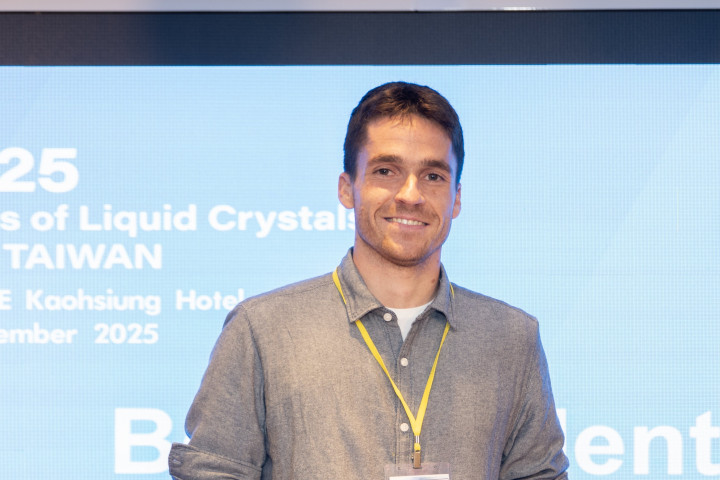
Teaching Assistant Jaka Zaplotnik, a doctoral student at the UL Faculty of Mathematics and Physics, has received the prestigious international Liquid Crystal Research Excellence Award, presented by the International Liquid Crystal Society and Meta Reality Labs Research. Among the three awards presented annually to young researchers from around the world, he received the highest distinction – the Diamond Award.
-
UL FS with a coordinating project towards the development of more efficient and sustainable e-mobility
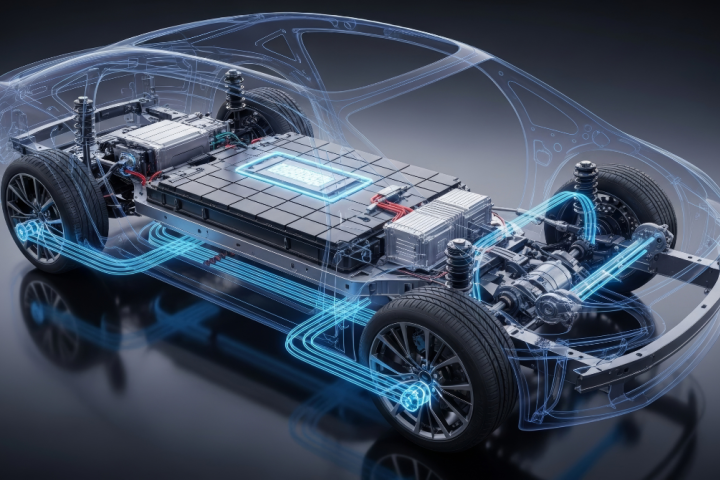
The Faculty of Mechanical Engineering at the University of Ljubljana will lead the breakthrough research and development project NEO-TWIN: Next-Generation Methods, Tools, and Products for Innovative Diagnostics and Prognostics of Electric Vehicles Based on Digital Twins. Through the project, they aim to improve the diagnostics of batteries and other e-vehicle components, extend their service life, and thereby contribute to even more efficient and sustainable e-mobility.
-

Slovenian astronomer from the UL FMF Gregor Rihtaršič awarded prestigious ESA fellowship
Gregor Rihtaršič, a doctoral student at the Faculty of Mathematics and Physics of the University of Ljubljana, has been awarded a research fellowship from the European Space Agency (ESA), one of the most competitive research programs in astrophysics in Europe. His achievement represents an important recognition of both his research work and Slovenian astrophysics.
-
Combating the Most Dangerous Heart Diseases with High-Voltage Electrical Pulses
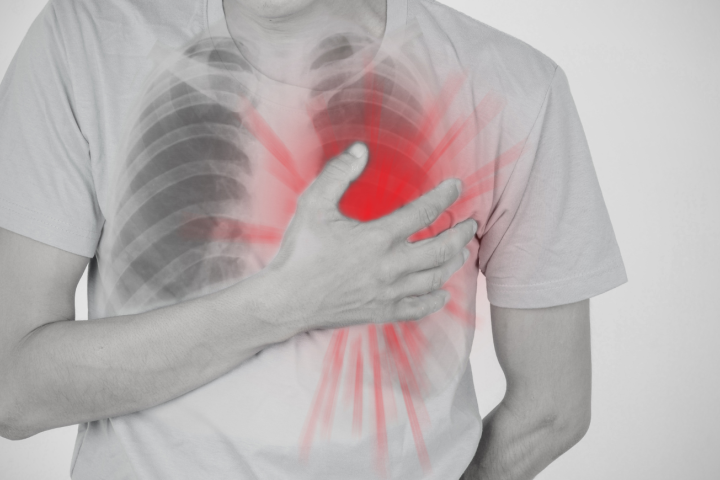
Researchers from the University of Ljubljana, together with partners in the interdisciplinary project CardioEP Experimental and Clinical Cardiac (Electro)physiology and Cell and Gene Therapy with Electroporation, are developing therapies for the treatment of a broad spectrum of heart diseases, from the most dangerous arrhythmias to heart failure, based on electroporation.
-

Dr. Jana Bedek is a recipient of the Marie Skłodowska-Curie Postdoctoral Fellowship
Dr. Jana Bedek, employed at the Croatian Biospeleological Society, was successful under the mentorship of Associate Professor Dr. Cene Fišer from the Biotechnical Faculty of the University of Ljubljana in securing a Marie Skłodowska-Curie Actions (MSCA) postdoctoral fellowship.
-

Artificial Intelligence Accelerates Plasma Simulations and Opens New Pathways to Fusion Energy
Researchers at the Faculty of Mechanical Engineering UL (UL FS) have developed a machine-learning approach that significantly accelerates complex physical simulations of plasma in fusion reactors. By using advanced surrogate models, researchers can predict plasma behaviour much faster, contributing to more efficient development of fusion energy as one of the key sustainable energy sources of the future.
-
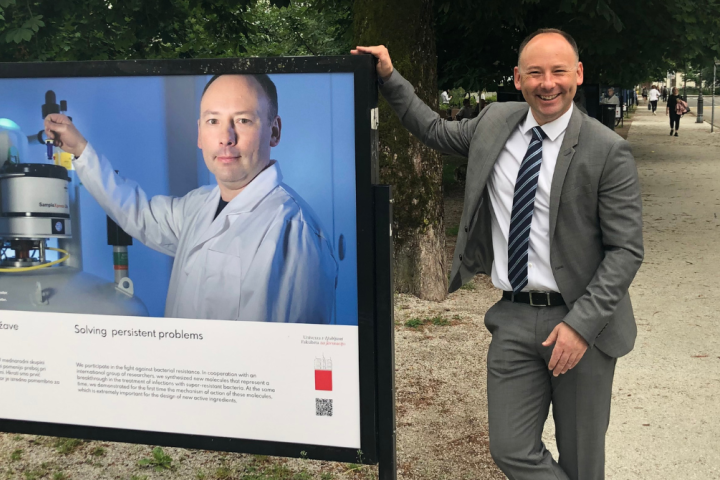
Prof. Marko Anderluh from the UL FFA awarded a prestigious MSCA Doctoral Network project
Prof. Marko Anderluh from the Faculty of Pharmacy UL is coordinating a prestigious European MSCA Doctoral Network project that received €4.3 million in funding from the Horizon Europe framework programme. Within the LLIMIT project, partners and doctoral students will develop innovative therapeutic agents to precisely modulate the immune system by targeting lectins.
-

Young researcher from UL BF Živa Alif receives the L’Oréal–UNESCO “For Women in Science” award
Živa Alif from the Department of Animal Science at the Biotechnical Faculty of the University of Ljubljana has received the L’Oréal–UNESCO “For Women in Science” award, granted to doctoral candidates in their final year of study for outstanding research achievements. She received the award for her work in the field of social aspects of nature conservation in agriculture.
-

Dr. Ivana Rapoš Božič Awarded MSCA Postdoctoral Fellowship for Research on Migrants’ Artistic Practices
Dr. Ivana Rapoš Božič has been awarded the prestigious Marie Skłodowska-Curie Postdoctoral Fellowship (MSCA) for her project PaReMAPs – Pathways to Recognition through Migrants’ Artistic Practices. She will be hosted by the Faculty of Arts, University of Ljubljana, where she will conduct the research under the supervision of Prof. Ksenija Vidmar Horvat and in collaboration with the research group Social Contract in the 21st Century, the APIS Institute, and the Slovene Ethnographic Museum. She will join the University of Ljubljana in September 2027.


